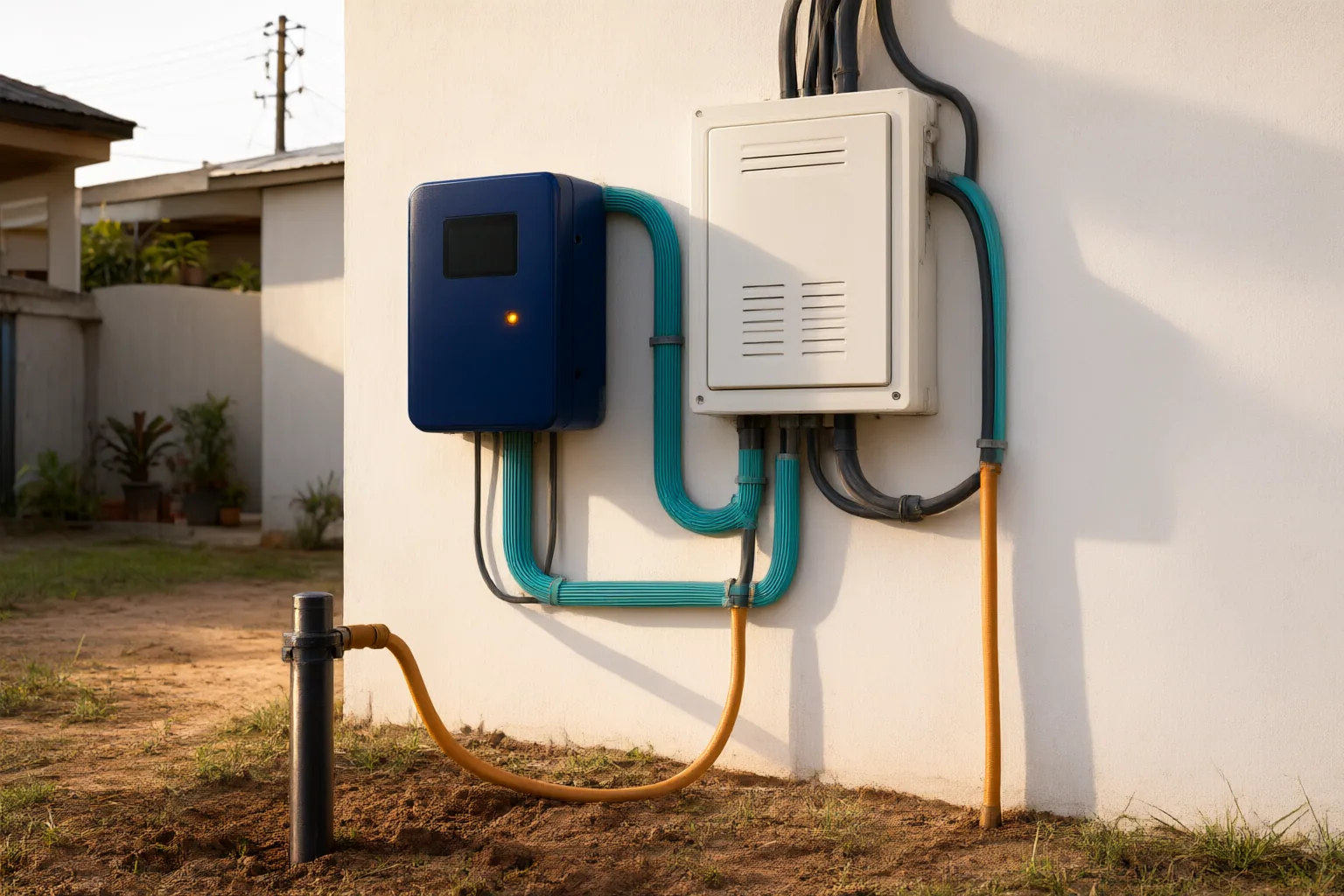
Nigerian households can reduce appliance risk by combining voltage stabilization, surge diversion and overcurrent protection with suitable wiring, earthing, load management and qualified inspection. These measures address different electrical problems, so no single protective device should be treated as complete protection.
Warning Signs and Appliances That May Be at Risk
Possible signs of an electrical-system problem include bulbs becoming unusually bright or dim, appliances repeatedly switching off and on, frequent breaker trips, hot chargers, burning smells and irregular inverter operation. These signs do not, by themselves, identify a particular fault, but they warrant attention—especially when they recur or affect several devices.
Refrigerators, freezers, air conditioners, televisions, computers and other electronics may be vulnerable to unstable voltage or sudden surges. The appropriate response is not simply to add an arbitrary protective device. A household first needs to consider whether the problem involves changing supply voltage, a sudden excess-voltage event, an overloaded circuit or a defect in the installation.
Warning signs can also point to broader weaknesses. Overloaded circuits, weak wiring, poor earthing, loose connections and undersized protection can reduce safety even where a stabilizer, surge protector or breaker is already installed. Burning smells, hot chargers, repeated trips and persistent irregular operation should therefore prompt inspection by a qualified technician rather than repeated resets or continued loading of the affected circuit.
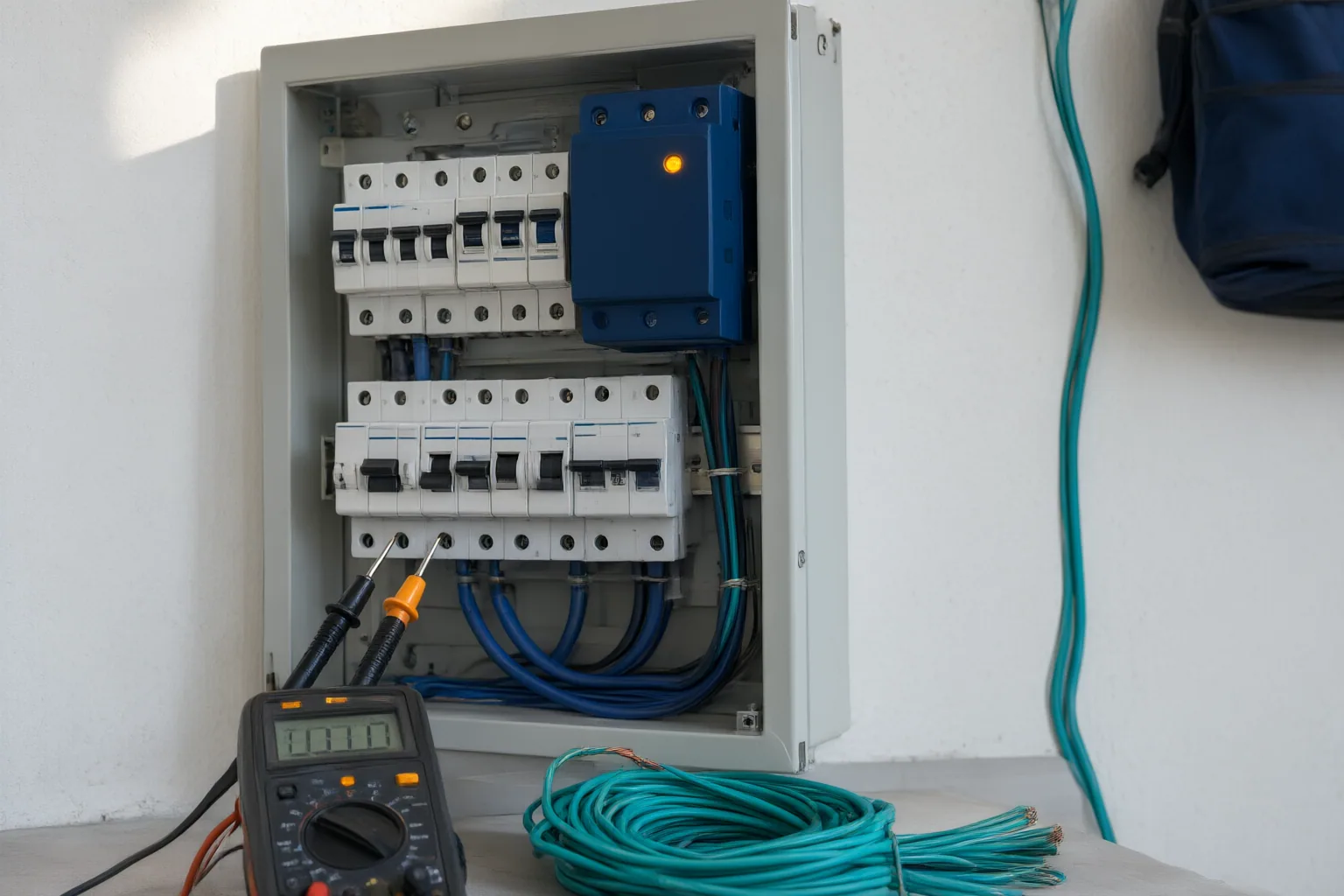
What Stabilizers, Surge Protectors and Breakers Actually Do
A voltage stabilizer regulates incoming electricity to provide connected appliances with a more consistent voltage level. The cited Nigeria-focused guidance identifies relay-based and servo-based stabilizers, but the essential household consideration is that any stabilizer must be suitable for the load it serves and must not be loaded beyond its capacity.
A surge protector performs a different role: it is designed to divert unexpected excess voltage away from connected devices. Some units include a protection indicator or a fail-safe shutdown feature. These features can help show when surge protection is no longer functioning; the presence of sockets alone does not establish that protection remains active.
A miniature circuit breaker, or MCB, addresses another category of problem. It protects a circuit against overload and short-circuit conditions by tripping and cutting power when current exceeds an appropriate level. It should not be confused with a stabilizer or surge protector merely because all three may interrupt or influence the electricity reaching equipment.
The distinction matters because consistent voltage regulation, diversion of a sudden surge and protection against excessive current are separate functions. A stabilizer is not presented in the sources as a substitute for correctly selected circuit protection, while an MCB is not described as a voltage regulator. Household protection should therefore match devices to the electrical conditions they are intended to address.
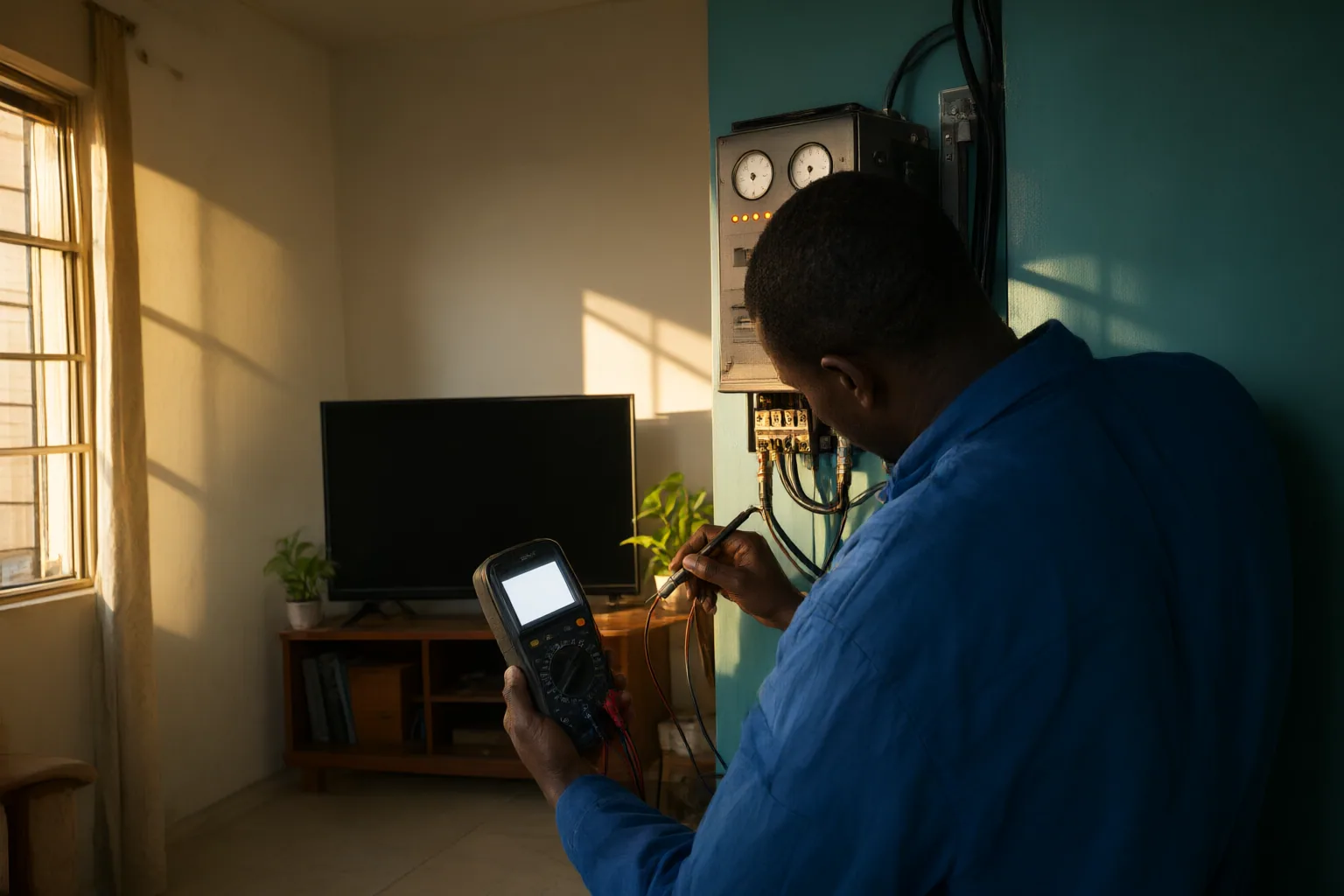
Build a Layered Household Protection Setup
A practical household setup uses several complementary layers. At appliance or supply level, voltage stabilization can help provide a more consistent voltage, while surge protection can divert unexpected excess voltage. At circuit level, correctly selected protection devices can disconnect power during overload or short-circuit conditions. These measures work best as parts of an installation that also has adequate wiring and earthing.
The distribution board should be properly arranged, with circuit-protection devices selected for the circuits they serve. Heavy loads should be separated appropriately instead of being crowded onto an already overloaded circuit. Protective equipment cannot compensate for weak wiring, loose connections, poor earthing or undersized circuit protection.
Loading also matters. A stabilizer should not carry appliances beyond its capacity. The supplied sources do not provide enough verified household information to prescribe a universal stabilizer size, so capacity should be considered against the actual connected load. Installation of a central stabilizer should be handled by a qualified technician.
Households can review the layers systematically:
- Observe whether bulbs, appliances, chargers, breakers or the inverter show recurring warning signs.
- Identify which circuits serve heavy loads and whether breaker trips recur.
- Check whether surge protectors have protection indicators or fail-safe features and whether those features show that protection remains functional.
- Avoid adding loads beyond a stabilizer’s capacity.
- Ask a qualified technician to inspect the distribution board, circuit protection, wiring, earthing and connections, and to handle any central stabilizer work.
This layered approach does not promise protection from every possible fault. Its value is that it avoids assigning every electrical risk to one device and includes the underlying installation in the assessment.
Conclusion
Protecting household appliances requires more than choosing between a stabilizer, surge protector and breaker. Voltage regulation, surge diversion and overcurrent protection serve different purposes, while wiring, earthing, the distribution board and load separation affect the broader installation. Note any recurring warning signs, avoid overloaded circuits and stabilizers, and ask a qualified technician to inspect the wiring, earthing, circuit protection and any proposed central stabilization before making changes.
Frequently asked questions
What is the difference between a stabilizer, surge protector and MCB?
A stabilizer regulates incoming electricity to provide a more consistent voltage. A surge protector diverts unexpected excess voltage away from connected devices. An MCB trips and cuts power during overload or short-circuit conditions. Because they address different problems, they should not be treated as interchangeable.
Is one protective device enough for every household electrical fault?
No single device is presented as complete protection for every fault. A broader setup can combine stabilization, surge diversion and correctly selected circuit protection with an appropriately arranged distribution board, adequate wiring and earthing, separation of heavy loads and inspection by a qualified technician.
Disclosures and limitations
- This article was prepared with AI assistance from the supplied research package. Its material claims are based on the listed source IDs, including commercial Nigeria-focused guidance and a general surge-protection source; it is not a substitute for an inspection by a qualified technician.
Related reading
- Electricity Consumers in Nigeria
- Nigeria Power Generation, Transmission, and Distribution Explained
- How to Report Electricity Outages in Nigeria: What Consumers Should Know
Sources
- Voltage Stabilizer for Home in Nigeria – Complete Guide (2025) — powerfluxmall
- Economy of Zambia – Wikipedia — en.wikipedia.org
- Best surge protector of 2024 — TechRadar
- Voltage Fluctuation Protection: How to Safeguard Your Appliances from Power Surges — hausstrom.com
- Frigidaire Freezer Green Light Flickering (Solved) – Fixzd — Fixzd
- How to File a Complaint with TANGEDCO (2026) — TNEB Bill Calculator