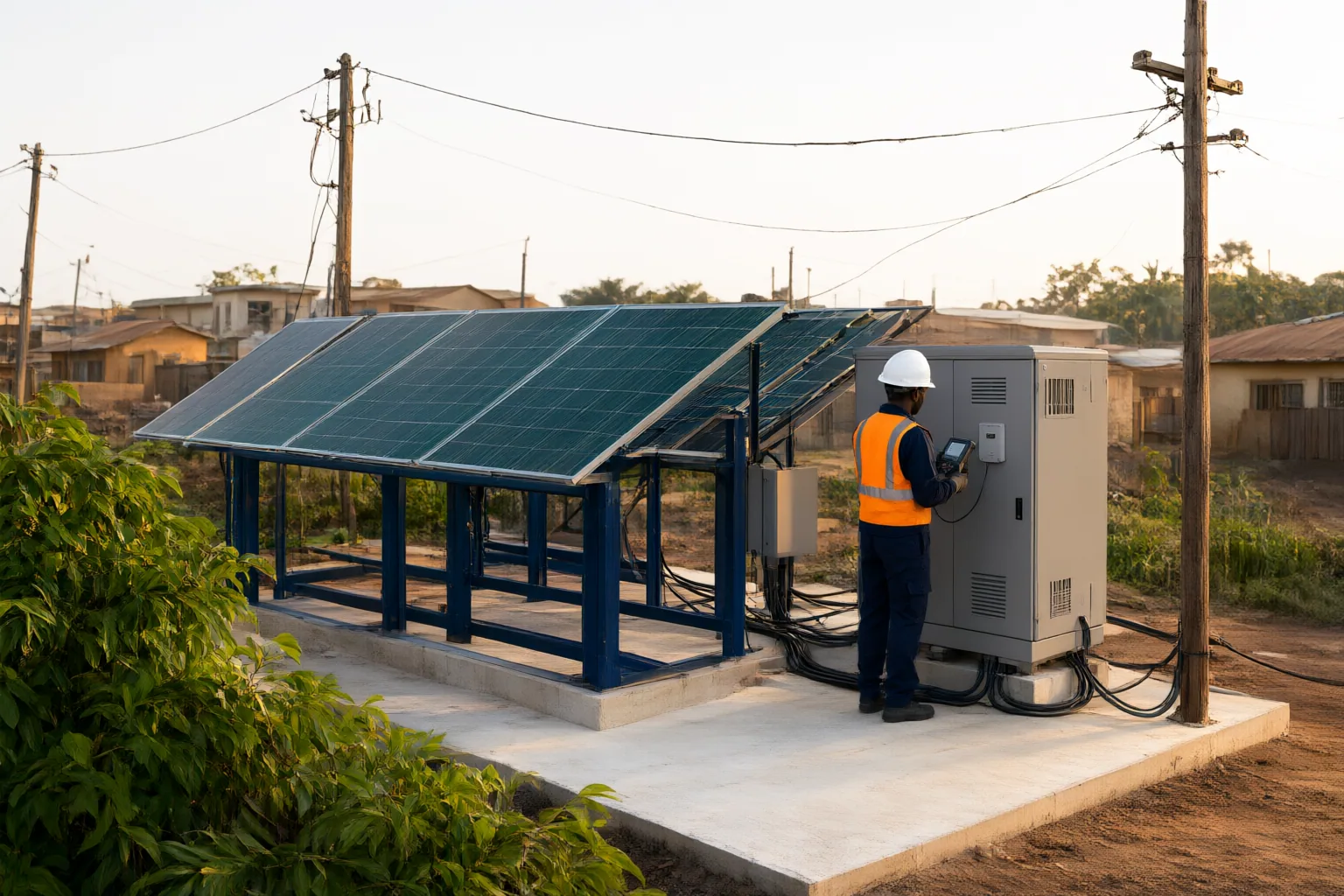
Nigerian electricity distribution companies lose revenue through a combination of network failures, theft, unmetered consumption and unpaid bills. Better metering can improve billing and collection, while utility-enabled distributed energy could strengthen local supply and reduce some losses—but neither measure resolves every structural constraint.
Why Nigerian DisCos Lose Revenue
Revenue losses at Nigerian electricity distribution companies, or DisCos, are not caused by a single problem. RMI identifies a connected set of constraints: limited transmission capacity, electricity supply deficits, high aggregate technical, commercial and collection losses, tariffs that do not fully reflect costs, and weak revenue collection. Together, these pressures make it harder for DisCos to cover operating expenses and invest in distribution infrastructure.
Aggregate technical, commercial and collection losses—commonly called ATC&C losses—capture several distinct failures. Technical losses include electricity lost through infrastructure problems. Commercial losses can arise from theft and consumption that is not properly metered or billed. Collection losses occur when issued bills are not paid. The distinction matters because recovering unpaid bills requires a different response from repairing a failing network or identifying unauthorized consumption.
The scale reported in 2024 illustrates the financial pressure. According to The Conversation, Nigerian DisCos recorded ATC&C losses of 36.36% in the first quarter of 2024 and 39.10% in the third quarter. These dated figures should be treated as reference points rather than current measurements. Persistent losses can weaken the link between tariff revenue and better service: raising tariffs alone may not deliver the expected improvements if operational inefficiencies and collection problems remain unresolved.
How Metering Gaps Weaken Billing and Collection
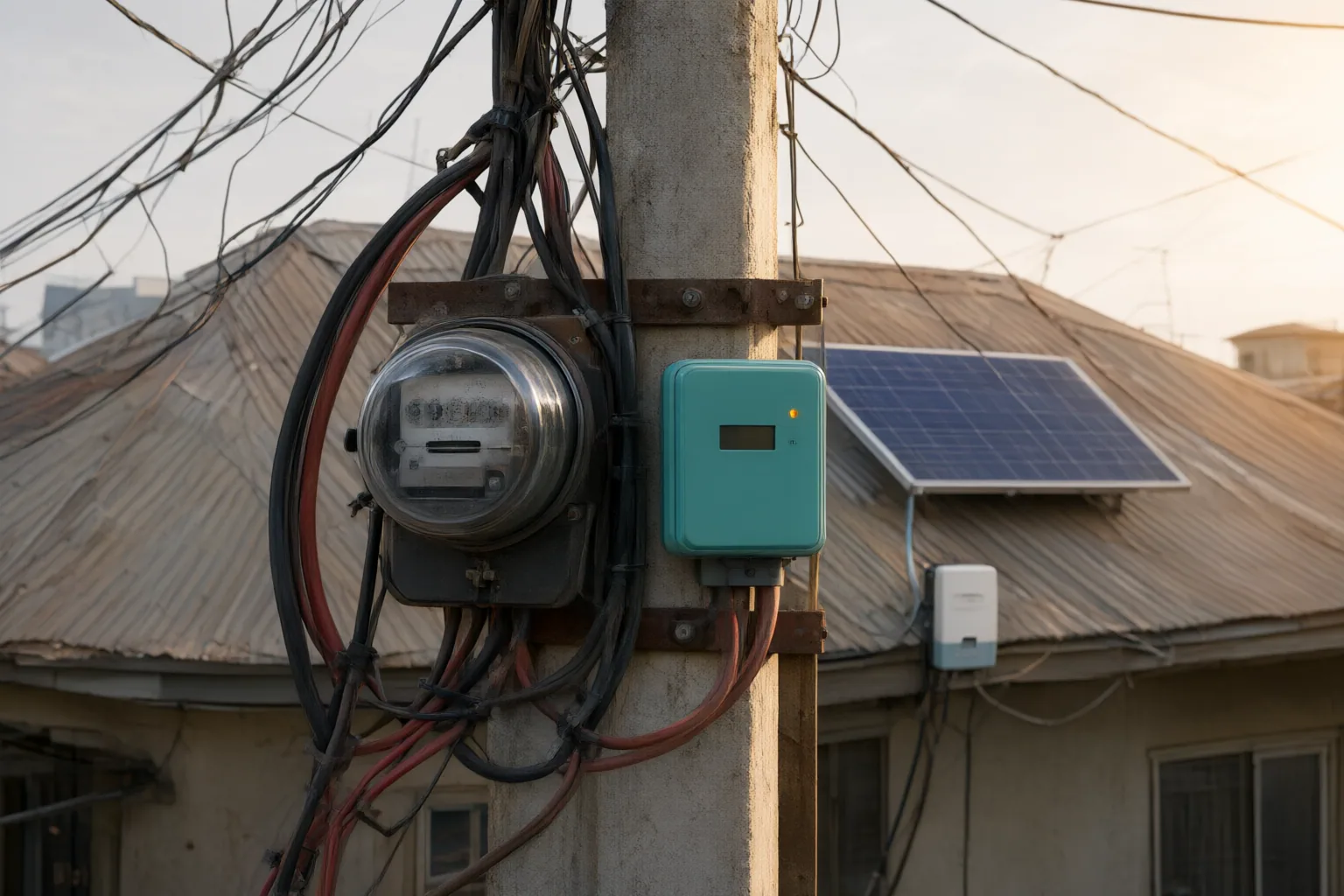
Meters give a DisCo a clearer basis for charging customers according to measured electricity consumption. Without them, accurate billing becomes more difficult, estimated charges are more likely, and disagreements can arise over how much electricity a customer actually used. Those disputes can reduce willingness to pay and make collection less predictable.
The reported gap was substantial at the end of 2024. As of December 2024, 6.29 million of Nigeria’s 13.5 million registered electricity customers were metered, representing a reported metering rate of 46.57%. Because this figure is tied to a specific date, it should not be presented as the current metering rate without newer evidence.
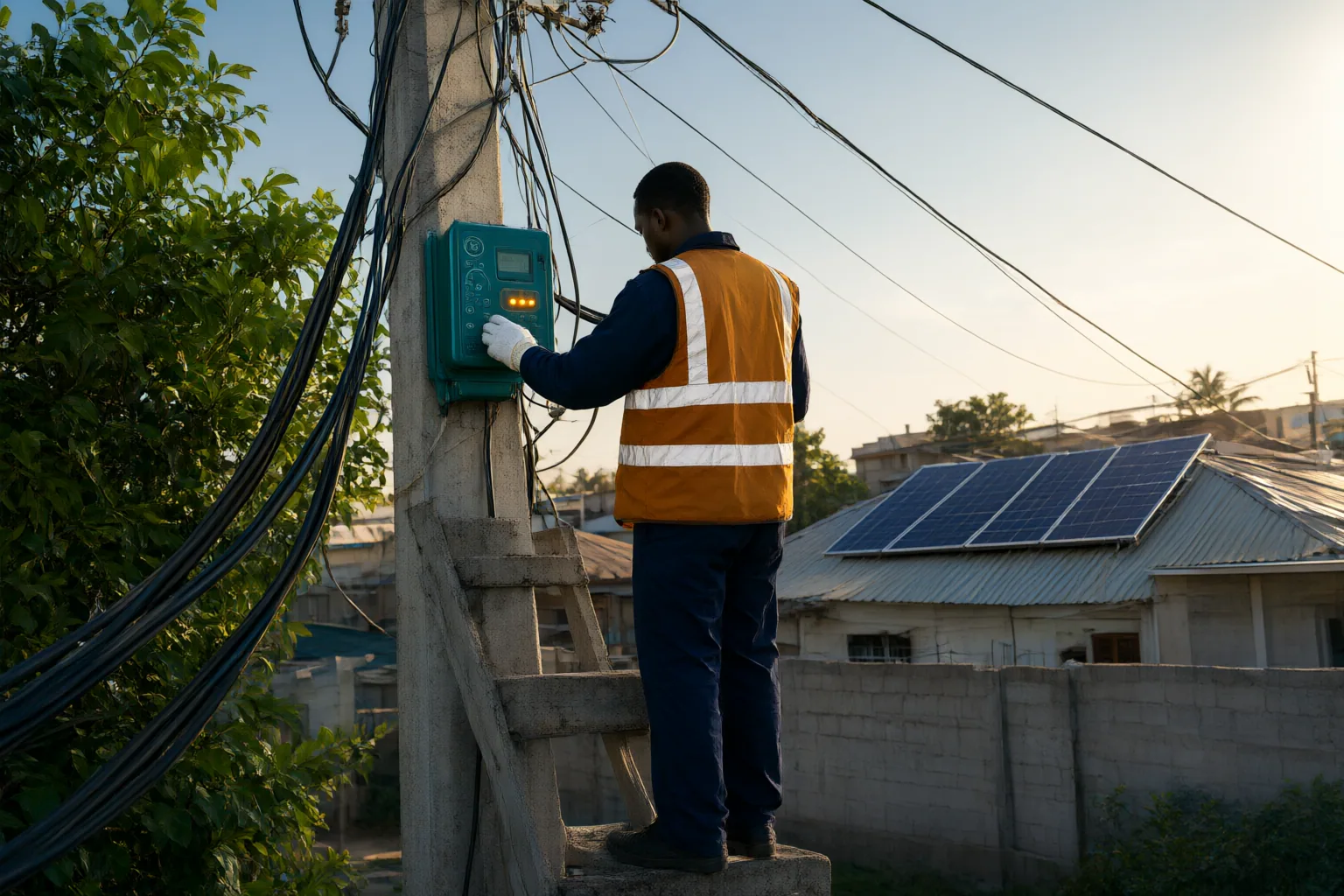
Expanding metering could improve consumption records, billing accuracy and revenue collection. It could also give customers a more transparent basis for examining charges. However, metering is not a complete remedy for ATC&C losses: it does not by itself repair weak infrastructure, eliminate electricity theft, ensure that every bill is paid or resolve supply shortages. Its central contribution is better measurement, which can strengthen the commercial relationship between customers and DisCos and help separate genuine consumption from billing uncertainty.
What Utility-Enabled Distributed Energy Could Contribute
Utility-enabled distributed energy resources offer a complementary response to supply and network constraints. RMI describes arrangements in which DisCos help enable distributed energy projects intended to improve electricity availability and reliability while creating benefits for utilities, project developers and end users. Its roadmap discusses distributed solar photovoltaic systems, batteries and gas technologies, drawing on an assessment of five DisCos and initial projects.
These resources can place generation or storage closer to customers. In principle, that can help address local supply gaps and avoid some electricity losses associated with distribution. It may also give DisCos a role in serving customers who would otherwise seek alternatives outside the utility relationship. The practical value depends on how projects are designed, financed and operated, rather than on the technology alone.
RMI models a potential reduction of up to 20% in ATC&C losses across participating DisCo territories. That figure is a projected opportunity, not evidence that participating DisCos have already achieved such a reduction. Any assessment should preserve that distinction and examine actual project results when they become available.
Deployment also requires workable business models, investment and coordination among DisCos, developers and other stakeholders. Distributed energy cannot independently fix tariff design, revenue collection or every network weakness. Its contribution is more focused: improving supply near demand, supporting reliability and potentially reducing part of the loss burden when commercial incentives and operational responsibilities are aligned.
Conclusion
Better metering and utility-enabled distributed energy address different parts of the DisCo revenue problem. Metering can support accurate billing, reduce uncertainty around consumption and strengthen collection. Distributed solar, batteries and gas-based resources could improve local availability and reduce some distribution losses where viable projects and commercial structures are established.
Neither is a complete solution. DisCos still face linked constraints involving supply, infrastructure, tariffs and unpaid bills. Progress therefore depends on combining clearer measurement and collection with investment, network improvements and coordinated distributed-energy delivery. Use the dated 2024 loss and metering figures as reference points, then check newer regulatory, DisCo or project disclosures before making consumer, policy or investment decisions.
Disclosures and limitations
- This article was prepared with AI assistance using only the supplied RMI and The Conversation research summaries. Figures and projections retain their stated dates and evidence limits; readers should verify newer primary or regulatory disclosures. No product or affiliate recommendations are included.
Related reading
Sources
- Situation Reports | African Security Analysis — africansecurityanalysis.com
- Scaling Utility-Enabled Distributed Energy Resources in Nigeria — RMI
- Network tariffs | www.acer.europa.eu — acer.europa.eu
- List of countries by carbon dioxide emissions – Wikipedia — en.wikipedia.org
- Nigeria raised electricity prices to improve supply. Why it hasn’t worked — The Conversation
- Power & Utilities — KPMG
- Economy of Nigeria – Wikipedia — en.wikipedia.org