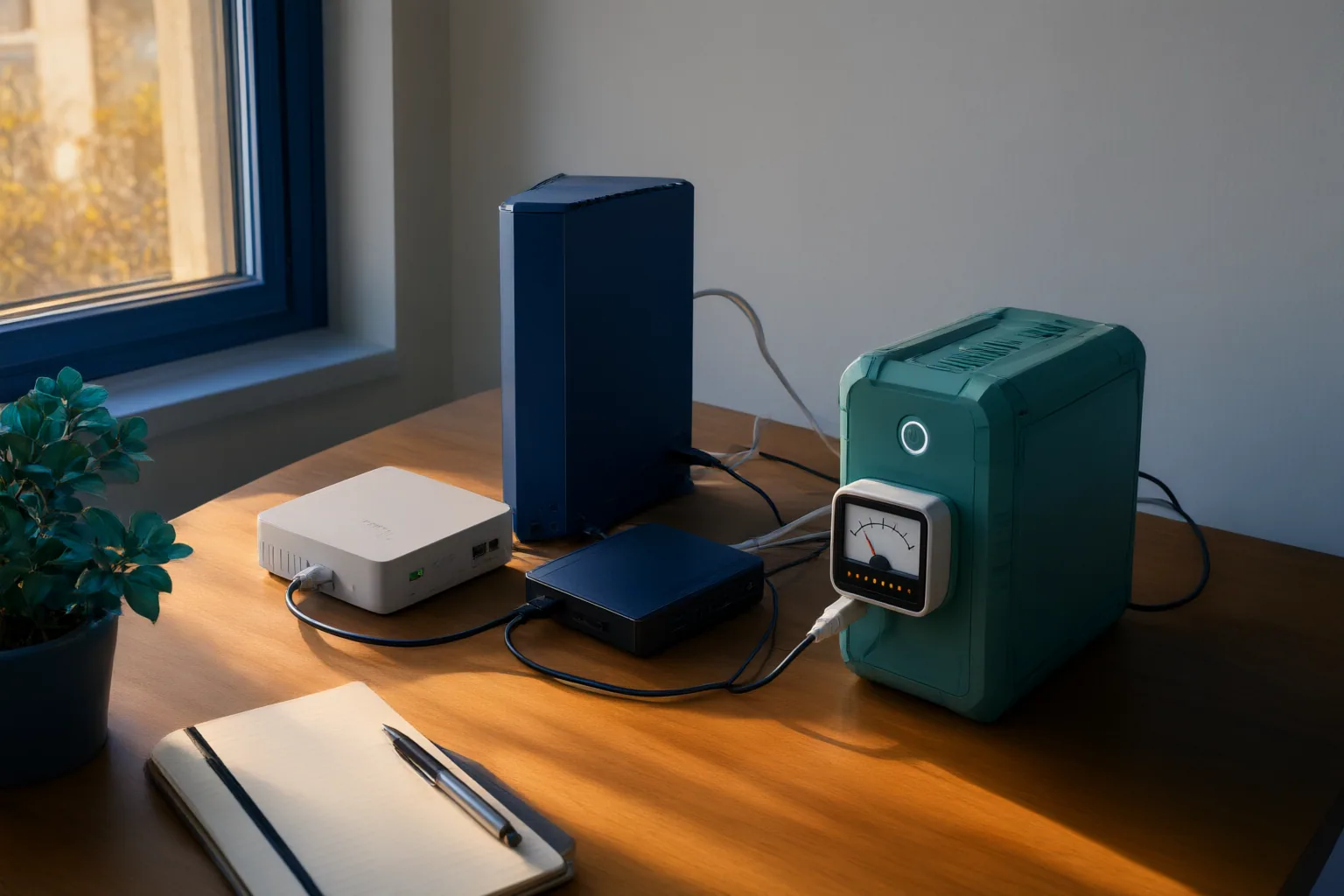
Start by identifying every locally powered device required for your connection. Then match temporary battery support or a mobile hotspot to the expected outage, account for each option’s limits, and record measurable electricity use over time.
Identify What Must Stay Powered for Internet Access
Internet access at a home or workplace may depend on more than the availability of an upstream signal. When grid power fails, locally powered equipment can shut down and interrupt the connection even if an internet signal still reaches the premises.
Identify the complete connection path before selecting backup power. Depending on the service, essential equipment may include a modem, an optical network terminal, a router, or several of these devices. A backup arrangement that powers only one required device may therefore leave the connection unavailable because another part of the local setup remains off.
Make a simple inventory of the equipment involved in delivering and distributing the connection. Separate devices that are necessary for access from those that do not need to operate during an outage. This establishes which equipment requires temporary power and prevents the backup decision from being based only on the most visible device. It also gives you a defined set of equipment whose electricity use can be tracked where measurement is possible.
Compare Battery Backup and Mobile Hotspot Options
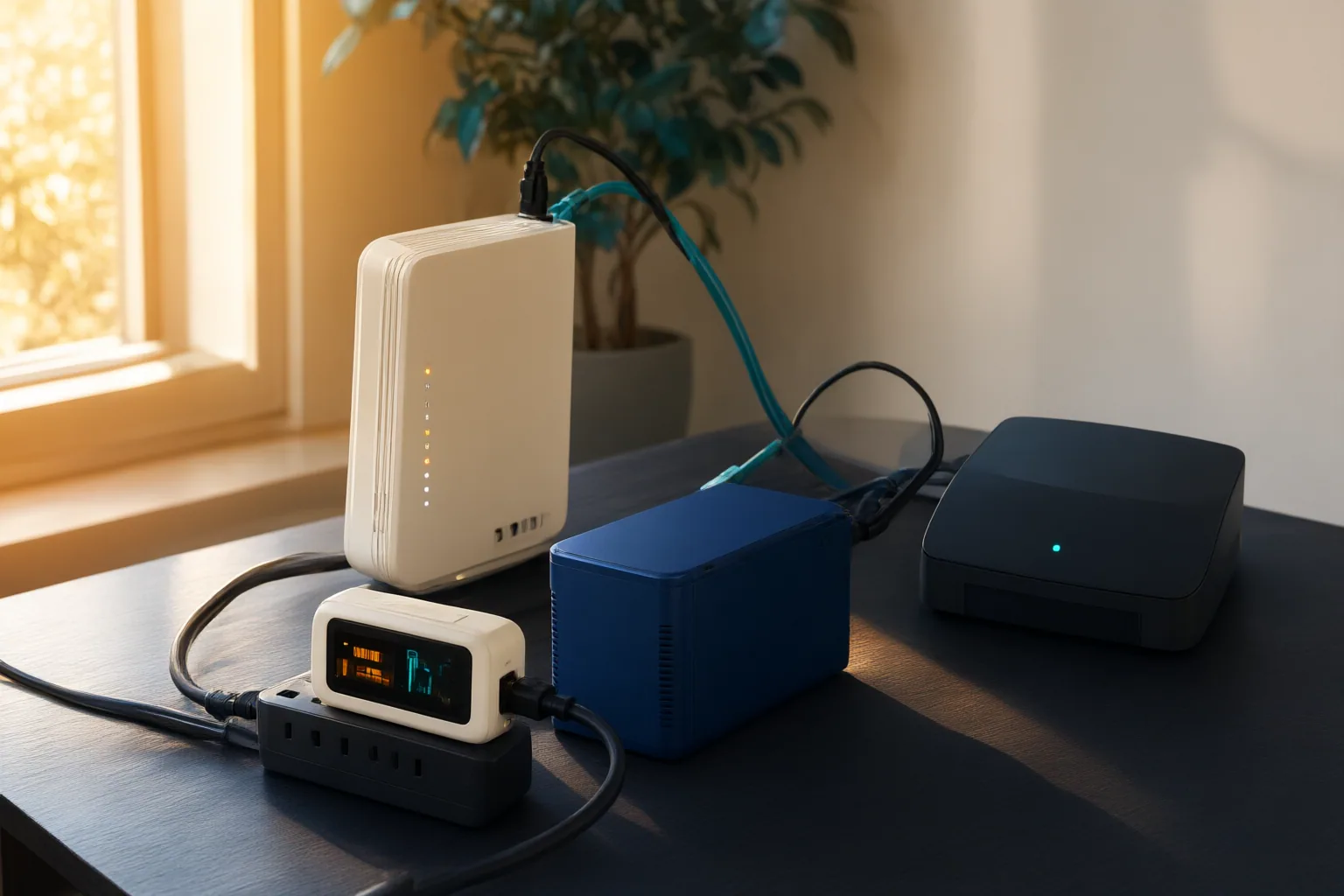
Battery backup and a phone hotspot address outages in different ways. A battery backup temporarily powers the existing networking equipment, helping preserve the usual connection while the required local devices remain operational. However, the cited practical guidance notes that many uninterruptible power supplies are designed for short runtimes rather than prolonged outages. The relevant question is therefore whether the available runtime matches the likely period without grid power.
A mobile hotspot takes another route: it shares a phone’s cellular connection with other devices. It may provide an alternative when the fixed connection’s local equipment cannot be powered, but it has several documented constraints. Hotspot use depends on phone battery life, cellular-plan eligibility and available data. Connection speeds may also be reduced. These limits should be considered together rather than treating a hotspot as an unrestricted substitute for a fixed connection.
Choose between the options by defining the connectivity requirement first. For short interruptions, temporary battery support may fit the need if it can power every essential networking device for the required period. A hotspot may be more suitable as an alternative connection when its plan, data, battery and speed constraints are acceptable. During longer outages, neither option should be assumed sufficient without comparing the needed duration with the actual limits of the chosen arrangement.
Measure and Manage the Equipment’s Electricity Use
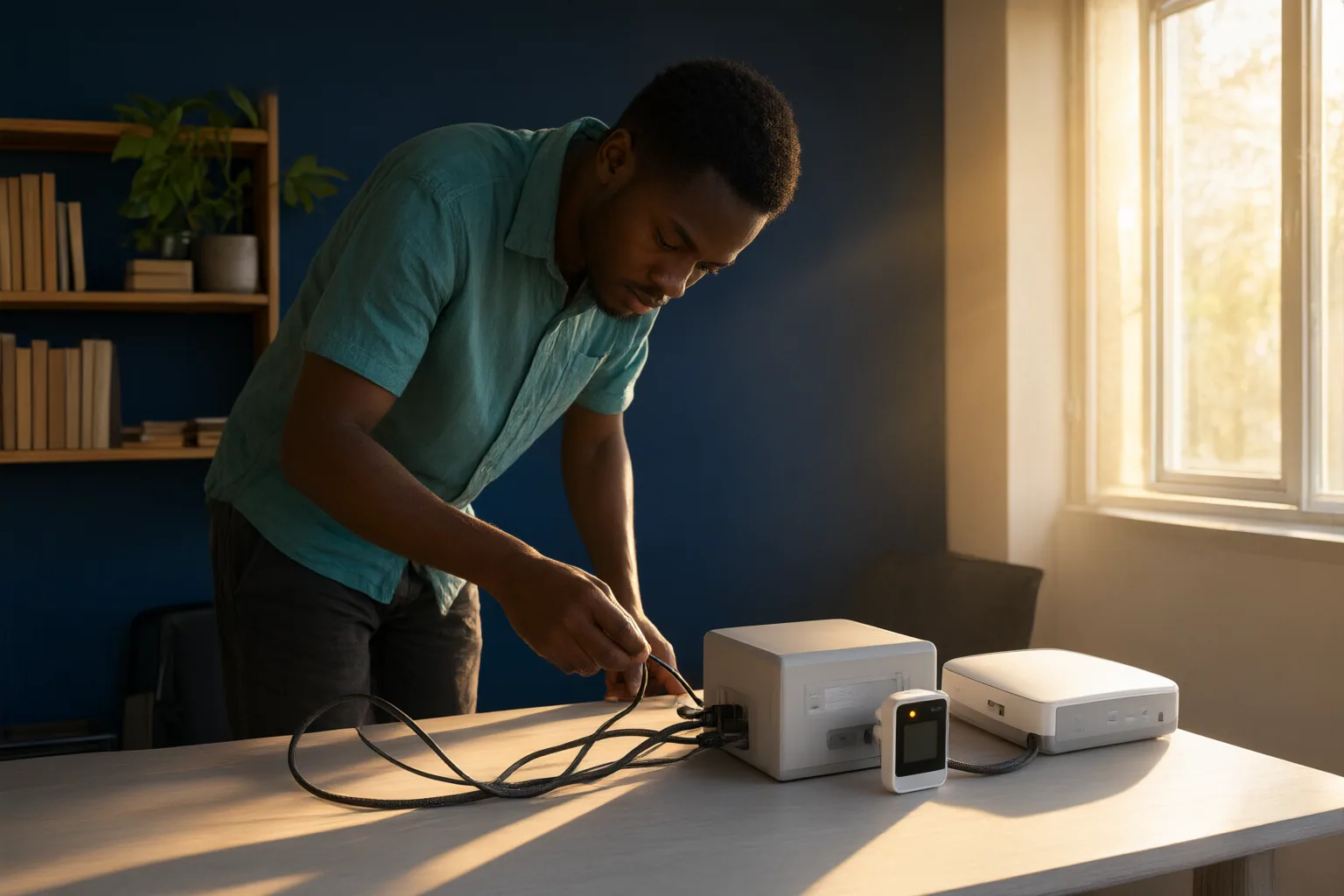
An electricity meter provides the basic measurement framework for managing consumption. It records electrical energy used by a residence, business or device over time, and the typical billing unit is the kilowatt-hour. Where the relevant equipment’s use can be measured, record consumption across a defined operating period instead of relying only on an estimate.
Begin with the essential-device inventory created for outage planning. For each measurable setup, note which modem, optical network terminal or router was operating and the period covered by the reading. Consistent records can help distinguish the electricity needed for essential connectivity from an undefined assumption about internet-equipment use. They can also support comparisons between operating arrangements, provided each recorded figure is tied to what was running and for how long.
Nigeria-specific tariff or service-band claims require careful dating. An article published on April 7, 2024 reported that the tariff change then under discussion applied to Band A customers. It attributed to officials a minimum service threshold of 20 hours per day for that band and reported that managing electricity use was presented as a priority. Those statements describe that 2024 pricing discussion; they should not be treated as confirmation of current tariffs or service rules.
The durable lesson is to base consumption management on recorded energy use while keeping dated pricing claims separate. Current tariff, service-band and local mobile-plan conditions require their own verification before they are used for present-day cost or connectivity decisions.
Conclusion
A practical outage plan starts with the connection path: identify every modem, optical network terminal and router that must remain powered. Next, decide whether short-duration battery support can cover the required runtime or whether a phone hotspot offers a workable alternative within its battery, plan, data and speed limits. Record electricity use over time wherever it can be measured, commonly in kilowatt-hours, so consumption decisions have a measurement basis.
List the internet devices you need during an outage, record their electricity use where measurable, and choose a backup approach whose runtime and limitations match your connectivity needs.
Disclosures and limitations
- This article was prepared with AI assistance using only the supplied research sources; Nigeria-specific tariff and service-band statements are attributed to a secondary article published on April 7, 2024 and are not presented as current rules.
- No specific products or affiliate-linked recommendations are included. General outage guidance is not Nigeria-specific, so local plan terms, network conditions, equipment availability and required runtime should be verified.
Related reading
- Electricity Consumers in Nigeria
- How Nigerian Households Can Protect Appliances From Voltage Fluctuations and Power Surges
- Nigeria Power Generation, Transmission, and Distribution Explained
Sources
- Electricity meter – Wikipedia — en.wikipedia.org
- IMF report on Nigerias budget: Minister of Finance Oyedele reply IMF over eight trillion naira off budget spending – BBC News Pidgin — BBC News Pidgin
- Power Outage? Here’s How to Keep Your Internet On Like a Pro – CNET — CNET
- Latest Documents | Vindy Archives — http://vindyarchives.com
- Matters Pertaining To Nigeria's New Electricity Pricing — VIZTADAILY
- NBC News Site Map Articles 2010 August — nbcnews.com
- Homestamp – UK Rental Tools for Tenants & Landlords — homestamp.com