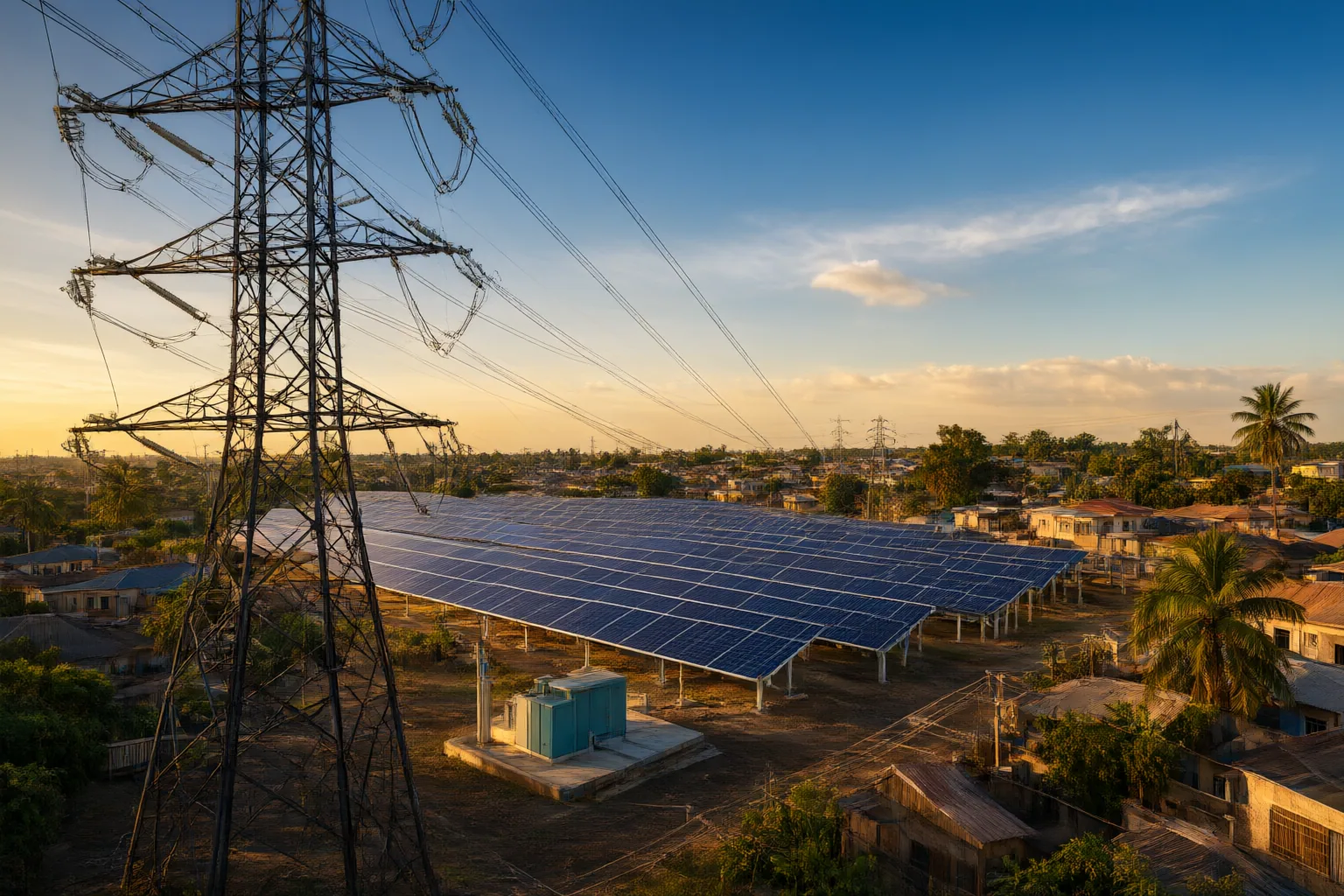
Nigeria’s grid electricity chain has three main stages: generation companies produce power, the transmission system carries it over long distances at high voltage, and distribution companies deliver it to consumers. Reliable supply depends on every stage working together, supported by regulation, market institutions, and sufficient payment flows.
Nigeria’s electricity value chain at a glance
Nigeria’s grid-connected electricity industry can be understood as a chain linking generation, transmission, and distribution. Electricity moves from generating companies to the transmission network, then to distribution companies and end users. Each stage performs a distinct function, but a failure or constraint at one point can affect service throughout the chain.
This three-part model is a useful starting point rather than a complete map of the sector. Distributed generation, government policy, regulation, and institutions that coordinate market and system operations also influence how electricity is produced, delivered, and paid for. Consumers experiencing an outage or supply shortage therefore cannot assume that the visible distribution company is necessarily the source of the underlying problem.
What generation, transmission, and distribution each do
Generation companies produce electricity in bulk. One source-dated overview says Nigeria had 23 power plants connected to the national grid, with combined installed capacity of 11,165.4 MW, managed by generating companies, independent power producers, and the Niger Delta Holding Company. The same overview attributes about 86% of capacity to fossil-fuel generation, principally natural gas, with the remainder coming from hydropower. These figures are historical source claims, not a current capacity benchmark.
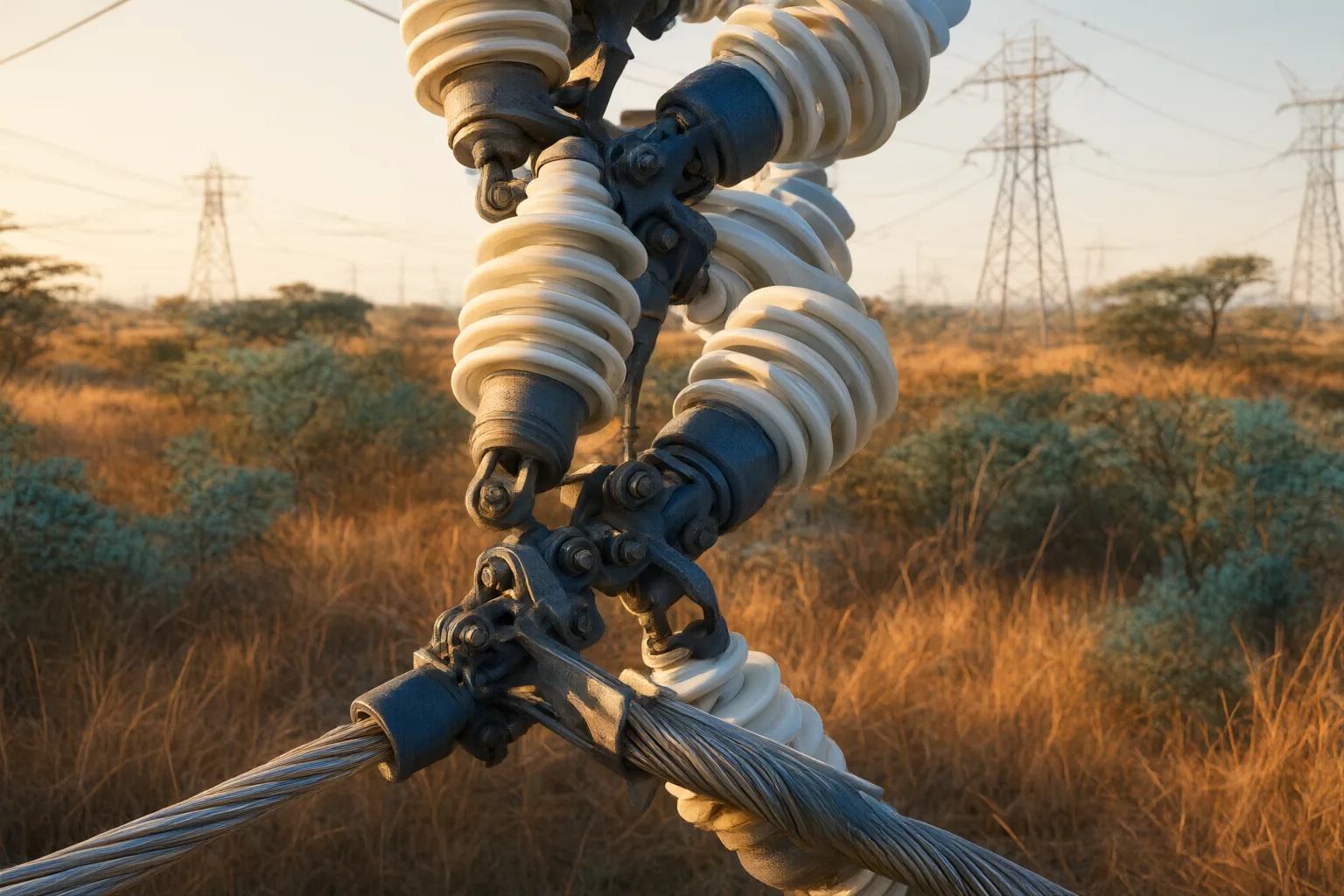
Transmission takes electricity from power plants and moves it over long distances at high voltage. Distribution companies then receive power from the transmission stage and supply homes, businesses, and other end users through their networks. The System Operator has the separate task of balancing electricity generation with consumption.
The industry’s ownership structure reflects reforms associated with the Electric Power Sector Reform Act of 2005. A cited historical account says privatization of generating businesses and 11 distribution companies had been completed by November 2013, while the federal government retained ownership of the transmission company.
Installed capacity does not show how much electricity consumers will receive. Generating facilities may operate below their potential, while fuel-infrastructure and maintenance problems can constrain output. Electricity that is generated must still pass through a transmission system affected by losses and then through distribution networks. Consequently, a large capacity figure cannot by itself establish the availability, duration, or reliability of household supply.
How regulation, tariffs, and money connect the chain
Regulation and financial coordination connect the physical stages. The cited materials describe the Nigerian Electricity Regulatory Commission, or NERC, as responsible for matters including licensing, consumer protection, and setting or reviewing tariffs. They describe the Nigeria Bulk Electricity Trader, or NBET, as helping to balance market cash flow, while the System Operator balances supply and demand on the electricity system.
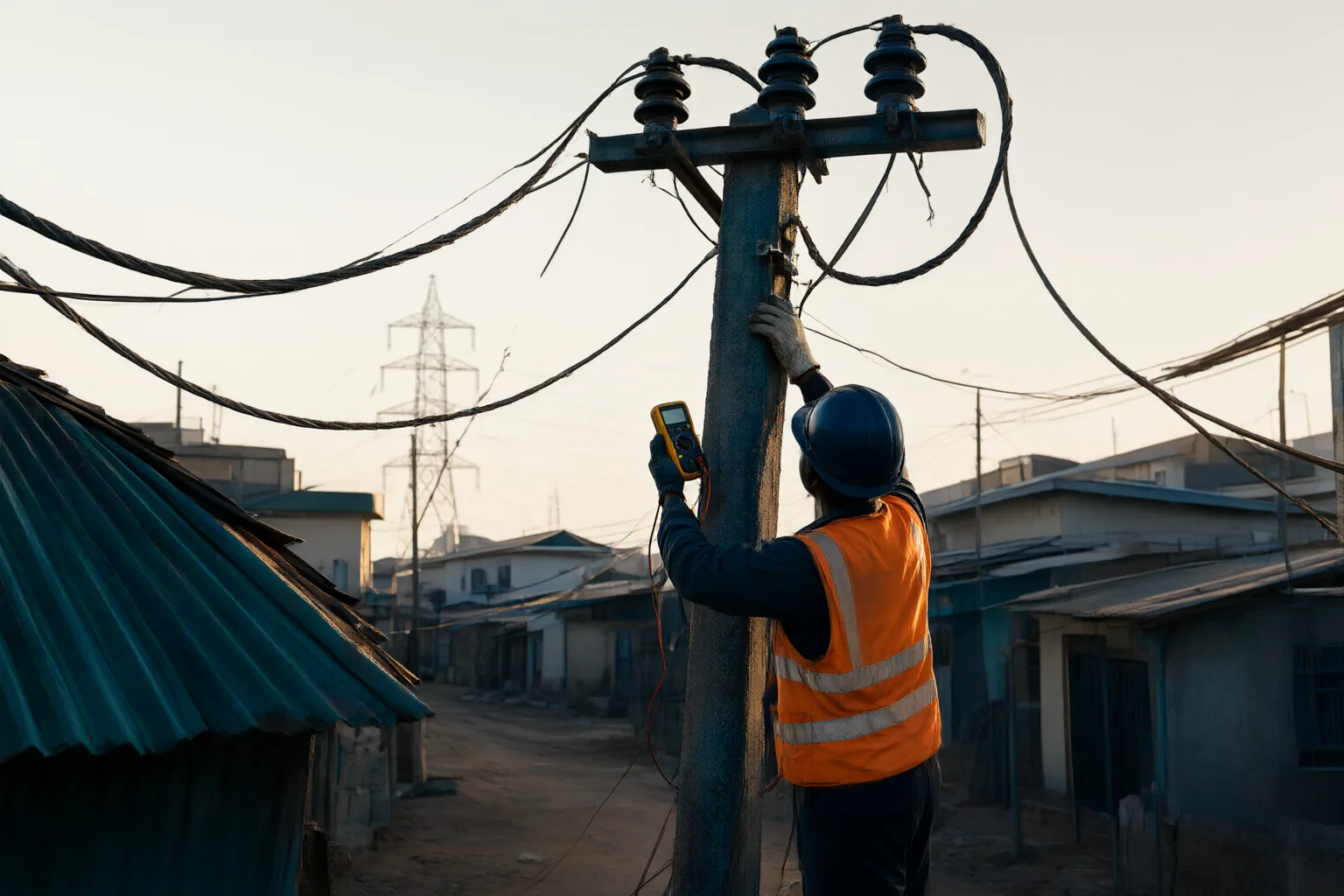
Money generally moves in the opposite direction from electricity. Consumers pay distribution companies; those revenues must then support distribution operations and payments associated with transmission and generation. A cited explanation of transitional market arrangements says NBET collected revenue from distribution companies and paid generation and transmission entities directly. Weak revenue collection, electricity theft, and technical, commercial, and collection losses can therefore restrict funding across the wider value chain.
Tariffs also connect service expectations with sector costs. A BBC report from 2020 described a service-reflective arrangement that placed consumers in bands A through E, associated at that time with approximately 20, 16, 12, 8, and 4 hours of daily supply. Bands D and E were reportedly excluded from that particular adjustment. This is a historical illustration, not evidence of current bands, rates, or entitlements.
The same report said tariff calculations considered inflation, gas prices, exchange rates, average electricity sales, generation costs, and industry losses. Separately, Energy for Growth Hub identified electricity-asset investment, gas-to-power coordination, renewable-energy integration, distribution revenue recovery, and demand research as policy priorities. Together, these accounts show why tariff debates involve service, operating costs, investment, and payment collection across the entire chain.
Conclusion
Nigeria’s electricity supply depends on more than power plants. Underused generation, fuel or maintenance constraints, transmission losses, distribution-network problems, and inadequate revenue recovery can each interrupt the path from available capacity to dependable consumer service. Persistent gaps have contributed to outages and reliance by some households and businesses on self-generation.
When investigating a supply or billing problem, first identify the most relevant part of the chain: generation, transmission, distribution, market payments, or regulation. Then verify current service commitments, tariff rules, and complaint procedures directly with the appropriate official institution, since historical sector descriptions do not establish today’s obligations.
Disclosures and limitations
- This article was prepared with AI assistance from the supplied research package. Several structural, capacity, and institutional claims come from secondary or non-official sources and should be checked against current NERC, TCN, NBET, and other official documents before publication or decision-making.
- No products are recommended, and no affiliate relationship is represented in this article.
Related reading
- Electricity Consumers in Nigeria
- How to Report Electricity Outages in Nigeria: What Consumers Should Know
- Nigeria Power Supply Data: How to Read Capacity, Generation and Per-Capita Figures
Sources
- New electricity tariffs in Nigeria 2020 hike for kilowatt unit of energy frustrate pipo from Ikeja to Abuja – See how much you go pay now & why NERC announce sudden hike – BBC News Pidgin — BBC News Pidgin
- Electricity sector in Nigeria – Wikipedia — en.wikipedia.org
- Power Industry in Nigeria: Explained – kpakpakpa Inc — KPA
- Five Electricity Policy Priorities for Nigeria – Energy for Growth Hub — Energy for Growth Hub
- Nigeria Energy Situation – energypedia — energypedia.info
- Nigerian Electricity Regulatory Commission – Wikipedia — en.wikipedia.org