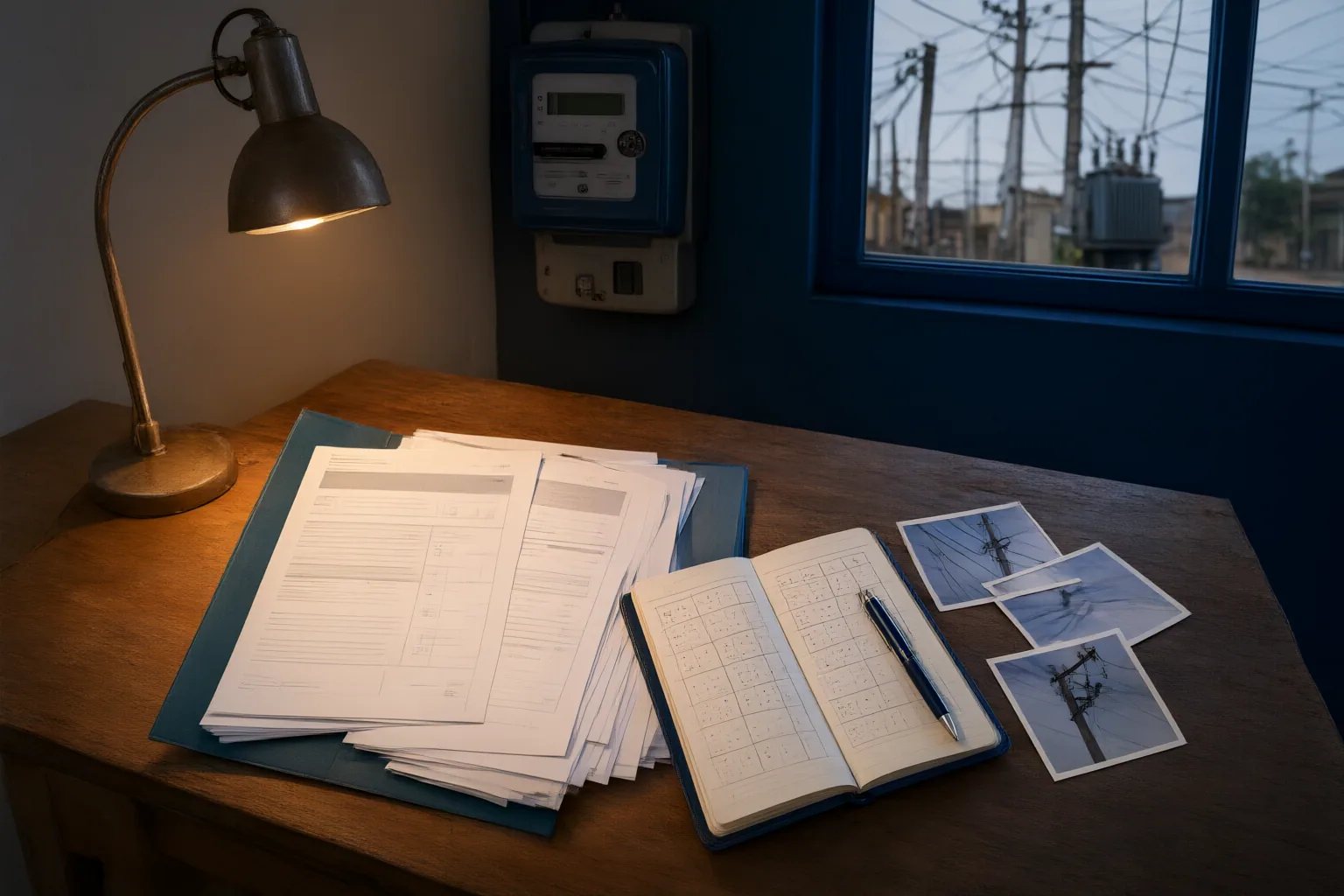
Before escalating, preserve a clear, chronological file containing meter readings, dated photographs, relevant bills, error messages, your written complaint, correspondence, account documents, and evidence supporting any claimed loss. These materials document what happened but do not, by themselves, prove that a meter is faulty.
Start by documenting the problem clearly
Begin with a short description of what prompted the complaint. Identify the bill or meter event involved, the date it was noticed, and the specific outcome you want addressed. Record whether the issue is an unexpectedly high bill, an unexpected charge, or an error message displayed by a prepayment meter.
Avoid treating an unusual bill as automatic proof of a defective meter. Citizens Advice, writing about the English energy market, says meter faults are rare and that higher bills usually have another cause. A change in consumption, an appliance issue, or another explanation may need investigation. Preserve the evidence without deciding the cause prematurely.
Create a simple timeline covering the meter observations, bills, communications, and actions taken. Keep statements factual: note what the display showed, what the bill charged, and when each event occurred. This makes the complaint easier to understand while leaving the technical conclusion open. The cited guidance supports evidence preservation only; it does not establish Nigerian complaint procedures or meter-testing rules.
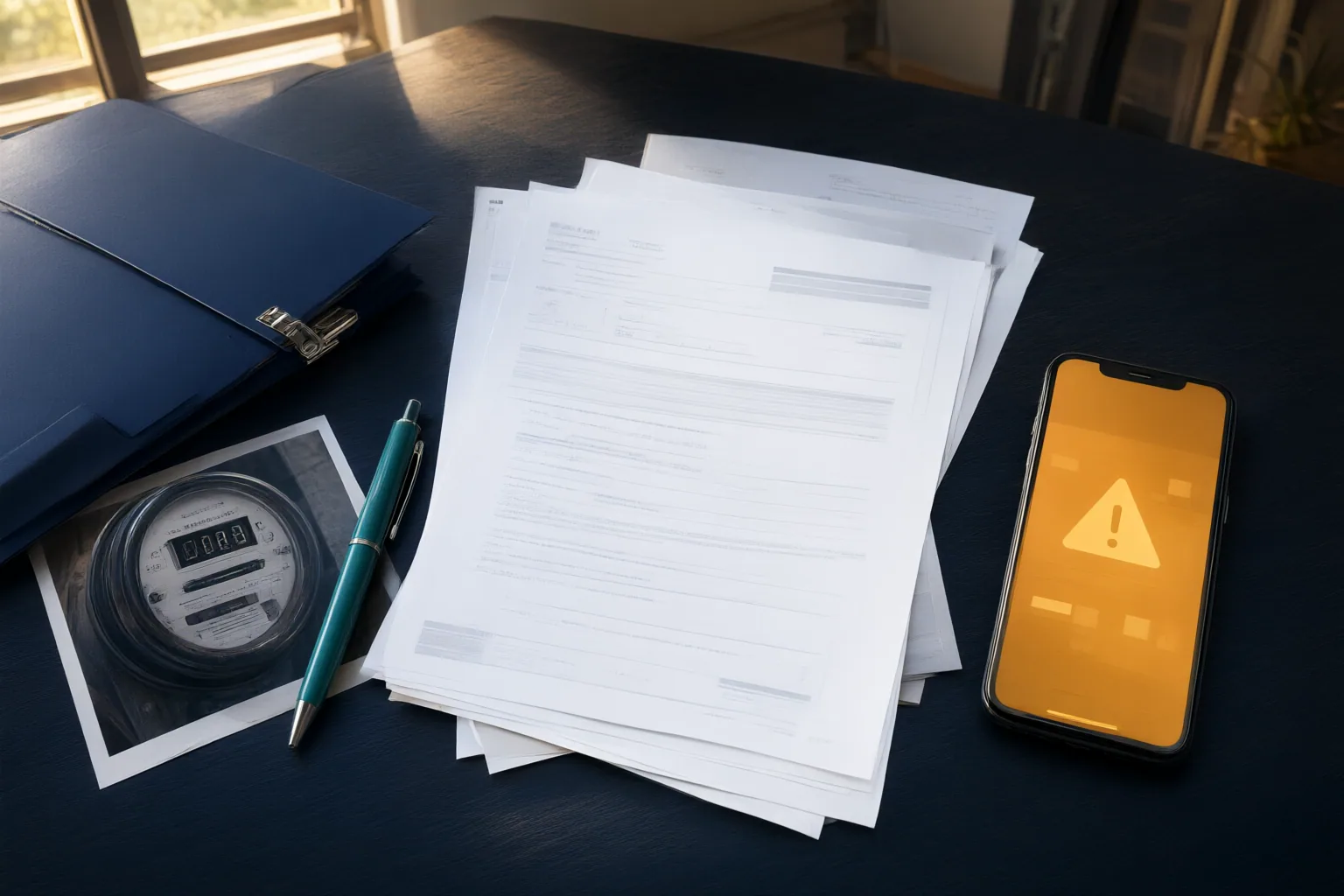
Build a dated meter and billing record
Build a record that can show what you observed over time. Include:
- Meter readings with the date and, where possible, the time of each reading.
- Clear dated photographs showing the reading or visible error message.
- The bills relevant to the disputed amount, kept in their original form.
- A written note explaining which charge or consumption figure appears unexpected.
- Any available sequence of readings that helps show how the display changed.
- Records of any instructions received about monitoring or comparing readings.
Citizens Advice recommends recording a meter reading before testing and says a photograph may help prevent a later billing dispute. It also notes that, in England, a supplier might ask for daily readings over seven days or use a second meter for comparison. These examples illustrate why consistent records can matter; they are not directions for a Nigerian test or escalation.
Keep original files where practical and label copies consistently. Match each photograph to its reading and date, and link each disputed figure to the bill on which it appears. Do not alter images in a way that removes useful context.
A reading, photograph, or short monitoring sequence preserves an observation. It does not independently establish that the meter caused the disputed bill. Present the records as evidence for investigation rather than as a technical finding.
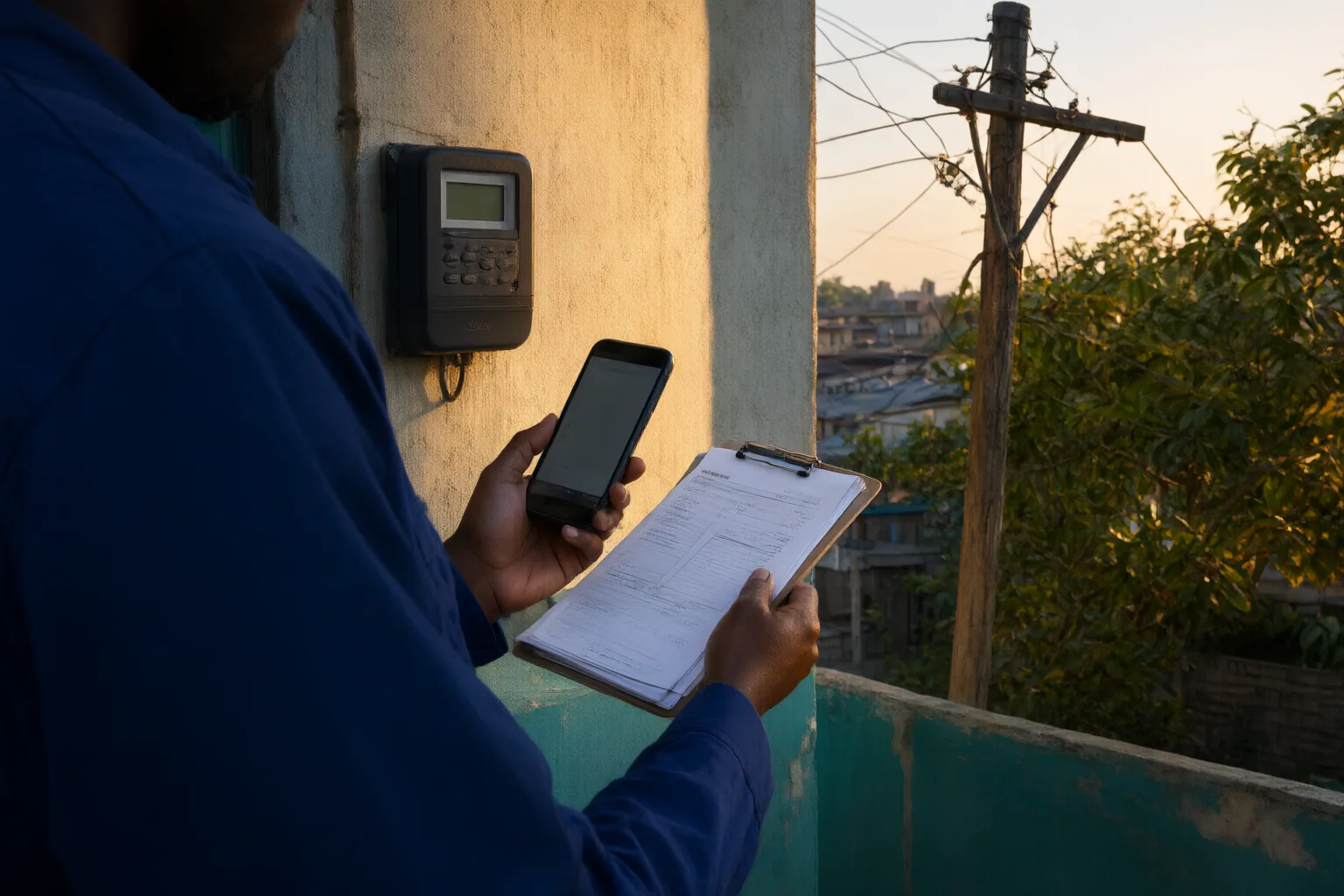
Prepare the written complaint and supporting file
Organize the complaint so another reader can identify the claim, understand its basis, and locate the supporting material. State what is disputed, why it is disputed, and what response you are seeking. Date the complaint and retain the submitted version.
A useful supporting file may contain the relevant account or contract documents, bills, meter records, photographs, error-message records, correspondence, and evidence of any problem or loss being claimed. If you state a financial amount, include documents showing how that amount was derived. Keep messages sent to and received from the business, including acknowledgements and responses.
Finland’s Consumer Disputes Board requires a consumer first to make a written complaint to the business and provide the claim, its grounds, evidence of the problem or loss, and the dated earlier complaint. It describes its own procedure as entirely written and identifies contract terms, defect documentation, damage records, support for the amount claimed, and correspondence as potentially relevant evidence.
Those requirements belong to Finland, not Nigeria. Their value here is as a general model for creating an orderly documentary record. They do not establish who must receive a Nigerian complaint, when it must be filed, or what remedy may be available. Before escalation, arrange the file chronologically and use a document list so every statement can be traced to its supporting record.
Conclusion
A practical evidence bundle should connect the disputed bill or meter event to dated readings, photographs, relevant bills, error messages, the written complaint, subsequent correspondence, account documents, and records supporting any claimed loss. Arrange everything chronologically, retain the originals, and distinguish observed facts from assumptions about the cause.
The cited English and Finnish materials offer general documentation principles, not Nigerian rules. Nigeria-specific complaint channels, deadlines, testing requirements, legal duties, and remedies must be checked against applicable Nigerian primary sources before publication or action. Organize your evidence file now, then verify the appropriate Nigerian channel and its current submission requirements before escalating.
Disclosures and limitations
- This article was prepared with AI assistance from the supplied research package. Its factual guidance is based on cited Citizens Advice material for England and Consumer Disputes Board material for Finland; neither source establishes Nigeria-specific procedures, deadlines, testing rules, duties, or remedies.
Related reading
- Electricity Consumers in Nigeria
- How Nigerian Consumers Can Keep Essential Internet Equipment Online During Outages and Track Its Electricity Use
- How Nigerian Households Can Protect Appliances From Voltage Fluctuations and Power Surges
Sources
- Kyoto Accord — mindprod.com
- Front page – Consumer Disputes Board — Consumer Disputes Board
- Wirecutter’s Editorial Standards — Wirecutter: Reviews for the Real World
- 10 Shocking Facts About Power Strips – CNET — CNET
- Trump's Climate and Clean Energy Rollback Tracker — Climate Action Campaign
- Economy of Nigeria – Wikipedia — en.wikipedia.org
- Check if your energy meter isn't working properly — Citizens Advice
- Semiconductors-101 & High-Tech Glossary — strategysanity.com
- Complaints, Submissions, Information Requests – ČOI — coi.gov.cz