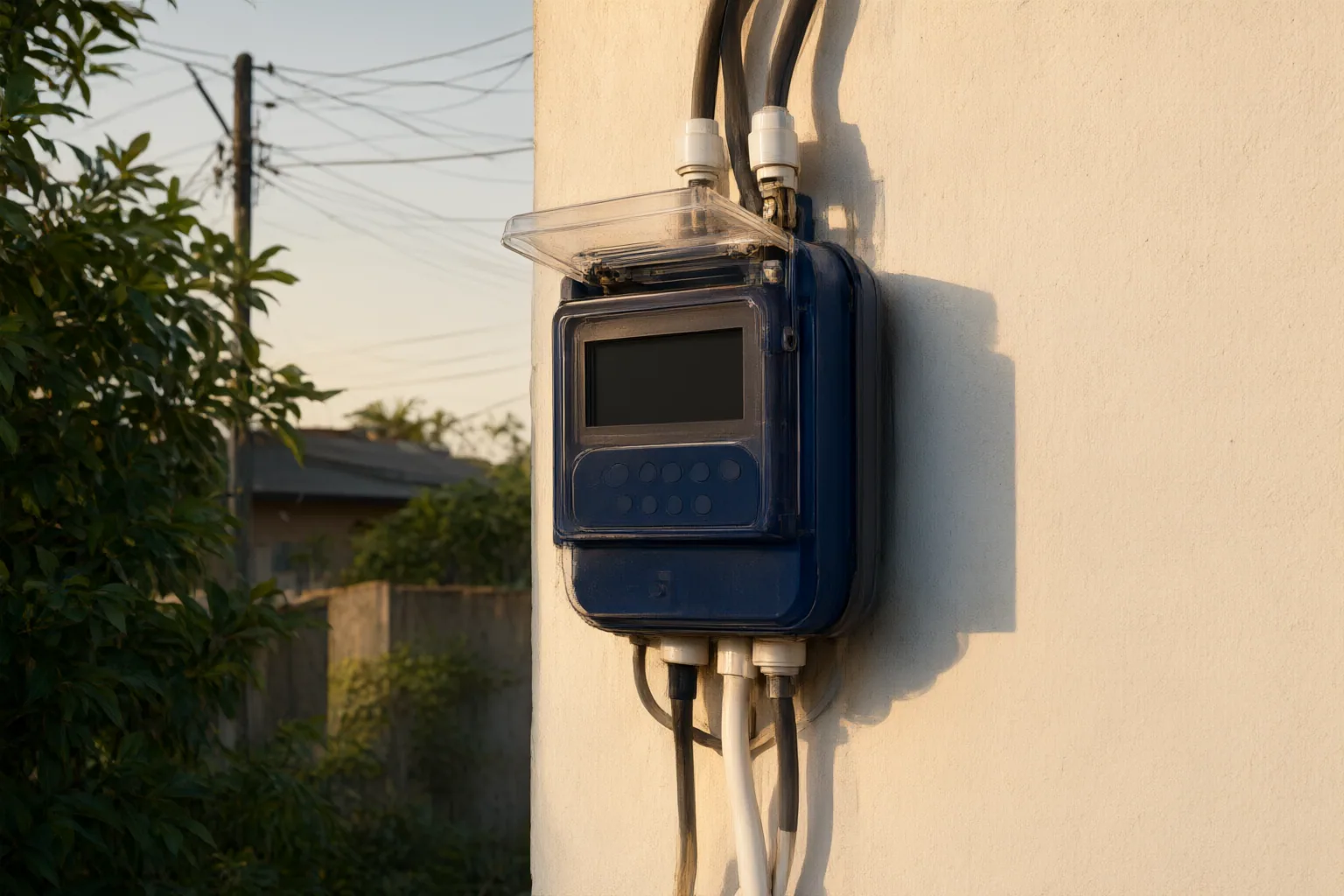
Start by checking three things: whether nearby premises have electricity, whether power appears to be reaching your premises, and whether the blank screen belongs to the main meter or a separate display. These observations can narrow the possibilities, but they cannot confirm the technical cause. If supply is present and the meter remains unresponsive, document the problem and report it to your distribution company.
First determine whether electricity is reaching the area and premises
A blank prepaid meter screen does not automatically mean the meter is faulty. It may coincide with a wider outage, reflect a premises-level interruption, or result from an inactive or defective display. Begin with observations that do not require opening, rewiring, or altering electrical equipment.
Check whether neighbouring premises or the wider area appear to have electricity. If nearby consumers are also without supply, an area outage is one possible explanation for both the loss of electricity and the blank screen. If the surrounding area has power, look at the premises-level indicators available to you. Confirm that the main switch is on and observe whether mains power appears to be present at the distribution board.
These checks create a useful distinction. No area supply points toward a wider interruption; area supply without apparent incoming power may indicate a premises-level supply issue; incoming power with an unresponsive display makes a display or meter problem more plausible. However, none of these observations proves the cause. A switch position, blank screen, or comparison with neighbouring premises is diagnostic context, not a technical finding. Avoid treating the meter as confirmed faulty until the distribution company has assessed the unresolved problem.
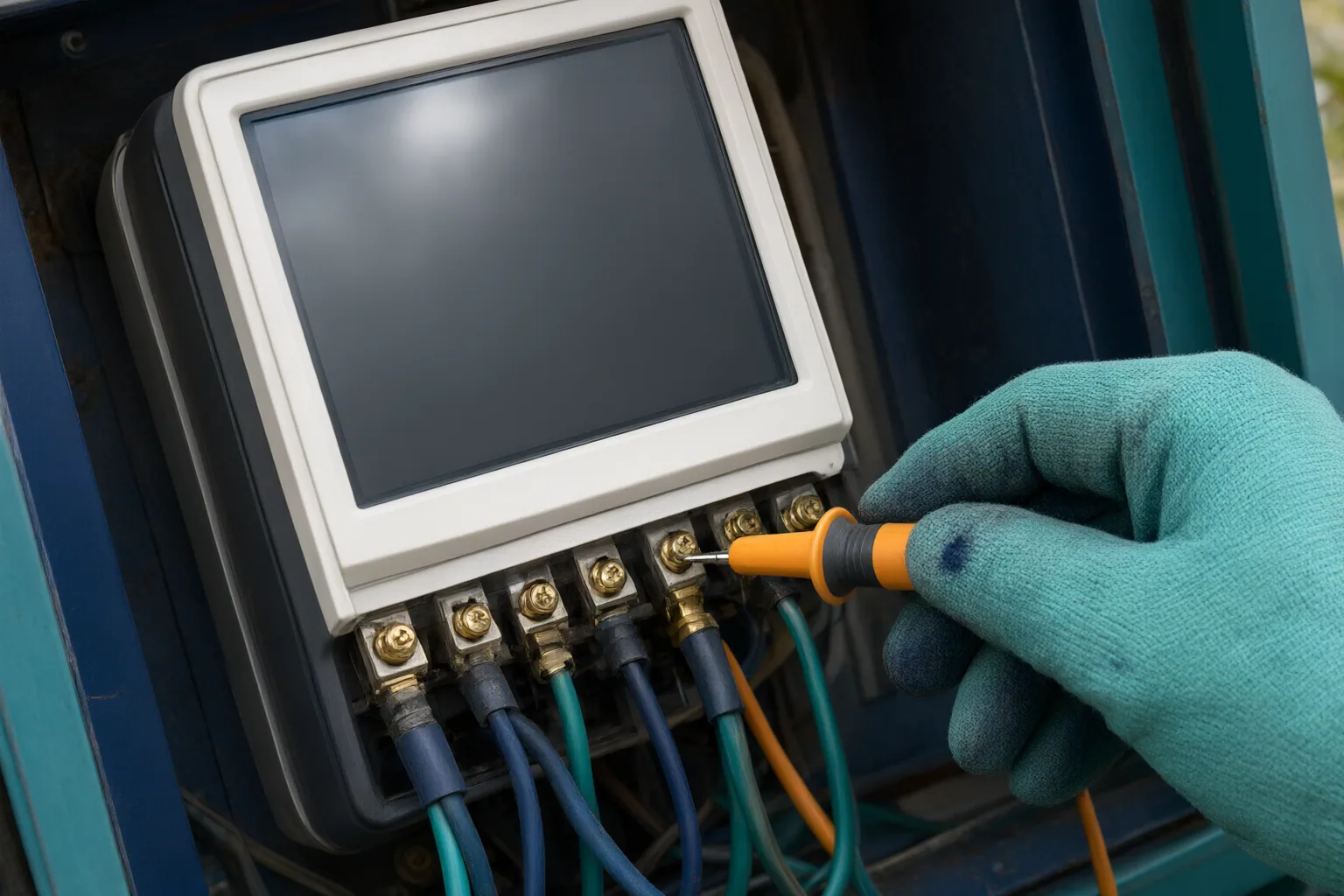
Check whether the screen is inactive, disconnected, or separate from the main meter
Once supply appears to be available, identify what kind of screen is blank. Some prepaid meter displays can switch off automatically. The Nigerian troubleshooting material recommends pressing a meter button to see whether an inactive screen wakes up. If it does, the blank appearance may have been a display state rather than evidence of lost supply or failed hardware.
Also distinguish the main meter from any separate in-home display. An in-home display is a monitor that communicates with the main meter; it is not necessarily the meter itself. A blank or disconnected monitor can therefore coexist with an operational main meter that continues recording consumption. General smart-meter guidance lists several possible reasons for a separate display losing communication, including depleted display batteries, excessive distance, interference, a temporary communications problem, or lost pairing.
Those possibilities establish a general distinction, not a Nigerian repair procedure. Do not assume that instructions for a foreign in-home-display system apply to your meter model or distribution company. Instead, note whether the main meter and the separate monitor behave differently, and use only the controls intended for ordinary consumer operation. If pressing the appropriate meter button does not activate the screen and supply has been confirmed, the continuing lack of response may require technical inspection.
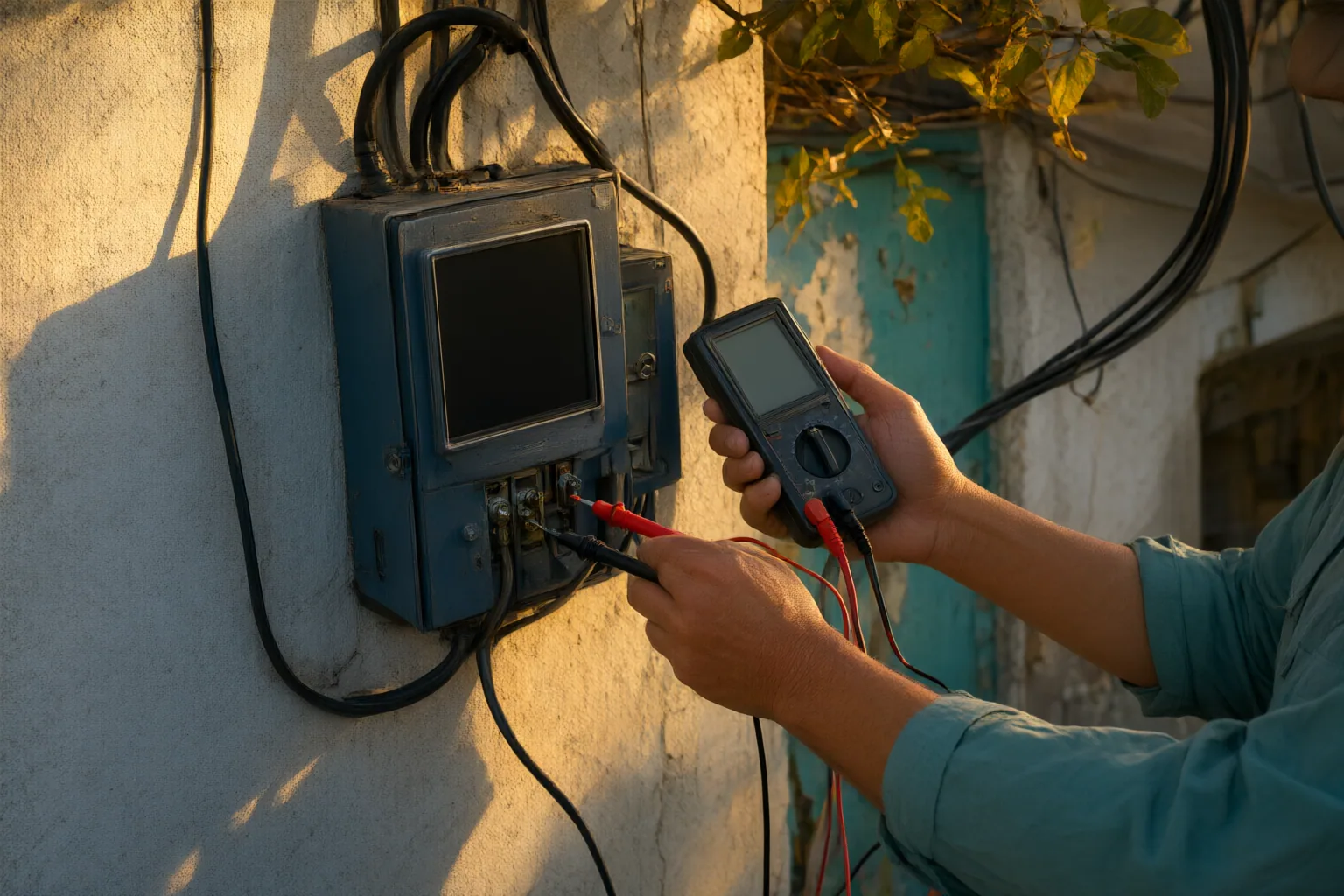
Document the problem and know when to report it
A blank or frozen display, missing provider data, unavailable app information, and unexpectedly high or estimated bills can each be signs of a meter, display, or communications problem. An error message may also help describe what happened. No single sign, however, establishes that the main meter has failed or that electricity supply is completely absent.
Create a dated record while the issue is visible. Note when it began, what the display showed, any readable meter value or error message, and the results of your area-supply, main-switch, and incoming-power checks. Keep dated photographs, relevant bills, and copies of correspondence. These records can make a later complaint clearer, although they still do not independently prove the technical cause.
After confirming that mains power appears present, report a display that remains completely blank, frozen, or unresponsive to your distribution company. The supplied Nigerian guidance recommends technical inspection when the initial checks do not resolve the problem. When reporting it, describe observations rather than declaring a diagnosis: for example, state that nearby premises had supply, the main switch was on, and the screen did not respond. Current escalation channels and meter-specific instructions should be confirmed with the relevant distribution company.
Conclusion
The practical distinction has three parts: check the wider area's supply, observe whether electricity appears to be reaching the premises, and determine whether the problem affects the main meter or only a separate display. A separate monitor may lose power or communication while the main meter remains operational, while a main meter screen may simply be inactive until a button is pressed. A persistently blank screen despite confirmed supply can indicate a possible hardware or display fault, but consumer observations cannot establish the technical cause.
Record the time, meter reading or error message, dated photographs, bills, and every check performed. Then contact your distribution company if electricity is present but the meter remains blank or unresponsive, giving the company the evidence needed to inspect the problem.
Disclosures and limitations
- This article was prepared with AI assistance using only the supplied research sources. Material claims are attributed through the accompanying source IDs; no product was tested or personally used.
- Some Nigerian sources are commercial vending-platform guides, while some general display guidance concerns foreign smart-meter systems. Meter-specific procedures and current reporting channels should be verified with the relevant Nigerian distribution company.
Related reading
- Electricity Consumers in Nigeria
- What to Document When Voltage Is Unusually High or Low in Your Nigerian Home
- Broken or Missing Meter Seal in Nigeria: What Electricity Consumers Should Do
Sources
- Evidence to Gather Before Escalating a Meter Fault or Billing — Nigeriaelectricityhub
- Smart Meter Not Working? Here’s What to Check (And How to Fix It) – OneSDR – 🛜 Technology — OneSDR – 🛜 Technology
- Common Prepaid Electricity Meter Errors & How to Fix Them | ABS Vendor — ABS Vendor
- Smart meter display not working: troubleshooting guide — fuseenergy.com
- Prepaid Meter Error Codes: Complete Troubleshooting Guide (Nigeria) – UtilityWallet — UtilityWallet.ng
- Troubleshooting Your Electricity Meter Display by Gelia – Hjalp.ai — hjalp.ai
- Smart Meter Display Not Connecting: Causes, Fixes, And When To Contact Your Supplier — Home Tech Nerves