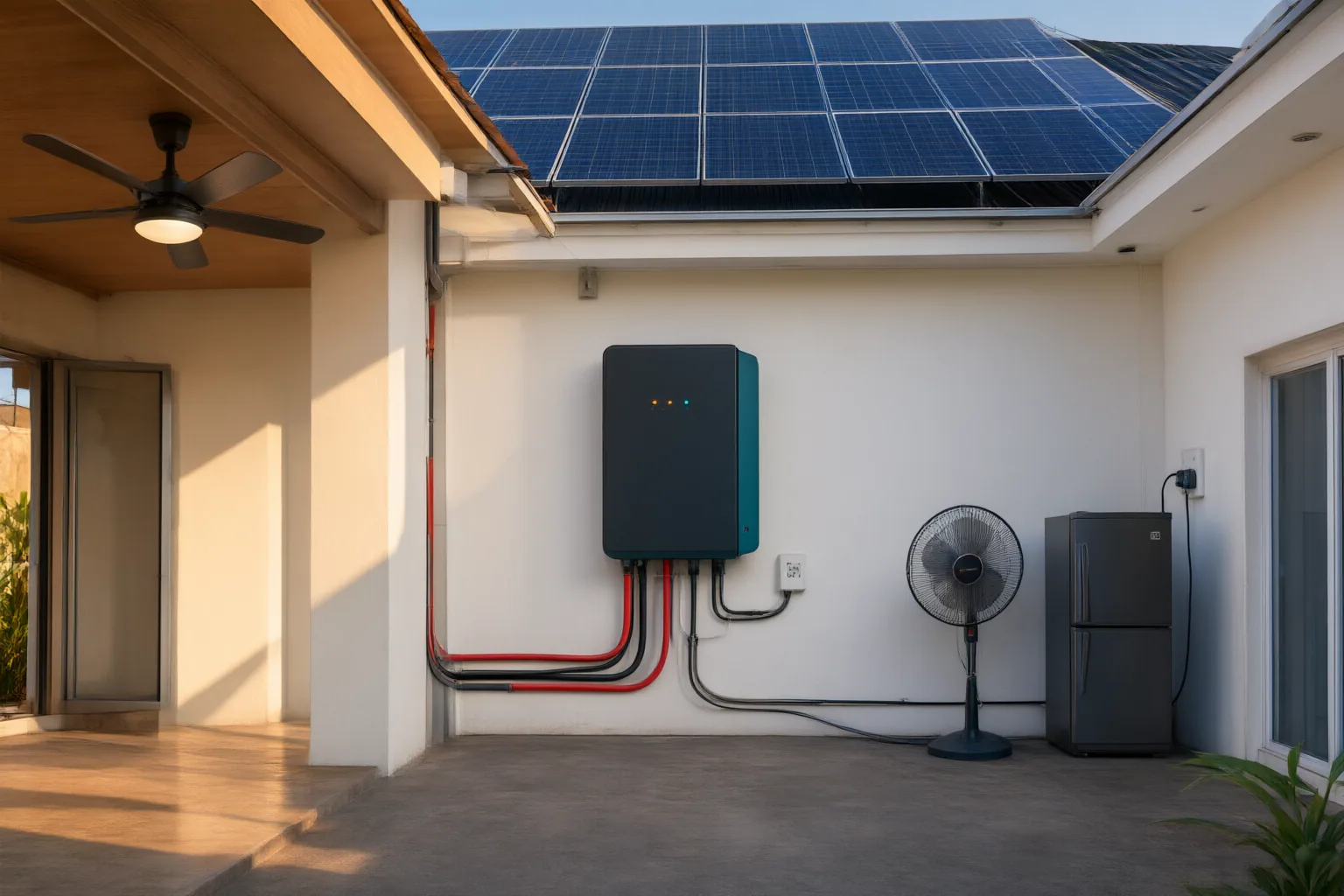
For a solar-powered home, neither DC nor AC appliances are automatically more efficient in every situation. Compare each model’s stated energy consumption and input requirements, then include inverter conversion and standby demand, wiring needs, availability, convenience, and installation complexity. The best choice is the appliance-and-system combination that meets the household’s needs with the lowest practical total energy demand.
How DC and AC appliances fit into a solar home
Direct current flows in one direction, while alternating current periodically reverses direction. Solar panels produce DC, and batteries store and supply DC. An inverter is therefore needed when energy from a battery-based solar system must operate appliances designed for household-style AC power.
That distinction explains how an appliance connects to the system, but it does not by itself establish efficiency. A native-DC appliance can avoid the system’s DC-to-AC conversion stage, yet its total energy use still depends on the particular appliance and the surrounding system. Likewise, an AC input does not reveal everything happening inside a device: phones, laptops, LED lighting, and other electronics use DC internally or through an adapter, while many refrigerators, air conditioners, and washing machines are designed for AC input.
Households should consequently compare complete operating paths. For a DC appliance, that includes its required voltage and the DC distribution circuit. For an AC appliance, it includes the appliance, inverter conversion, and any inverter demand that continues when active AC loads are absent.
Compare daily energy use and conversion demand
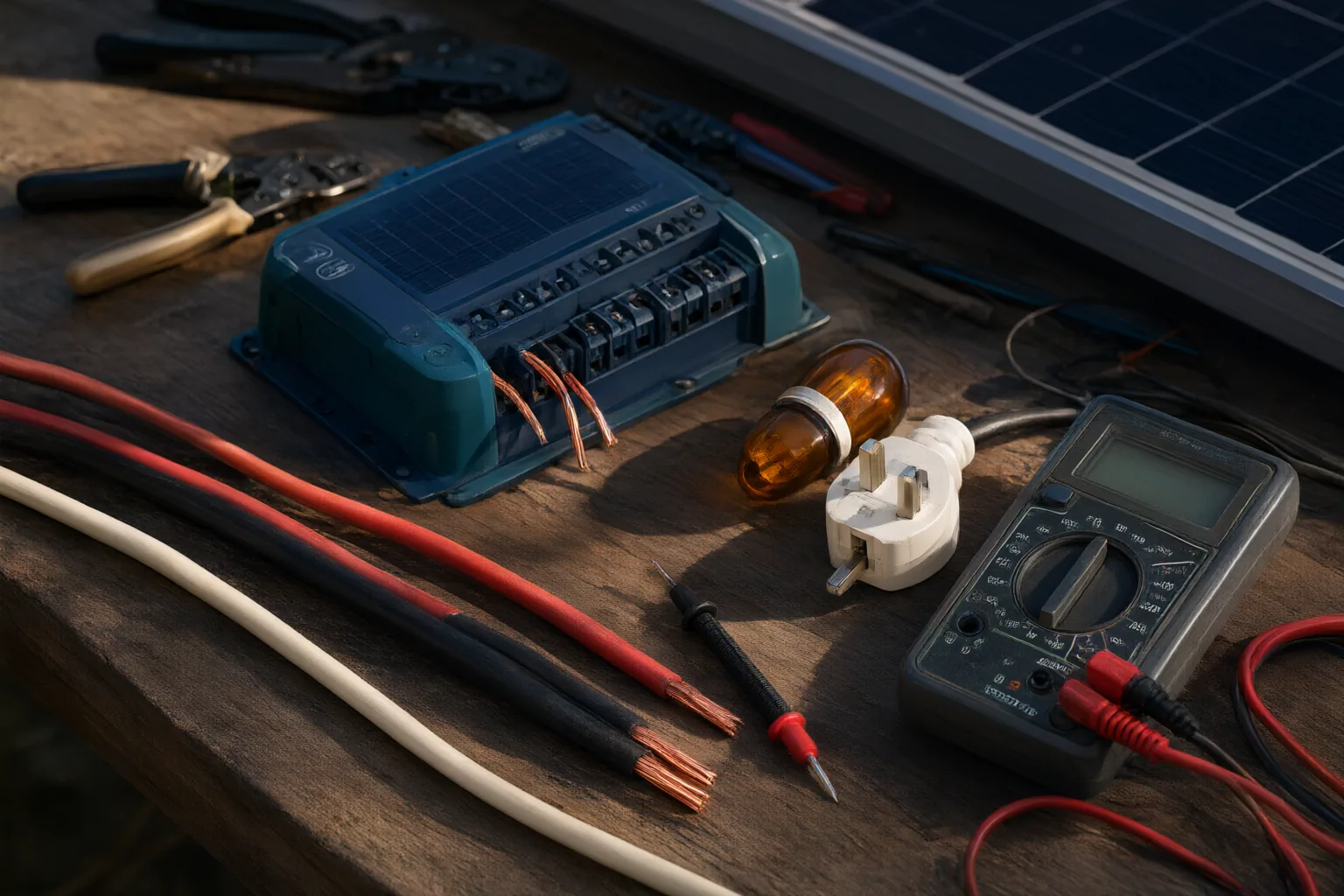
Start with the stated energy consumption and input requirements of each candidate model. Record the energy figure provided for the relevant operating period and avoid treating the words “DC” or “AC” as substitutes for that figure. Models serving the same purpose may have different demands regardless of their input type.
For an AC option, account for the inverter required to convert battery-supplied DC into AC. Include both conversion demand while the appliance operates and inverter standby consumption when no AC appliance is actively running. Idle demand can matter in a small solar system because it continues to draw from limited generation and storage. For a native-DC option, avoiding that conversion stage may reduce demand, but the result must still be assessed using the particular appliance and system.
A supplied abstract for a Nigeria-focused residential study reported 55.44% lower energy consumption and energy cost for its compared fully DC configuration. That is study-specific evidence, not a universal savings rate. The available excerpt does not contain enough detail about the appliance set, operating assumptions, or system design to apply the percentage to an individual home.
A useful comparison table can therefore list each appliance’s function, stated consumption, operating time, input voltage, and required conversion equipment. Add inverter standby demand to the AC system total rather than assigning it only to one appliance. This produces a more meaningful daily-energy comparison than selecting a device solely because it carries a DC label.
Check wiring, availability, and system trade-offs
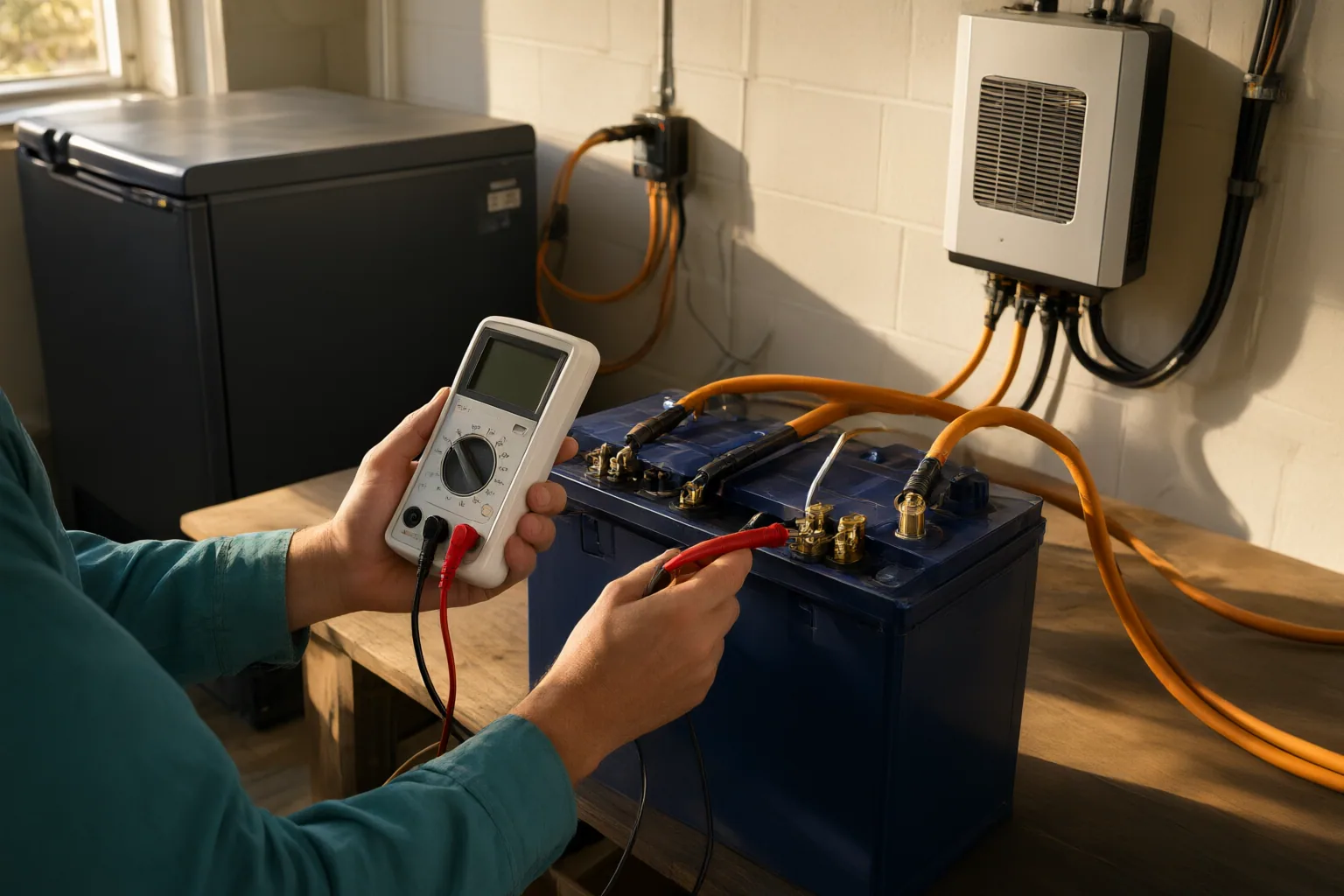
Energy consumption is only one part of the decision. Low-voltage DC circuits can require thicker conductors for a given power level. Cable length, voltage drop, wire sizing, fusing, and installation safety should therefore be checked when comparing a DC appliance with an AC alternative. A device that avoids inverter conversion may still require more demanding DC distribution arrangements, particularly over a longer cable run.
Availability and convenience also matter. Many familiar household categories, including refrigerators, air conditioners, and washing machines, commonly use AC input. DC selection may be narrower, so households should confirm specifications for the exact model rather than assume a product category is available at the required voltage. The supplied retailer collection, for example, lists refrigerators and freezers designed for DC, including 12/24V units and some DC/AC models. This demonstrates that input type and rated voltage can be checked at model level; it does not establish current Nigerian availability, price, or comparative performance.
A hybrid arrangement can use DC for selected routine loads and AC where appliance availability, power requirements, or convenience favour it. This may preserve flexibility, but supporting both forms of distribution adds wiring and protection complexity. The comparison should therefore consider not only conversion demand but also compatible appliances, cable routes, protection equipment, and the practicality of maintaining the complete installation.
Conclusion
Choose between DC and AC appliances by comparing total appliance-and-system demand, not by treating either label as a guarantee of efficiency. A DC model may avoid DC-to-AC conversion, while an AC model may offer greater availability or convenience; each choice can introduce different equipment, wiring, and protection requirements.
Record every proposed appliance’s rated input and stated energy consumption. Include inverter standby demand for AC loads and the cable, voltage-drop, fusing, and safety requirements for DC circuits. Then ask a qualified solar-system professional to verify the household load list and installation design before equipment is selected or installed.
Disclosures and limitations
- This article was prepared with AI assistance from the supplied research package. Material claims are attributed through the listed source IDs; the sources do not provide Nigeria-specific appliance measurements, tariffs, installation costs, or verified current market availability.
- No product recommendation or affiliate offer is included. Any future commercial links or recommendations should clearly disclose possible affiliate relationships and be assessed using current model specifications and qualified installation advice.
Related reading
- Renewable Energy in Nigeria
- How to Calculate Whether Your Existing Roof Space Can Fit a Planned Solar Array
- Solar Inverter Shutting Down or Showing a Fault Code? What Nigerian Consumers Should Check
Sources
- DC vs AC Power: The Complete Guide (2026) — Watts to Volts — Watts to Volts
- Understanding the Power Behind Your Home Appliances: Do They Use AC or DC? – ParadiseForFood — ParadiseForFood
- DC vs AC Appliances: Which Are Better for Off-Grid Living? – Off Grid for Life — Off Grid for Life
- Solar DC Refrigerators & Freezers for Off-Grid Living — The Cabin Depot
- Comparative Study of the Electrical Energy Consumption and Cost for a Residential Building on Fully AC Loads Vis-a-Vis One on Fully DC Loads — SpringerLink
- AC vs DC Power: Differences and Applications — Anker