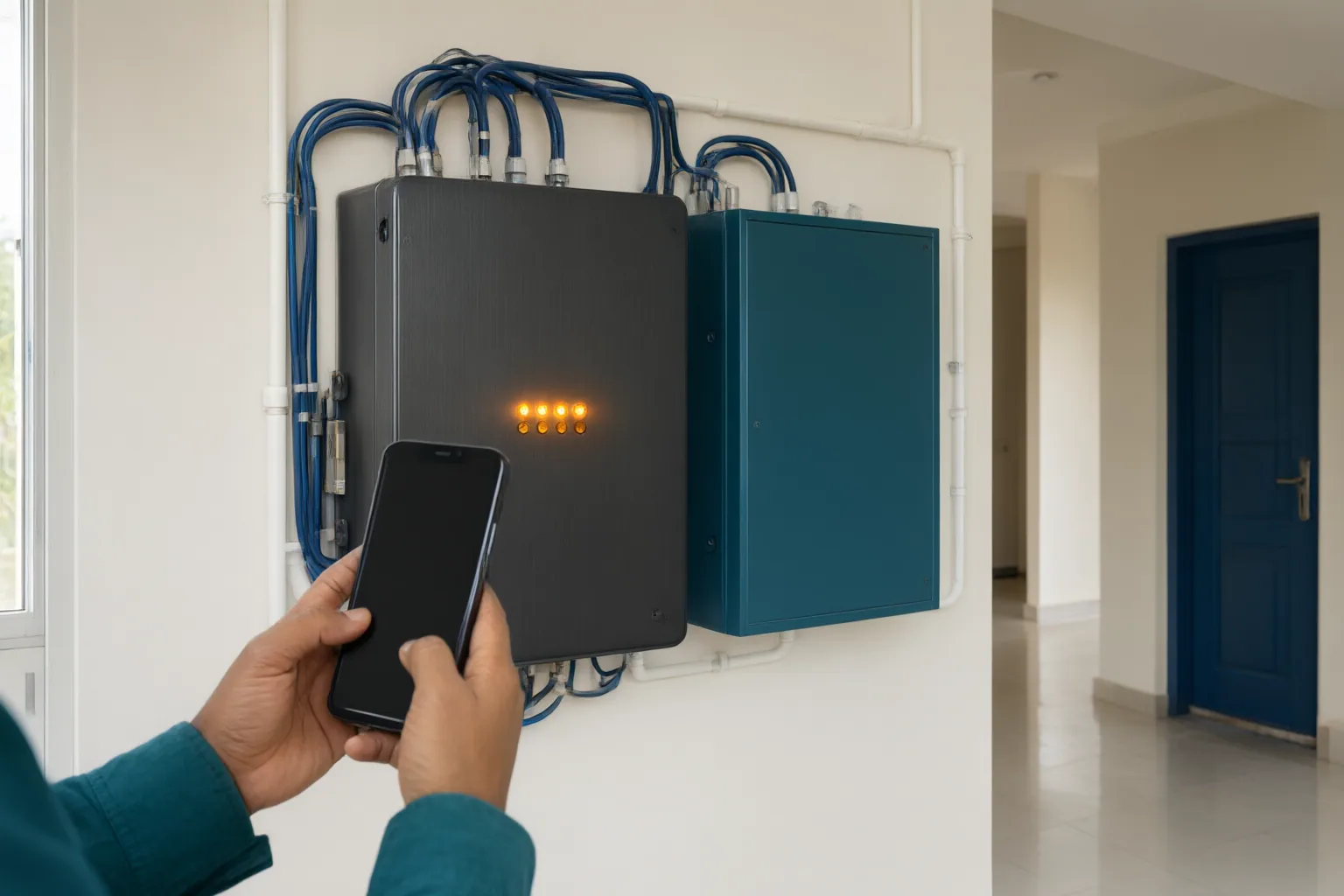
If you suspect unusually high or low voltage, record exactly what happened, when it happened and which devices or circuits were affected. Preserve photos, alarm codes and equipment ratings, but leave live testing and electrical-panel inspection to a qualified person. Observable symptoms are useful evidence, not proof of the cause.
Warning Signs to Record Without Assuming the Cause
Record visible or audible changes as soon as you notice them. Relevant observations include lights becoming unusually bright or dim, repeated flickering, appliances restarting, protective shutdowns, unusual noises, hot sockets, burning smells and discoloration around an outlet.
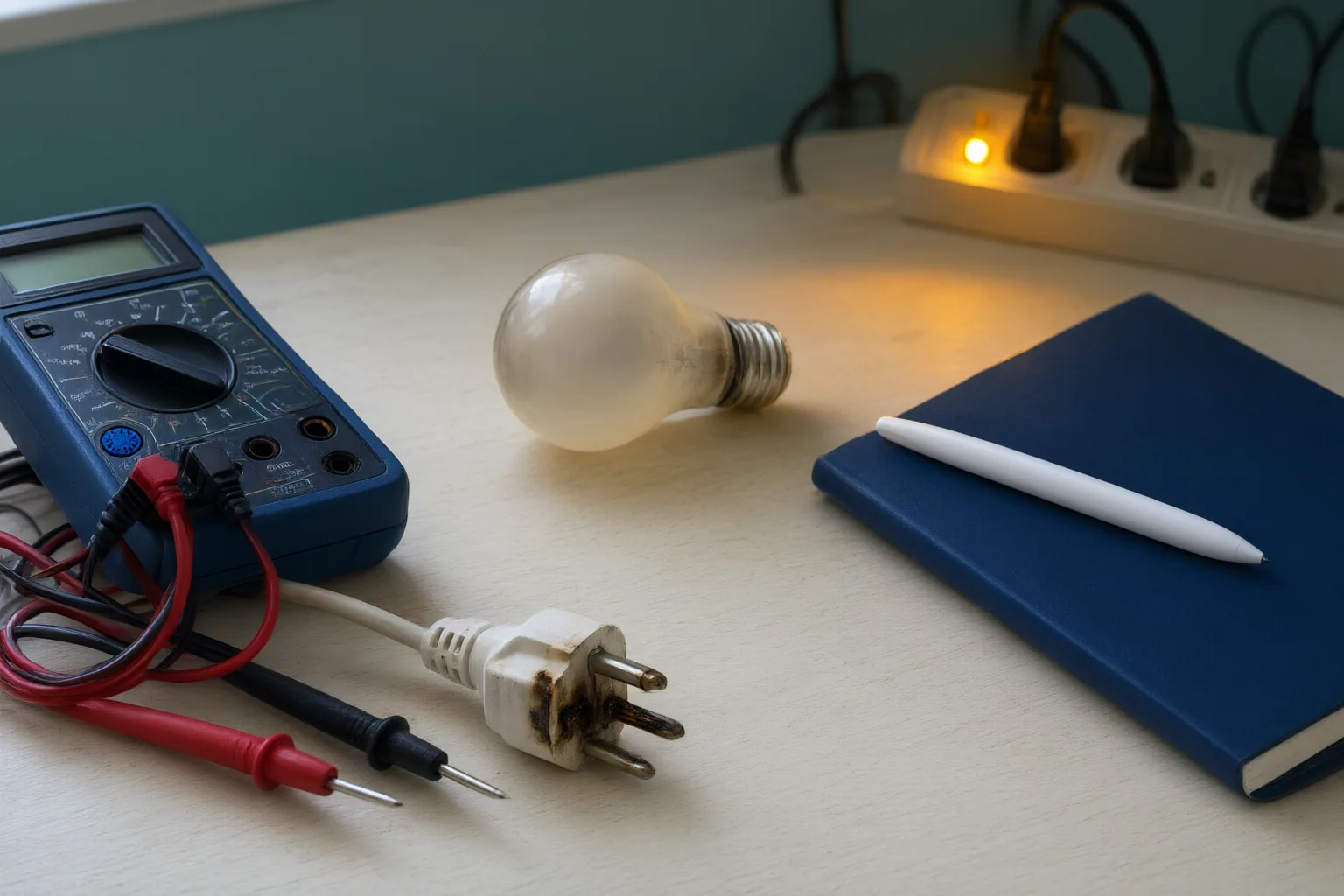
Describe what you observe precisely rather than labelling it immediately as high or low voltage. For example, note that a light became brighter when another load started, or that several devices restarted at the same time. Photographs can preserve visible clues such as discoloration or the state of indicator lights. Written notes can capture noises, smells and changes that a photograph cannot.
These warning signs warrant investigation, but none establishes abnormal supply voltage by itself. A faulty appliance, an outlet problem or local wiring may produce similar symptoms. Treat alarms and UPS transfers in the same way: record the message, code and time without assuming they provide a complete diagnosis. This distinction helps a qualified electrician compare your observations with measurements instead of starting from an unsupported conclusion.
Build a Time-Stamped Voltage Incident Log
Create an incident log that can be updated whenever the problem occurs. For each event, record:
- The date and exact or approximate time.
- The equipment affected and what each device did.
- Any displayed alarm message or code.
- Whether a large or noticeable load started nearby at the same time.
- Whether the event affected one device, one outlet, one circuit or devices on different circuits.
- Any corresponding photograph or written observation.
The extent of the problem is important. An event confined to one device may point investigators toward that equipment. A pattern limited to one outlet or circuit may direct attention to local wiring. Simultaneous symptoms across different circuits may support investigation of a shared supply issue. These patterns guide investigation but do not prove the cause.
Log events as they happen because intermittent disturbances may disappear before an electrician arrives. A later spot reading can be normal even when a short or recurring event occurred earlier. A time-linked account is therefore more useful than saying the problem happens randomly. Consistent timestamps also allow a qualified person to compare observed symptoms with any voltage events captured by suitable recording equipment.
Preserve Evidence for Safe Professional Investigation
Keep photographs and notes together with identifying information for the affected equipment. Photograph or transcribe the nameplate, including the model information and stated electrical input range where it is visible. Preserve the manufacturer’s specified input range as well. A qualified person can then compare those ratings with professionally measured supply voltage.
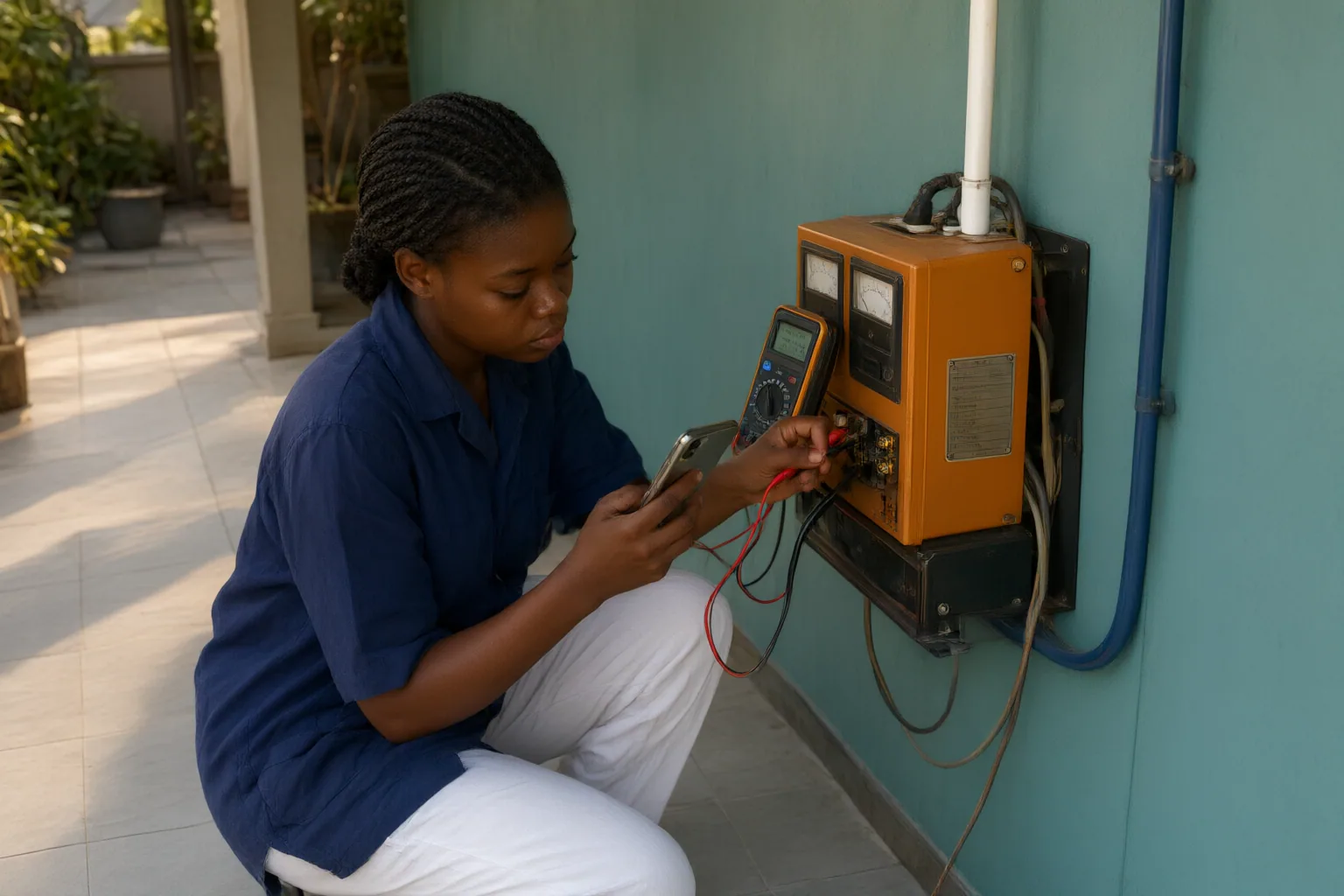
Do not probe live outlets or open sockets or electrical panels to obtain evidence. Live mains testing requires a qualified person using suitable equipment. Consumer observations are a useful starting point, but they do not replace safe measurement.
A single normal reading taken after the incident does not rule out an intermittent disturbance. Short or recurring events may require event-capable recording equipment, with its timestamps compared against the times when lights changed, equipment restarted or protective systems operated. Preserve the time shown on any alarm rather than treating the alarm itself as a diagnosis.
Also record whether an ordinary fuse or circuit breaker operated, but do not treat an untripped breaker as proof that the voltage was safe. Ordinary fuses and breakers respond primarily to excess current. The absence of a trip does not settle whether an unusual voltage event occurred. The strongest record combines contemporaneous observations, equipment details and safely obtained measurements.
Conclusion
Document suspected voltage problems while they are occurring: note the time, affected equipment, alarm codes, nearby load changes and how widely the symptoms appear. Preserve relevant photos, notes, nameplate information and manufacturer input ranges.
Do not open sockets or panels or attempt live mains testing. Ask a qualified electrician to investigate recurring events or hazardous signs such as heat, a burning smell or discoloration. If professional measurements indicate a possible utility-supply issue, match the recorded events to your incident times when reporting the matter to the local electricity distribution company. This guidance does not establish Nigeria-specific voltage limits or complaint procedures. Start your time-stamped incident log now so the next event can be documented clearly and safely.
Disclosures and limitations
- This article was prepared with AI assistance from the supplied research package and its cited sources. The sources support general documentation and safety guidance, not Nigeria-specific voltage limits, service standards or distribution-company complaint procedures.
Related reading
- Electricity Consumers in Nigeria
- Broken or Missing Meter Seal in Nigeria: What Electricity Consumers Should Do
- How Nigerian Households Can Reduce Generator Carbon Monoxide Exposure During Outages
Sources
- Signs of High Voltage in Home Every Homeowner Should Know — Wolverine Low Voltage
- Troubleshooting US Electrical Outlet Voltage: Drops, Spikes & Fixes — electricalflux.com
- How do I recognize problems caused by low or high voltage? — otomasyonavm.com
- What is High, Medium, and Low Voltage? NEC Definitions – ExpertCE — ExpertCE
- Low Voltage and High Voltage: Definitions, Thresholds, and Circuit Impacts — electricalflux.com