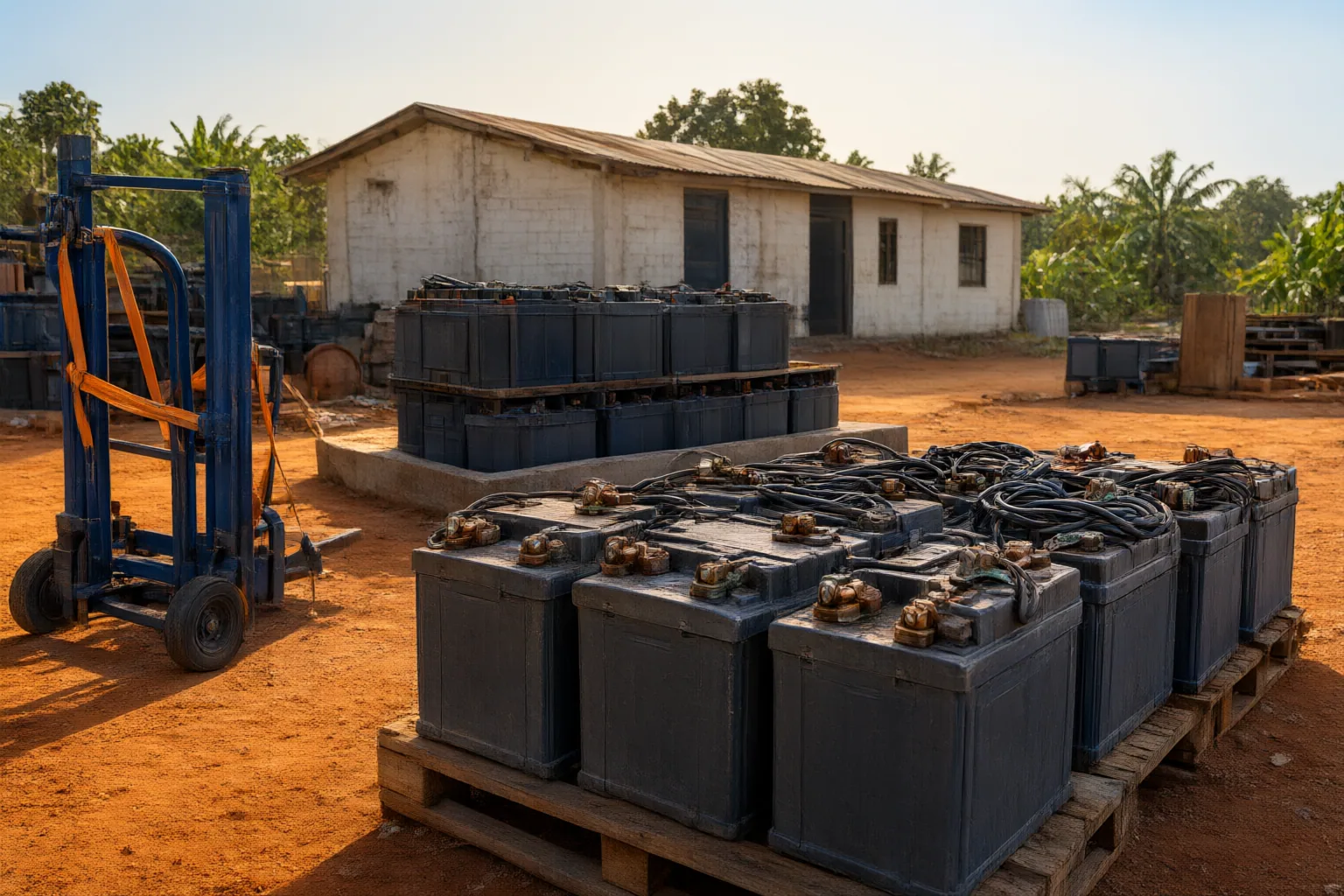
Before disposing of a used solar battery, identify its chemistry and ask the seller or installer for a documented take-back, collection or recycling route. Keep the battery intact and out of household waste while obtaining handling and transport instructions appropriate to its condition.
Start by identifying the battery and its condition
First, check the battery label or product documentation to determine its chemistry. Gel and AGM batteries are forms of sealed lead-acid battery, while lithium-ion batteries require specialised recycling facilities. This distinction matters because the appropriate handling and recycling process depends on the chemistry.
Tell the seller, installer or collector about any visible damage or leakage and ask how the battery’s condition changes the collection procedure. Do not open, break or dismantle the case to investigate it. Consumers should also avoid placing a used solar battery in household waste.
If the label is unclear, ask the original seller or installer to identify the battery before it is moved. A useful request is: “Please confirm the battery chemistry and provide the handling instructions for this type and condition.” Identification should come before decisions about collection, recycling or disposal rather than being left to an informal handler after transfer.
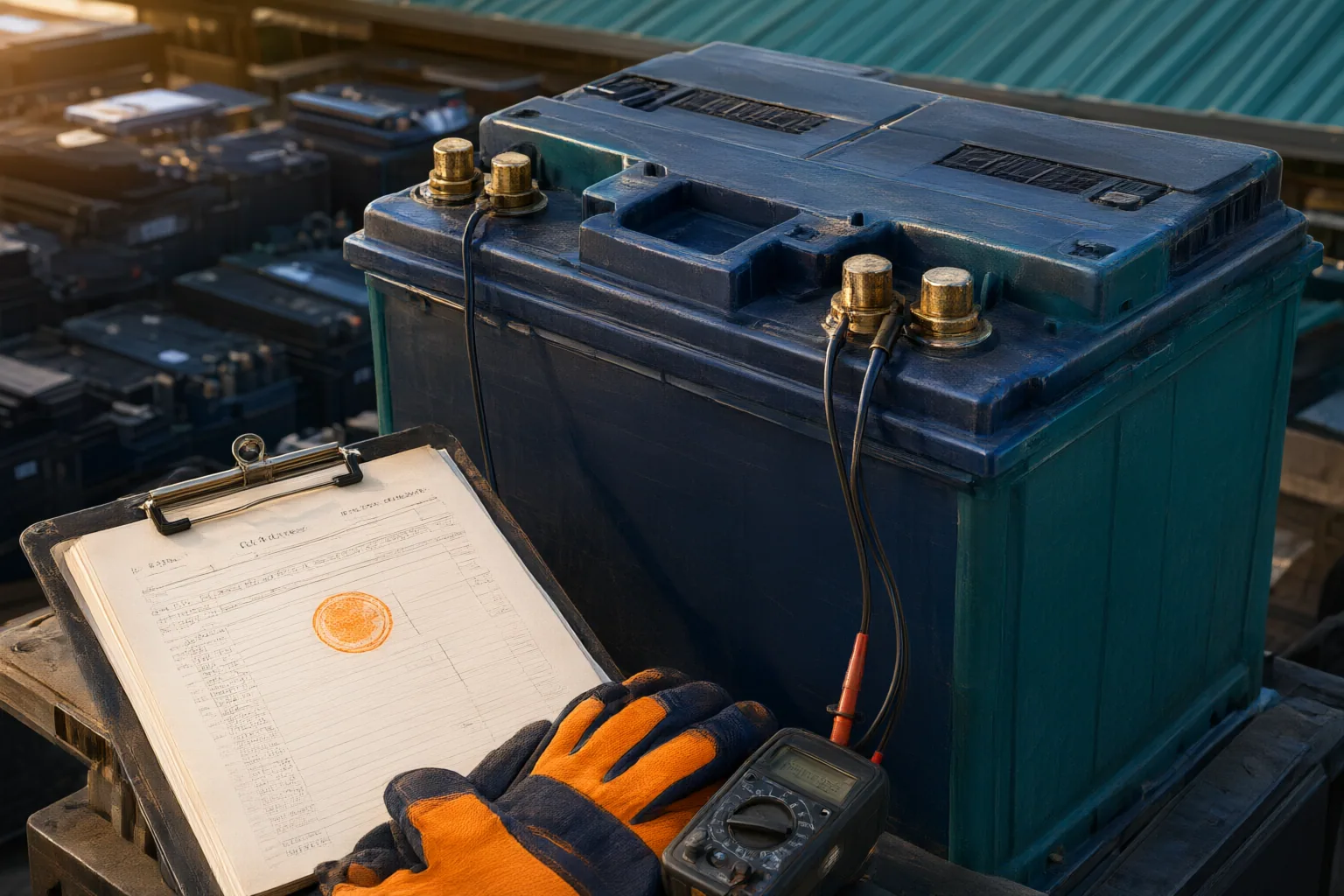
Questions to ask the seller, installer or collector
Ask direct questions and request answers that can be documented:
- Do you provide a battery take-back service when a replacement is installed?
- If not, which collection point or recycler should receive this battery?
- Is that channel appropriate for this battery chemistry?
- Who is the final receiving recycler, rather than only the person collecting it?
- What packaging, labelling and transport requirements apply?
- Who is responsible for arranging transport?
- What current documentary proof shows that the battery will enter a certified or otherwise appropriate recycling channel?
- Can you provide a receipt or other record showing that the battery was accepted?
The Alliance for Responsible Battery Recycling says Nigeria’s Battery Control Regulations cover lead-acid, lithium-ion, nickel-cadmium and other rechargeable and non-rechargeable batteries. Its summary says end-of-life batteries must be collected and processed through certified recycling channels, with standards applying to collection, packaging, labelling and transportation. It also describes lifecycle responsibilities for producers and importers and obligations for covered stakeholders to educate consumers about disposal and collection points.
However, the supplied evidence does not name specific certified Nigerian collection points or independently confirm any operator’s licence. A company’s claim should therefore not be treated as proof of certification. Ask for current documents and verify precise legal duties against the official National Environmental (Battery Control) Regulations, 2024, because the available regulatory description comes from an industry alliance rather than the regulation’s full text.
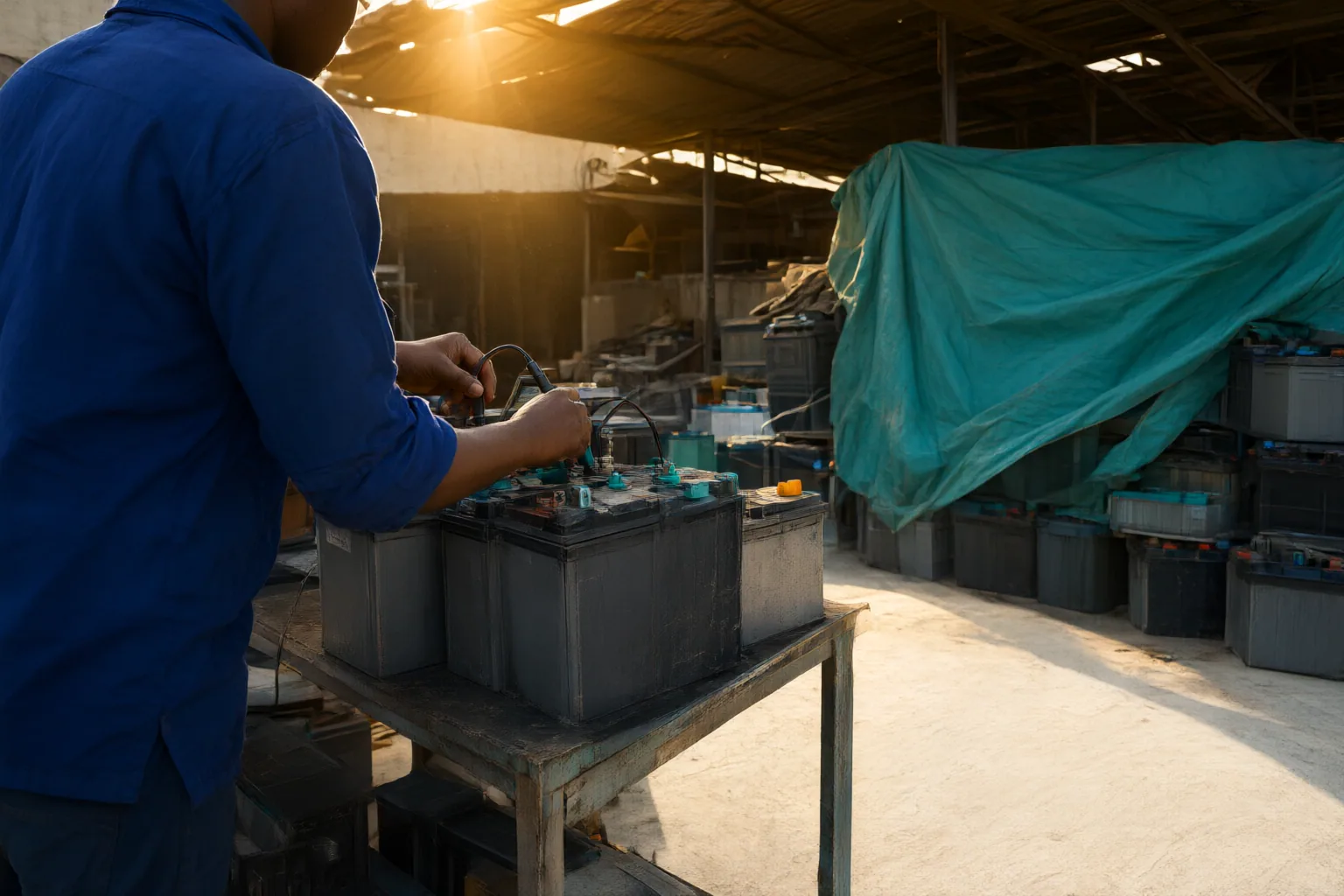
How to store and transfer a used battery more safely
While arranging collection, keep the battery out of household waste and do not open or break its case. Ask the seller, installer or intended collector how to prevent damage, leakage, fire or exposure during temporary storage and transport. The instructions should reflect both the battery chemistry and its physical condition.
Before moving it, confirm who will package and label it, what transport arrangement is appropriate, and what to do if the unit is damaged or leaking. Do not assume that the same process applies to sealed lead-acid and lithium-ion batteries. Abuja Solar distinguishes gel and AGM units as sealed lead-acid batteries and notes that lithium-ion batteries require specialised recycling facilities.
Formal and specialised recycling options may be limited, which can leave consumers exposed to informal handling routes. An overview of Nigerian research published by Energypedia reports that recovered lead and plastic have resale markets, but unregulated battery handling can expose workers and nearby communities to toxic substances. The resale value of recovered material is not evidence that a collector uses a safe or compliant process. Consumers should ask where the battery will ultimately go and request documentation before handing it over.
Conclusion
A practical decision path begins with identifying whether the used battery is lead-acid, lithium-ion or another chemistry. Next, ask the seller or installer for a documented take-back or recycling route, the identity of the receiving recycler, and chemistry-specific packaging, labelling and transport instructions. Keep the unit intact and out of household waste while those arrangements are made.
If someone proposes reusing the battery in a second-life application, do not accept the proposal without evidence of safety and performance testing. Limited formal systems and the value of recovered materials can create incentives for informal handling, so a verbal assurance alone is insufficient. Before moving the battery, contact the seller or installer, request current documentary proof of the destination, and confirm exactly how the battery should be collected and transported.
Disclosures and limitations
- This article was prepared with AI assistance using only the supplied research package, which cites Abuja Solar, the Alliance for Responsible Battery Recycling and an Energypedia overview of Nigerian research. No product, collector or recycler was independently tested or endorsed.
- This article contains no product recommendation or disclosed affiliate relationship. Regulatory details should be checked against the official National Environmental (Battery Control) Regulations, 2024, because the supplied summary is not the full legal text.
Related reading
- DC vs AC Appliances for a Solar-Powered Home in Nigeria: How to Compare Energy Use
- How to Calculate Whether Your Existing Roof Space Can Fit a Planned Solar Array
Sources
- Solar Battery Recycling and Disposal in Nigeria: Complete Guide – Abuja Solar — Abuja Solar – Solar Panels and Inverters
- Buy Solar Batteries | Buy Used Solar Batteries – The Solar Recycling Company — The Solar Recycling Company
- ARBR – Alliance for Responsible Battery Recycling — batteryalliance.com.ng
- Used Solar Batteries in US – Is it safe, where to contact? — My Green Star Energy – Renewable Energy
- Battery Recycling and Second-Life Opportunities in Nigeria’s Off-Grid Solar Sector – energypedia — energypedia.info
- America's No 1 Solar Marketplace | Buy, Sell Solar Equipment — Sunhub