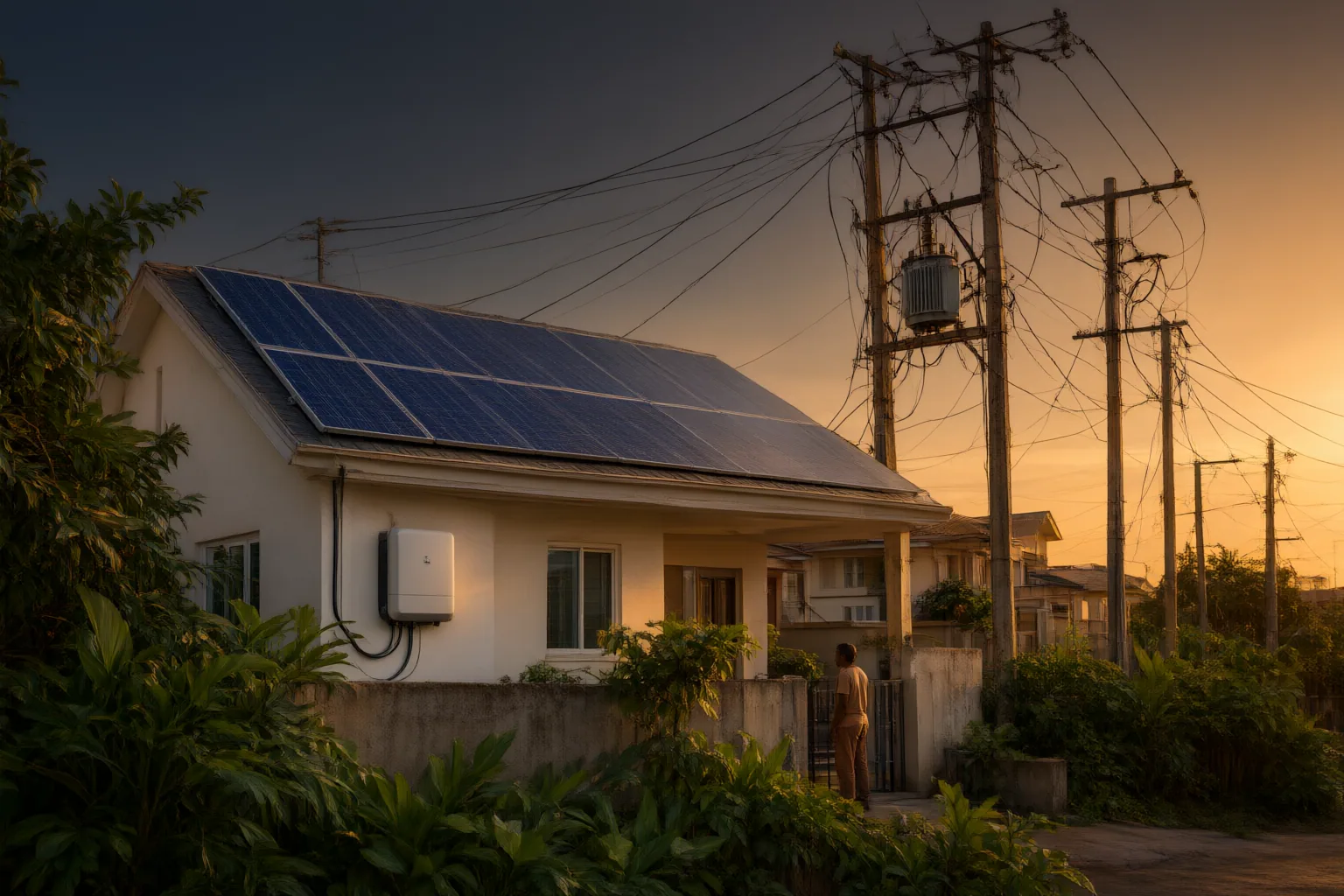
Eko Power says it operates under cost-reflective tariffs approved by the Lagos State Electricity Regulatory Commission. The reported announcement explains the company’s regulatory framework; it does not state a new tariff rate or establish an immediate increase in every customer’s bill. Customers need the official tariff applicable to their band and feeder before estimating costs or comparing grid electricity with solar.
What Eko Power’s cost-reflective tariff announcement means
Eko Power says LASERC licenses it to distribute electricity in southern Lagos State and has approved its cost-reflective tariffs and service-level commitments. The company is therefore subject to the commission’s tariff methodology and service standards.
For customers, the crucial distinction is between an approved tariff framework and the announcement of a specific new price. The cited consumer-focused report explicitly says Eko Power’s clarification did not introduce a new tariff rate or an immediate change to customer bills. The statement should therefore not be treated, by itself, as notice of an across-the-board price increase.
The supplied reports do not include the applicable tariff schedule or figures. Consequently, they cannot show what a particular household should pay or whether its bill will rise. That calculation requires the official rate applying to the customer’s classification, together with the household’s electricity consumption.
Why LASERC now oversees Eko Power tariffs
The reported transition reflects changes in Nigeria’s electricity governance. The sources connect it to the Electricity Act 2023, as amended, the 2023 constitutional amendment and the Lagos State Electricity Law 2024, which established LASERC.
According to the reports, the Nigerian Electricity Regulatory Commission began transferring oversight of Lagos State’s retail electricity distribution market to LASERC in December 2024. LASERC assumed responsibility for retail distribution and end-user tariffs in June 2025. Eko Power says it now operates under LASERC’s licensing, tariff and service framework in southern Lagos.
This change identifies the regulator responsible for approving and overseeing the relevant tariff framework. It does not, without an accompanying tariff schedule, reveal the rate charged to an individual customer. Regulatory authority and the amount on a bill are related but separate questions: customers still need to identify the official tariff applicable to their customer band and feeder.
How customers can assess their electricity costs and solar options
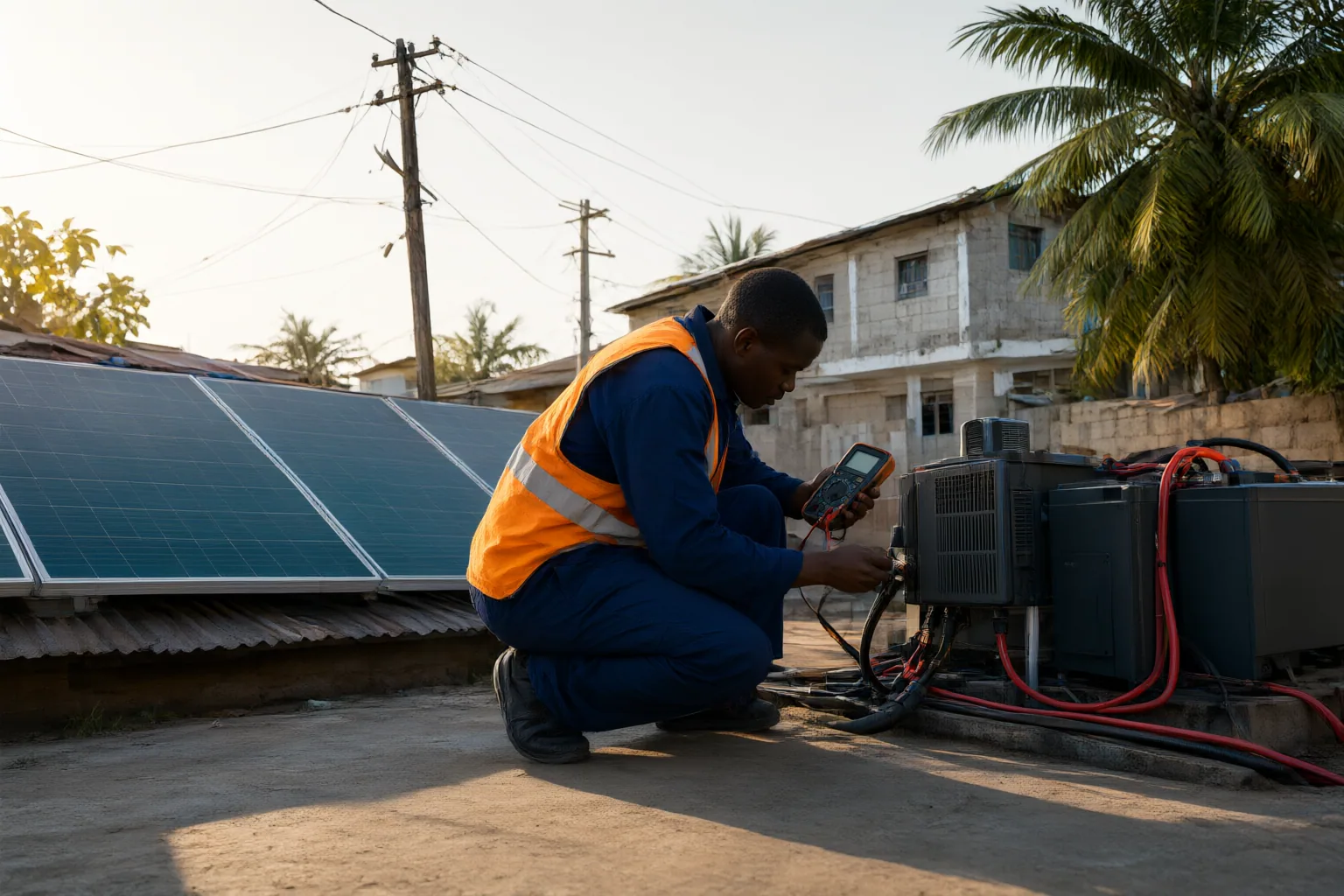
A useful assessment begins with verified customer information, not the general announcement. First, check the tariff information published by Eko Power and LASERC and identify the rate applicable to the household’s customer band and feeder. Then review the relevant service-level commitment and published performance information. Eko Power says it publishes tariff and service-level performance information in line with LASERC’s transparency requirements.
Next, examine the household’s own consumption records. An electricity-cost estimate needs both the applicable rate and the amount of electricity consumed. The supplied reporting provides neither a usable tariff figure nor a household consumption profile, so it cannot determine the resulting bill.
A grid-versus-solar comparison needs additional evidence. Households should obtain verified solar quotations and system specifications and compare them with their consumption needs and applicable grid costs. The supplied sources contain no sufficiently verified solar prices, configurations or household-specific calculations. They therefore provide no basis for claiming a particular saving, payback period or preferred option.
Service information also matters to the decision. Customers can compare Eko Power’s published commitments with reported performance, while keeping the financial calculation tied to verified rates, consumption records and solar quotations. If any of those inputs is missing, the result should be treated as incomplete rather than as a reliable savings estimate.
Conclusion
Eko Power’s statement concerns a LASERC-approved cost-reflective tariff and service framework. Based on the supplied reports, it should not be read as an announcement of a specified new rate or an immediate increase in all customer bills.
The reports largely relay claims attributed to Eko Power and do not include a primary LASERC tariff order, tariff schedule, license or service-level publication. Readers should therefore verify the operative documents and figures before drawing financial conclusions.
Check the tariff, customer band, feeder classification and service-level information published by Eko Power and LASERC. Then use household consumption records and verified solar quotations and specifications before deciding whether grid electricity, solar or a combination best fits the household’s cost calculation.
Disclosures and limitations
- This article was prepared with AI assistance from the supplied research package. Material claims are attributed to its source IDs; the package did not include primary LASERC tariff documents or figures.
- No products are recommended and no affiliate relationship is represented. Any future product or installer comparison should disclose commercial relationships and rely on verified prices and specifications.
Related reading
- Renewable Energy in Nigeria
- Used Solar Batteries in Nigeria: Questions to Ask About Collection, Recycling and Disposal
- DC vs AC Appliances for a Solar-Powered Home in Nigeria: How to Compare Energy Use
Sources
- Eko Power adopts cost-reflective tariffs — Punch Newspapers
- Eko Power Says It Is Complying With Regulatory Tariff Rules – Oriental News Nigeria — Oriental News Nigeria
- Electricity Cost Nigeria 2026, NERC Band Tariff Guide — voltflow.net
- Eko Power: What Lagos Electricity Consumers Should Know — CrispNG
- Eko Power affirms status as Lagos State-licensed electricity distributor — Daily Post Nigeria