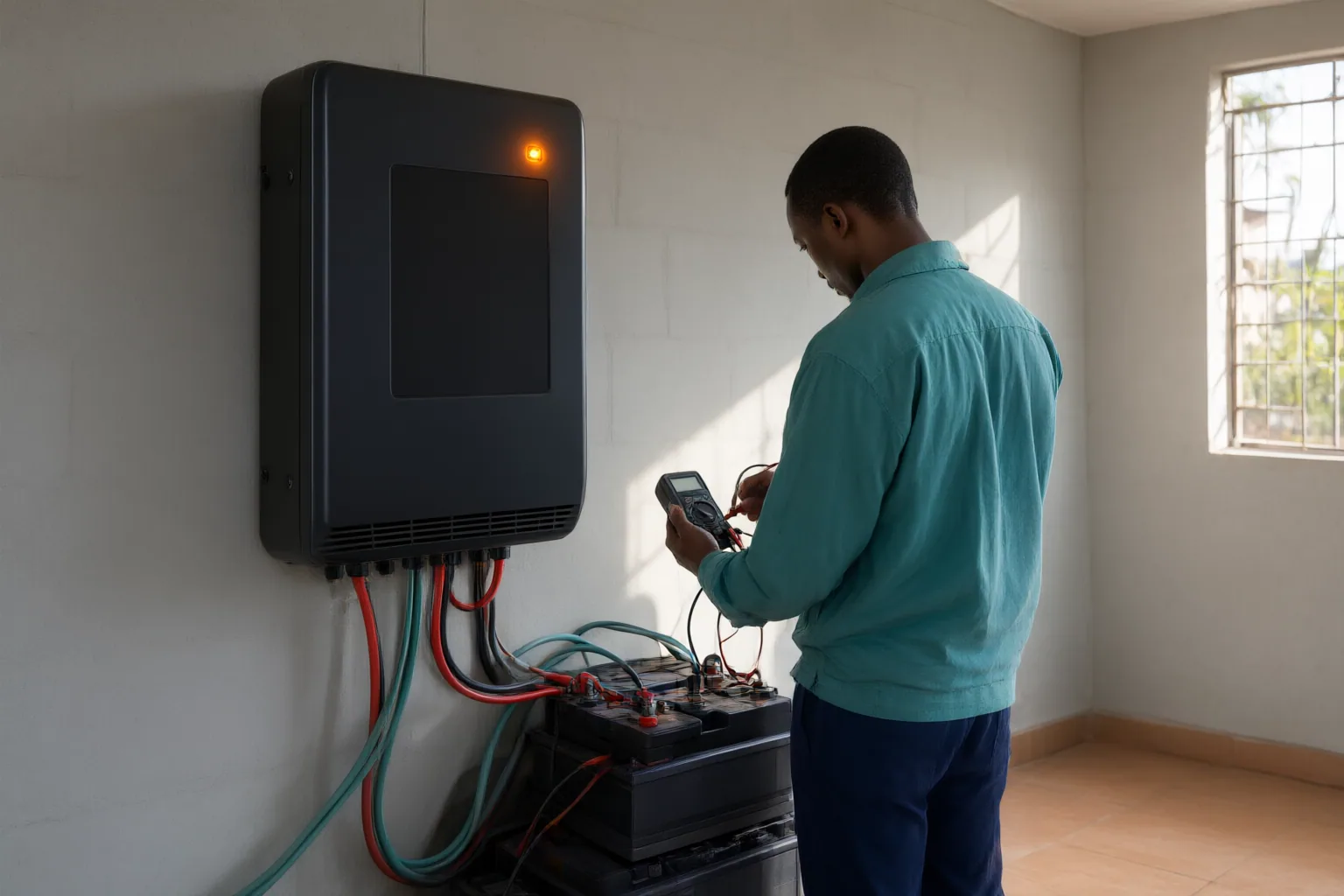
If your solar inverter keeps shutting down, beeping or displaying a fault code, first record the code, make and exact model. Note which appliances were operating, check only readily visible conditions, and use the model-specific manual before attempting any reset. Stop immediately if there are signs of heat, fire, battery damage or water ingress.
Start With the Fault Code and Operating Conditions
A fault code is a starting point, not a universal diagnosis. Code numbers and meanings can differ among manufacturers and even between models from the same brand. Photograph or write down the complete display message, the inverter make and exact model, and the time and circumstances in which the problem occurred. Then consult the manual for that specific model or give those details to the installer or a qualified technician.
Also note whether the shutdown happened as several appliances started, when solar production was low, during a charging problem or after the equipment had been operating in a hot space. Record which appliances were running and whether output returned after any automatic recovery. These observations can help distinguish possible load, battery, temperature, input, settings, wiring or hardware problems without treating the displayed code as self-explanatory.
Do not apply a voltage threshold, code definition or restart procedure taken from another inverter. Model-specific instructions should take precedence over general troubleshooting guidance.
Check the Load, Battery and Cooling Conditions
If the inverter shuts down while several appliances are operating, overload is one condition to investigate. Note the connected equipment and, where it is safe to do so, reduce the load. If the inverter operates normally with fewer appliances, demand may have exceeded its capacity. This is an indicator rather than permission to alter wiring or protection devices.
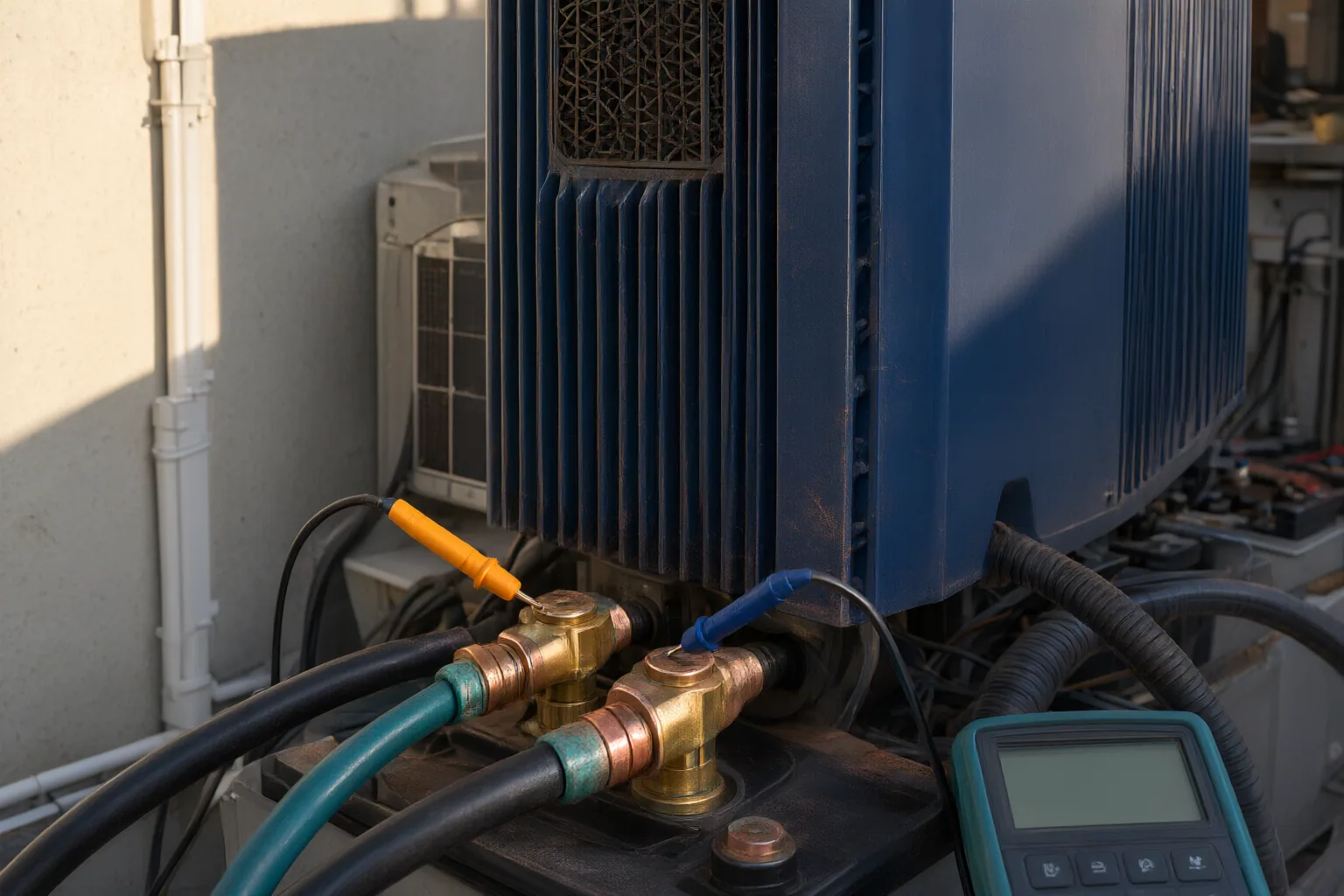
Low battery voltage can also trigger a protective shutdown. Review the inverter’s displayed battery status and whether the battery appears to be charging normally. Repeated low-voltage events may indicate that the battery bank is not being adequately recharged, is not appropriately sized for the load, or includes a weak or failing battery. These possibilities require proper assessment; do not assume that replacing or bypassing a component is the correct response.
Next, inspect the installation area without opening the inverter. Restricted ventilation, high surrounding temperature and dust around cooling vents can contribute to over-temperature shutdowns. Look for obvious blockage and keep the ventilation area clear in accordance with the model’s instructions. Do not open the casing to clean internal components.
Treat these checks as a way to document patterns. If reducing the load or addressing an obvious external ventilation obstruction does not resolve the shutdown, record what changed and obtain qualified assistance.
Check Solar and Grid Inputs Without Opening Electrical Connections
A hybrid inverter can manage energy from solar panels, battery storage and the utility grid. A shutdown or warning may therefore reflect a problem elsewhere in the system rather than a failure of the inverter alone. The inverter’s role includes converting direct current from photovoltaic panels into alternating current for ordinary AC-powered equipment.
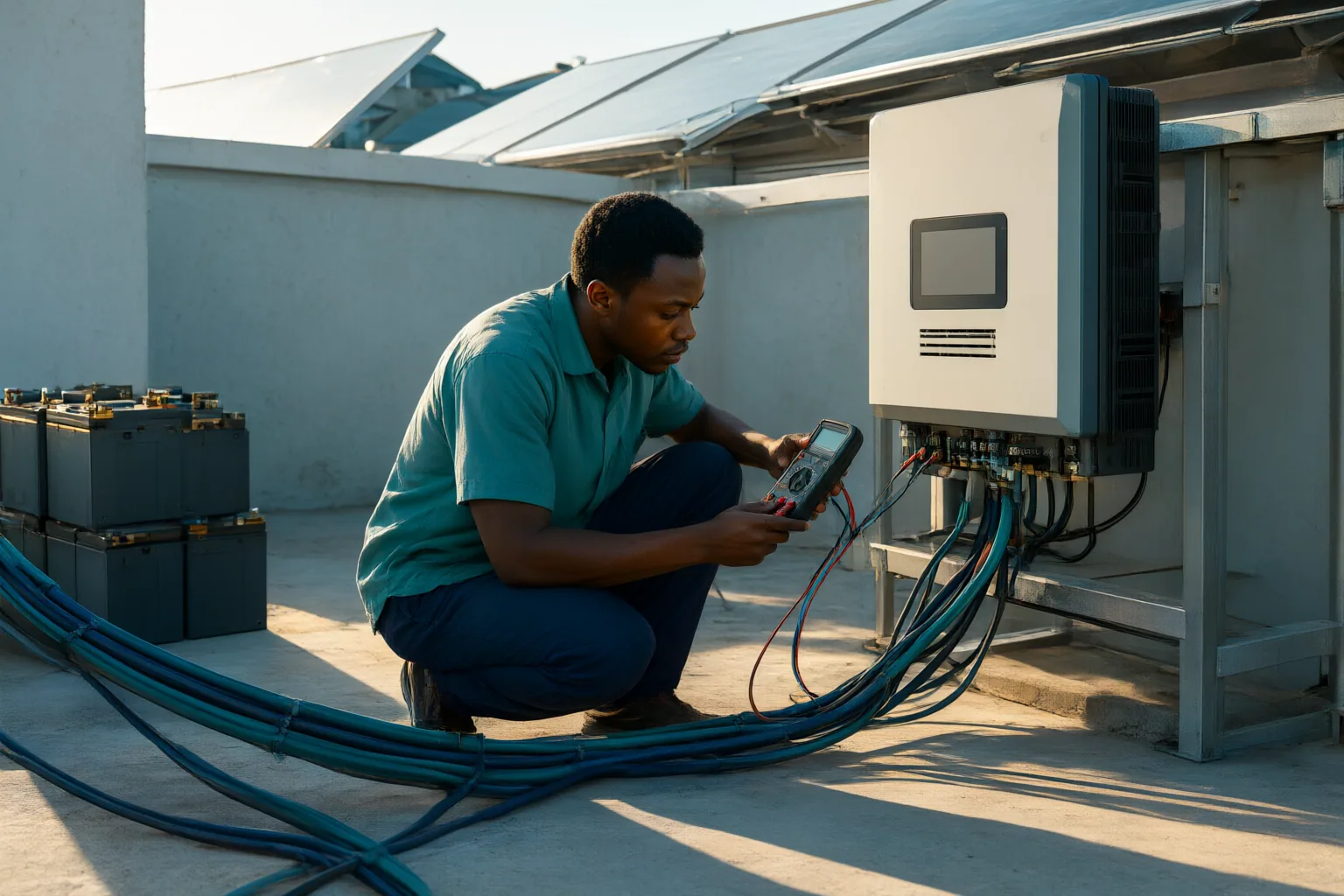
For a possible solar-input problem, review the PV input shown on the inverter display and look from a safe position for visible shading over the panels. You may also check whether an accessible PV fuse or circuit breaker is visibly tripped, but follow the equipment documentation and do not repeatedly reset a protective device. A tripped device can signal a condition that needs investigation.
Panel connections, wiring faults and incorrect settings are possible parts of a diagnosis, but they are not suitable for trial-and-error work. Leave electrical measurements and all work on DC connections to a suitably qualified person. The same boundary applies when investigating grid input or internal inverter hardware. Provide the technician with the recorded code, model, displayed input information and the circumstances of the shutdown so the complete system can be assessed.
Conclusion
Stop user-level troubleshooting if you notice a burning smell, smoke, sparks, burn marks, water ingress, severe external heat, or a swollen or leaking battery. A persistent short-circuit or hardware fault also requires professional assistance. Do not open the inverter, handle DC connections or continue resetting the system in an attempt to keep it running.
Even when no immediate danger sign is present, a fault that repeatedly returns should be assessed using the exact model documentation. General web guidance cannot establish a universal meaning for a code or prescribe one restart procedure across different brands.
Your next action should be concrete: record or photograph the full fault code, write down the inverter make and exact model, list the appliances operating when the fault occurred, and consult the model-specific manual. If the fault persists—or any danger sign appears—contact the installer or a qualified technician and share those observations.
Disclosures and limitations
- This article was prepared with AI assistance from the supplied secondary and commercial research sources. Model-specific manufacturer instructions should take precedence; no product recommendation or affiliate endorsement is included.
Related reading
- Renewable Energy in Nigeria
- How to Identify Double-Counted Renewable Energy Projects Across Nigerian Datasets
- Pay-As-You-Go Solar Plans in Nigeria: Contract Terms to Check Before You Sign
Sources
- Solar Inverter Problems and Solutions: The Complete Troubleshooting Guide for Nigerian Homes (2026) — Ubest Solar
- All-in-One Solar Inverters — The Solar Store
- Deye Inverter Problems in Nigeria: Error Codes, Causes and Fixes (2026) — Dr. Solar — getdrsolar.com
- Solar inverter – Wikipedia — en.wikipedia.org
- Solar Inverter Fault Codes in Nigeria: What They Mean and How to Fix Them — solaroptimize.io
- A Guide to Solar Inverters: How They Work & How to Choose Them — Solar Magazine
- Solar Inverter Beeping? Complete Error Codes Troubleshooting Guide – Power.ng — power.ng
- Best solar inverters 2026: Types, reviews and prices — solarreviews.com
- Solar Panel Inverters — The Solar Store