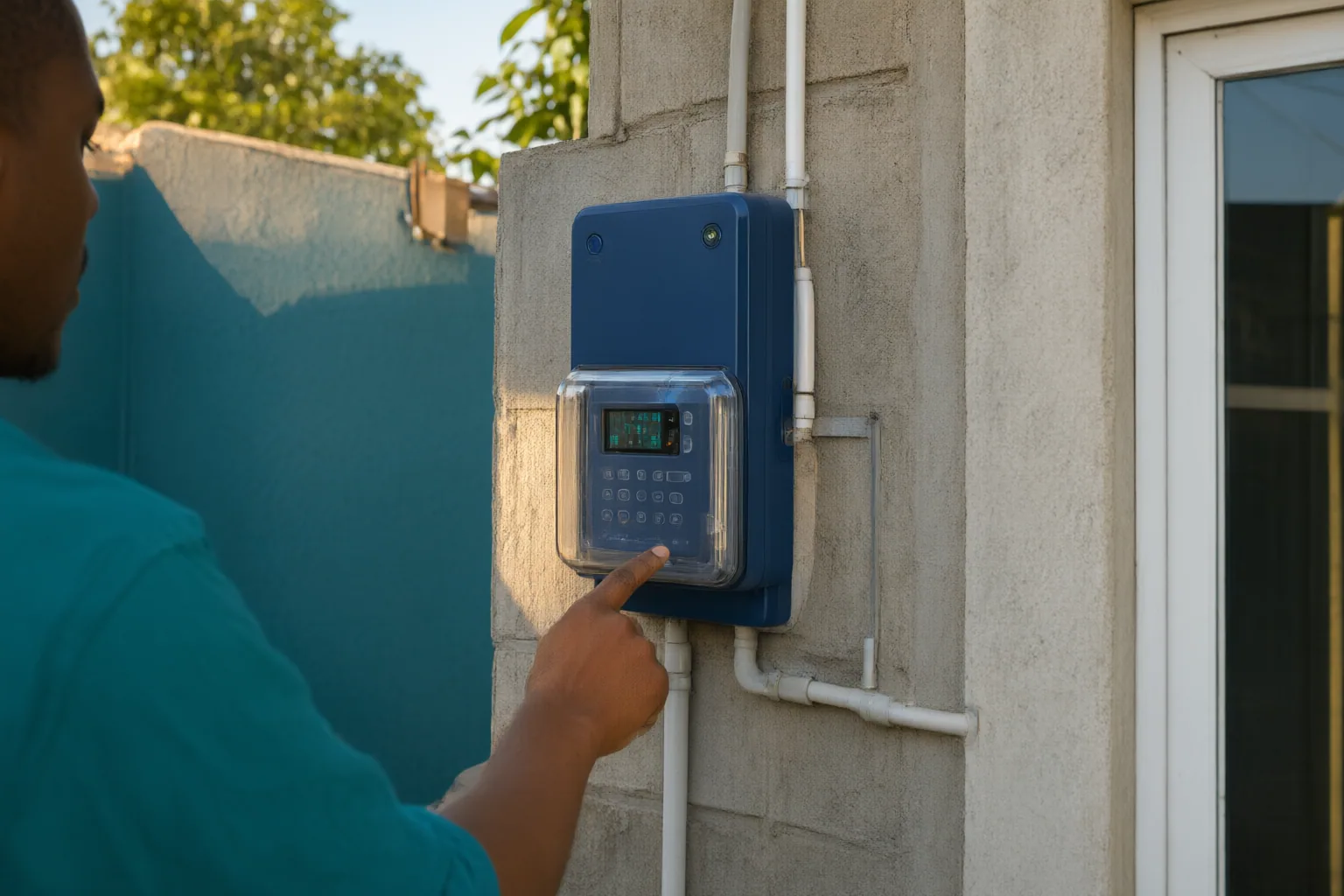
Before the installer leaves, identify the exact meter configuration, record the identifying information shown or provided, and request a demonstration of its display and any separate keypad. These are practical precautions, not an official Nigerian checklist: the available commercial sources show that prepaid-meter designs and stated capabilities vary by model.
Start by identifying the installed meter and its configuration
Begin by establishing exactly what has been installed. Record the identifying information visible on the meter or supplied by the installer, and ask the installer to name the model and configuration. This matters because prepaid meters are not all designed alike.
A Calinmeter manufacturer catalogue lists several configurations, including compact split-keypad products, an anti-tamper single-phase model, and meters associated with STS- or DLMS-related specifications. Femade Group, a commercial energy-services company, says it supplies post-paid and prepaid meters and develops customized metering systems for electricity distribution companies across Nigeria.
Together, these sources support a limited but useful conclusion: customers should not assume that instructions written for one prepaid meter automatically apply to another. Treat recording the installed configuration as a practical precaution rather than a regulatory requirement established by these sources. If the model or configuration is unclear, ask the installer to identify it before the visit ends. Do not rely on an unverified code, sequence or procedure merely because it worked on a different device.
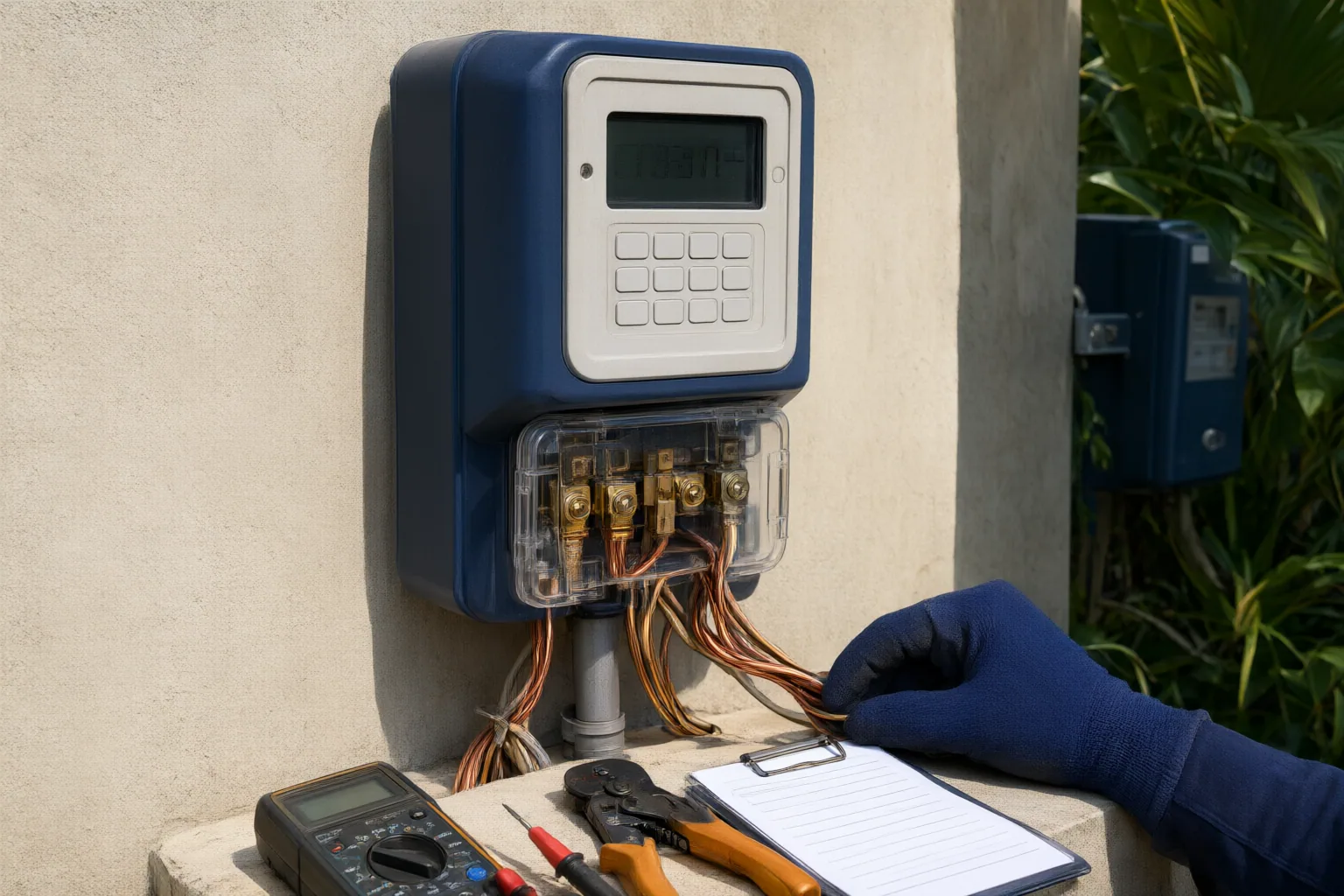
Ask the installer to demonstrate the display and keypad
Locate the meter’s visible interface and ask for a demonstration using the device that was actually installed. If the arrangement includes a separate keypad, ask the installer to identify it and explain which parts of the interface are relevant to that model. If no separate keypad is present, ask where information is displayed and how the installed configuration differs.
The manufacturer catalogue shows why a model-specific demonstration is preferable: its prepaid-meter range varies in keypad arrangement, display, communications specifications and anti-tamper features. The catalogue establishes that such differences exist, but it does not establish one universal procedure for every Nigerian installation.
During the demonstration, focus on recognizing the physical components and understanding what the installer says they do. Avoid assuming that a particular screen symbol, key sequence, token-loading method or indicator has the same meaning across devices; the supplied evidence does not support universal instructions for those functions. Where possible, keep the model information together with any documentation provided during installation so later questions can refer to the correct device rather than a generic prepaid-meter description.
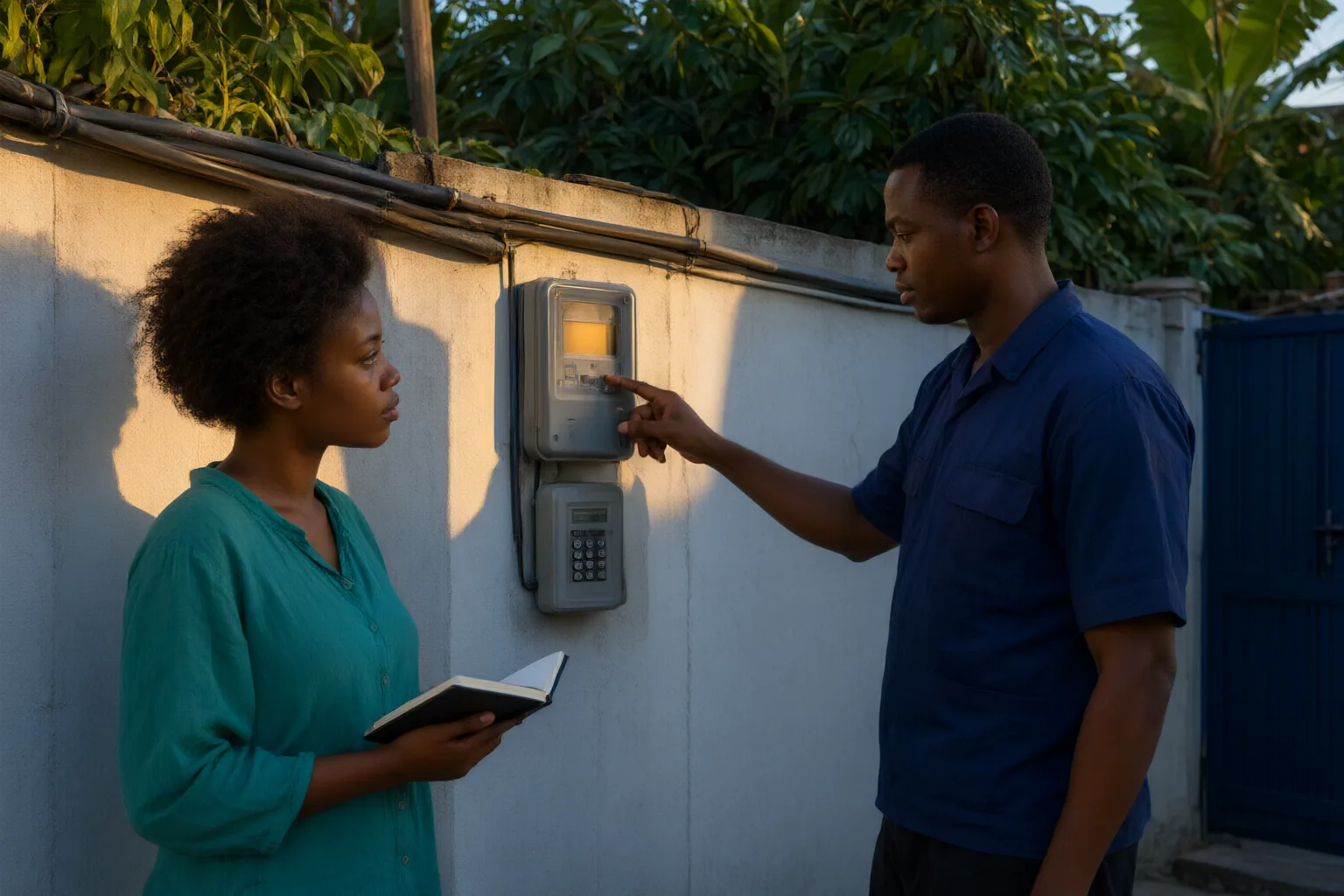
Clarify which monitoring and communication features apply
Ask which monitoring or communication capabilities are actually available on the installed meter. Femade Group describes smart meters generally as supporting energy monitoring and real-time data communication for billing and energy management. That is a supplier’s broad description, not proof that every prepaid meter—or every feature on a particular meter—is enabled in a customer’s installation.
The Calinmeter catalogue also lists differing technical configurations across its range. Accordingly, separate three things when speaking with the installer: the capabilities promoted for a product family, the specifications of the exact model, and the functions enabled for the customer’s installation. A feature appearing in a supplier description or catalogue should not automatically be treated as active on the installed device.
Ask the installer to identify the applicable features without presuming how communications, monitoring or anti-tamper functions operate. The supplied sources do not support claims about universal activation steps, billing behavior, account linkage, network availability or troubleshooting codes. Questions about those matters should be directed to the responsible electricity distribution company or installer with the meter’s identifying information at hand.
Conclusion
The defensible priorities are straightforward: identify the exact meter configuration, understand its visible display and keypad arrangement, and request a demonstration tied to that model. Commercial supplier and manufacturer materials confirm that prepaid-meter designs and stated features vary, but they do not provide an official Nigerian post-installation checklist, universal codes, required timelines or a general escalation procedure.
Before the installer leaves, save the meter details and any documentation provided. Direct unresolved model-specific or account-specific questions to the responsible electricity distribution company or installer instead of applying instructions from a different meter.
Disclosures and limitations
- This article was prepared with AI assistance from the supplied commercial provider and manufacturer materials; their claims were attributed and were not treated as independent regulatory guidance.
- No product is recommended and no affiliate link is included. Readers should confirm model- and account-specific information with the responsible electricity distribution company or installer.
Related reading
- Electricity Consumers in Nigeria
- What to Do After Buying a Nigerian Prepaid Token for the Wrong Meter Number
- Duplicate Electricity Bill Payment in Nigeria: How to Document and Raise the Issue
Sources
- Quality Prepaid Electricity Meters & STS Prepaid Meters factory from China — Shenzhen Calinmeter Co,.LTD
- Our Services – Femade Group — Femade Group – Femadec Group: Driving Innovation in Clean Energy Solutions