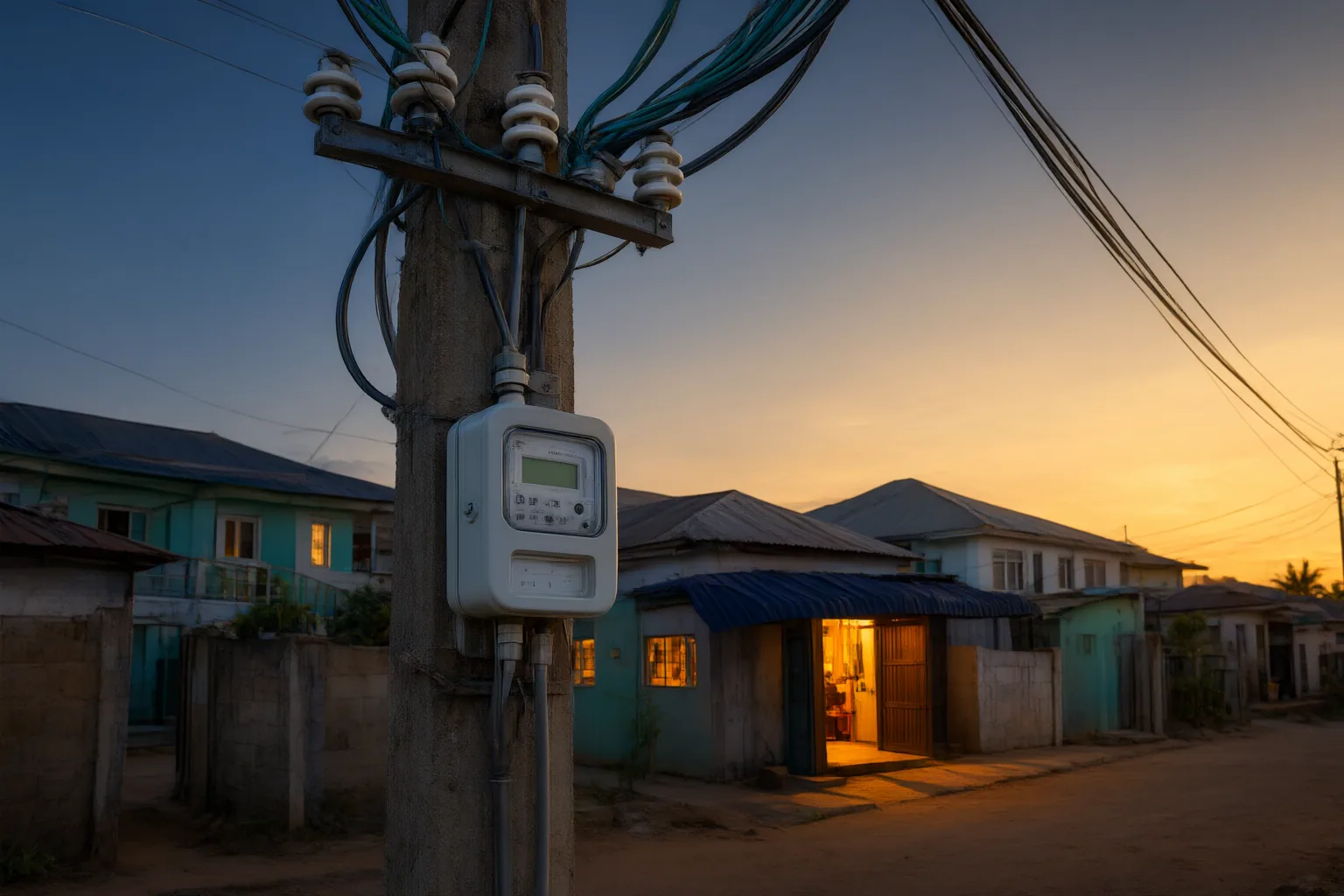
Registered, active and metered customers should not be treated as interchangeable categories in Nigerian electricity research. The supplied evidence distinguishes registration from metering but does not define “active customer,” so researchers must verify each dataset’s terminology and counting method before making comparisons.
Registered and metered customers measure different things
A registered-customer figure describes customers recorded within the reporting system covered by a source. A metered-customer figure identifies the subset reported as having meters. Metering has a separate practical meaning: a provider measures service consumption and can charge according to the amount used. Meters capture customer and usage information that may be used to produce detailed invoices.
The distinction is visible in the supplied Nigeria-focused figures. As of December 2024, the source reported 13.5 million registered electricity customers across 12 distribution companies, but only 6.29 million were metered. It gave the metering rate as 46.57%. These figures describe different attributes and should not be copied into a table, calculation or headline as though they were alternative estimates of the same population.
Researchers should preserve the labels used by the source. “Registered” does not, by itself, establish that consumption was recorded through a meter. Likewise, “metered” describes metering status within the reported customer base; it is not a substitute label for every registered customer. The general definition of metering helps explain this conceptual difference, but it does not establish the official counting rules used in Nigerian electricity datasets.
Why “active customer” needs separate verification
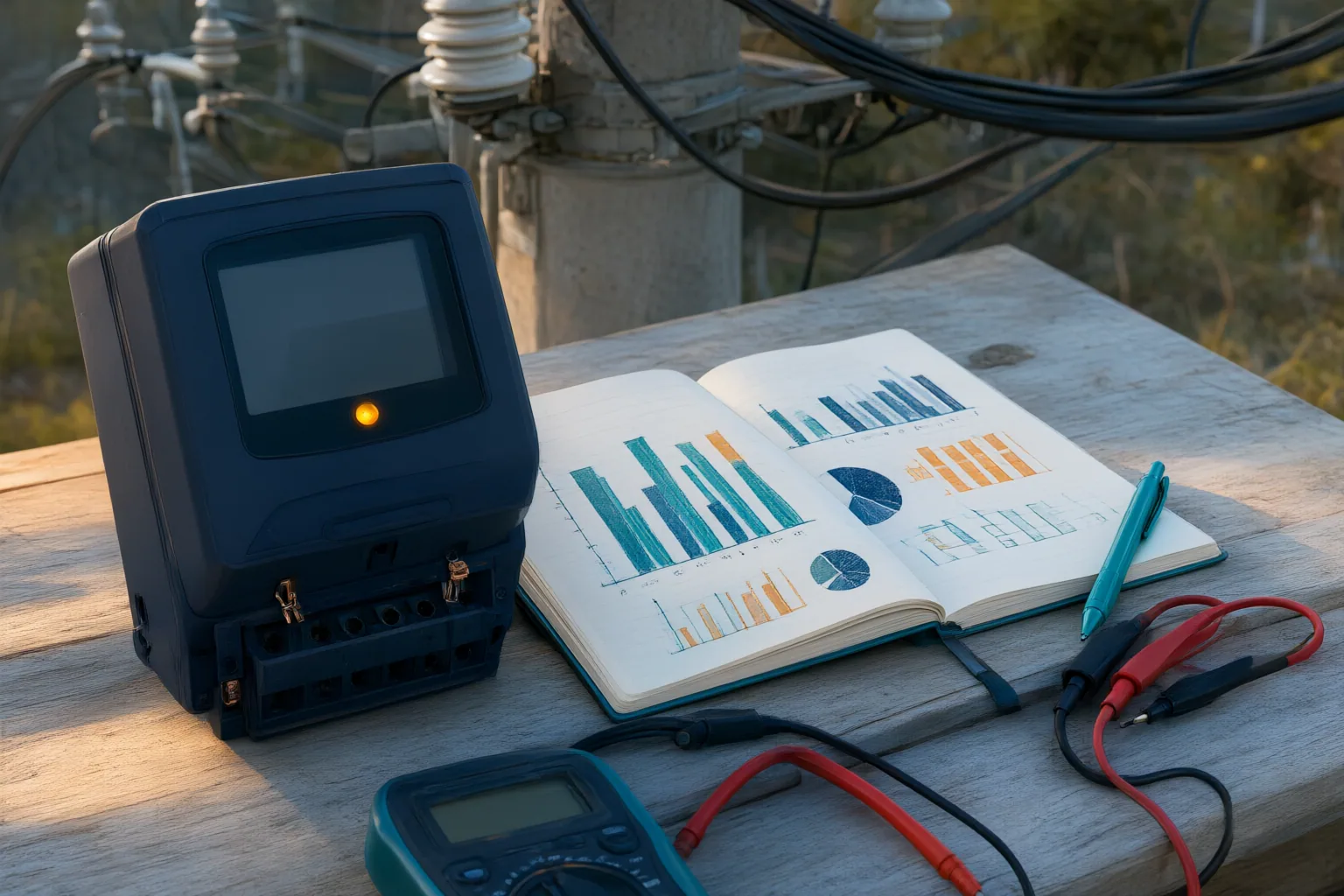
The supplied evidence does not provide an official Nigerian definition, counting rule or reporting period for “active customer.” It therefore cannot establish whether an active customer must have recent consumption, a current account, a recent bill, a payment, an energized connection or some other status. Those possibilities should not be presented as definitions without a methodology document that supports them.
Researchers should not automatically map active customers to registered customers or metered customers. A label may refer to a different condition from either registration or metering, and the available sources do not show that the three categories are mutually exclusive or directly comparable. Metering explains how consumption may be measured; it does not prove that a metered account meets an unspecified activity rule.
When a dataset uses “active,” check the definitions, notes and reporting period supplied with that particular dataset. Record the wording exactly and state plainly when no definition is available. If two sources use the same label but do not disclose the same counting method, their totals should not be combined or used to calculate a change without qualification. This approach keeps an undefined category from being silently converted into a better-documented one.
How customer categories affect billing-data analysis
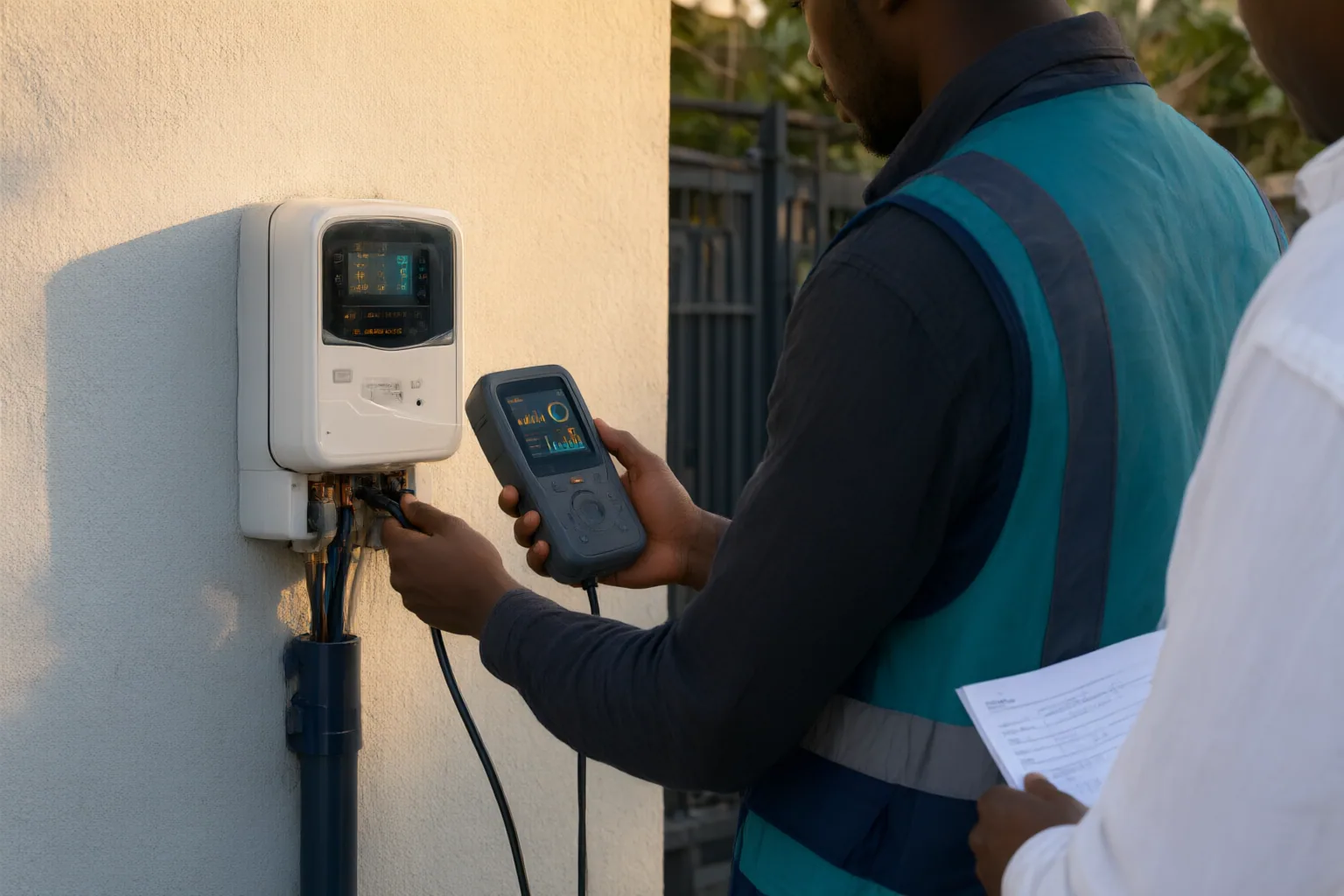
Metering status changes how billing figures should be interpreted. The Nigeria-focused source reports a 46.57% metering rate as of December 2024 and says consumers without meters are billed through estimated billing. It also links the metering gap to contested bills and weaker payment collection. A billing analysis that ignores metering status can therefore mix meter-based consumption measurement with estimated billing and obscure an important difference in how charges were produced.
The general metering reference explains that a metered service measures consumption and charges according to usage, with meter information supporting detailed invoices. That is useful conceptual context, but it is not an authority on Nigerian customer-category definitions. Researchers should use it to understand what metering does, not to infer Nigerian regulatory rules that are absent from the supplied evidence.
For comparisons, keep the customer denominator visible. A metering rate based on registered customers should not be described as the share of active customers unless the source expressly defines and uses that denominator. Similarly, billing outcomes for unmetered consumers should not be interpreted as though their charges came from recorded meter consumption. State the reporting date and the 12-distribution-company coverage alongside the figures so readers can see the scope of the comparison.
Conclusion
A reliable comparison begins with a compact audit trail. For every customer figure, record:
- the category label exactly as published;
- the reporting date or period;
- the organizations or coverage included;
- the source and any stated methodology;
- the denominator used for rates or percentages; and
- whether key terms, especially “active customer,” are actually defined.
The available evidence supports a clear distinction between registered and metered customers: the December 2024 figures report 13.5 million registered customers and 6.29 million metered customers across 12 distribution companies. It does not supply the corresponding official definition or counting rule for active customers. Researchers should preserve that limitation rather than fill it with an assumption.
Before publishing a calculation or comparison, verify each figure’s category, date, coverage, source and counting method. Flag every undefined use of “active customer,” and do not assume that registration, activity and metering status are mutually exclusive or directly comparable.
Disclosures and limitations
- This article was prepared with AI assistance from the supplied research package and approved content plan; its factual claims are limited to the two identified sources.
- The Nigeria-focused source supports the reported customer and metering figures. The general metering source provides conceptual context only and does not define official Nigerian electricity-dataset categories.
Related reading
- Electricity Consumers in Nigeria
- How Nigerian Households Can Choose and Use Extension Cords Safely During Outages
- MW, MWh and GWh: How to Convert and Compare Nigerian Electricity Data
Sources
- Usage Metering By Stripe – Docs — Chat Data | 24/7 Custom AI+LiveChat Chatbot
- Nigeria raised electricity prices to improve supply. Why it hasn’t worked — The Conversation
- What are metered services and how do they work? — TechTarget