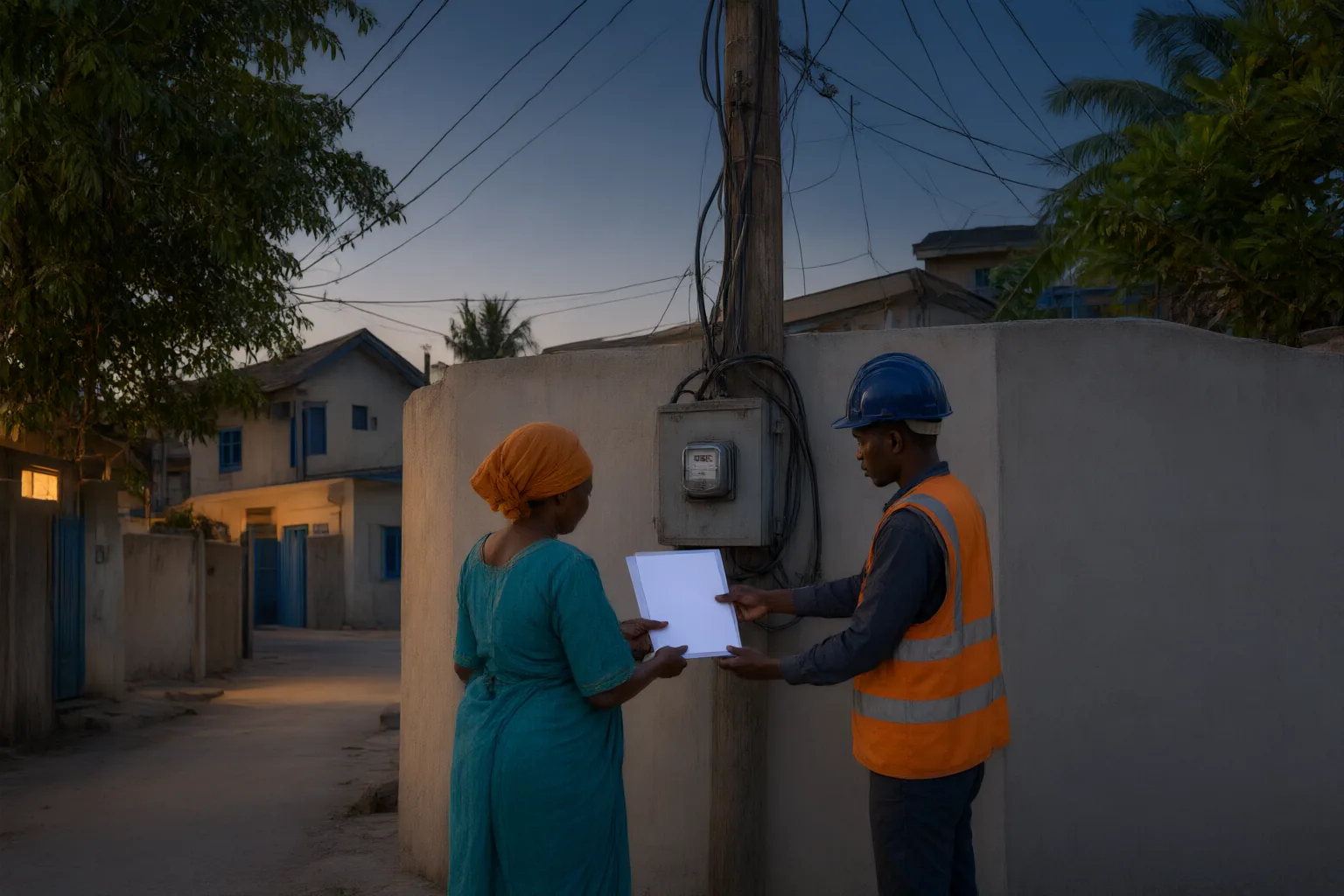
When a registered electricity customer dies, the family should first decide whether the property still needs power, identify who is authorised to act, gather the account and estate documents, and contact the relevant Nigerian electricity distribution company. The provider must confirm whether it can change the account holder or instead requires closure and a new account, because the available evidence does not establish a standard Nigerian procedure.
Decide Whether the Electricity Service Should Stay Active
Start by determining what should happen to the electricity service. If relatives, tenants or estate representatives still use the property, maintaining the supply may be important while the account position is resolved. If the property is vacant or being handed over, closing the account may be more appropriate. A family may also need a temporary arrangement while authority over the deceased customer’s affairs is being established.
Identify the person who can speak to the provider on behalf of the deceased customer. This may be a surviving family member or an authorised estate representative, depending on the provider’s requirements and the documents available. The family should also decide who is prepared to accept responsibility for electricity charges going forward.
Do not assume that continued payment automatically changes the registered customer’s name. Before requesting any change, ask the relevant Nigerian distribution company whether service can remain active temporarily, whether it permits a transfer, and what action is necessary to avoid confusion over future bills.

Gather the Account and Authority Documents
Prepare the available records before contacting the electricity provider. A general utility guide recommends collecting:
- The electricity account number
- The service address
- The latest bill
- Identification for the person making the request
- The registered customer’s death certificate
- Details of the proposed new account holder
- Any documents showing that an executor or administrator is authorised to act
Having these records together may reduce avoidable delays. The latest bill can help the provider locate the account and clarify its current balance, while authority documents may establish why the applicant is entitled to request information or changes.
These items are a preparation checklist, not a confirmed list of Nigerian requirements. No retrieved source specifies the official forms, fees, processing time or legal standard used by a Nigerian distribution company for this situation. Contact the company serving the property and ask it to identify the exact documents it accepts. Confirm whether originals, certified copies or ordinary copies are required before submitting anything, and keep copies of every document provided.

Ask the Provider About Transfer, Closure and Billing
Provider policies can differ. According to the available general guide, some utilities may allow an account to pass to a surviving spouse or authorised representative, while others may close the deceased customer’s account and require another person to establish new service. The relevant Nigerian distribution company must say which route it uses.
Ask the provider clear, specific questions:
- Can the existing account name be changed, or must the account be closed?
- If a new account is required, when should it begin?
- Can service remain active under a temporary or representative arrangement while the estate is administered?
- Which documents and applicant details are required?
- How will the final charges on the deceased customer’s account be calculated and handled?
- From what date will the new account holder become responsible for future bills?
- Is there a reference number or written record for the request?
Record the answers, the date of contact and any case or reference number. If instructions are given verbally, request written confirmation where available. This can help the family distinguish the final bill associated with the existing account from charges arising after another person assumes responsibility.
The available research does not confirm any Nigerian company’s forms, fees, deadlines or legal rules. Families should therefore rely on current instructions obtained directly from the distribution company rather than treating a general utility process as binding Nigerian policy.
Conclusion
Handle the matter in a practical sequence: decide whether electricity is still needed at the property, assemble the account and identity records, establish who is authorised to act, and ask the provider whether it will transfer the account or require closure and a new service arrangement. Responsibility for the final balance and future charges should be clarified rather than assumed.
Gather the account details, latest bill, identification, death certificate and evidence of authority, then contact the Nigerian distribution company serving the property to confirm its current requirements. Write down its instructions and retain copies of all submitted documents, bills and correspondence.
Disclosures and limitations
- This article was prepared with AI assistance from the supplied research package. Its practical guidance is based on a general United States utility guide and must not be treated as a confirmed Nigerian provider procedure; verify requirements directly with the relevant distribution company.
- No products are recommended and no affiliate relationship is represented in this article.
Related reading
- Electricity Consumers in Nigeria
- Electricity Distribution Equipment on Private Property in Nigeria: What Occupiers Should Check
- New Prepaid Meter Installed in Nigeria? What to Check Before the Installer Leaves
Sources
- How to Transfer Utility Bills After Death in 2026 — QuickFuneral LLC