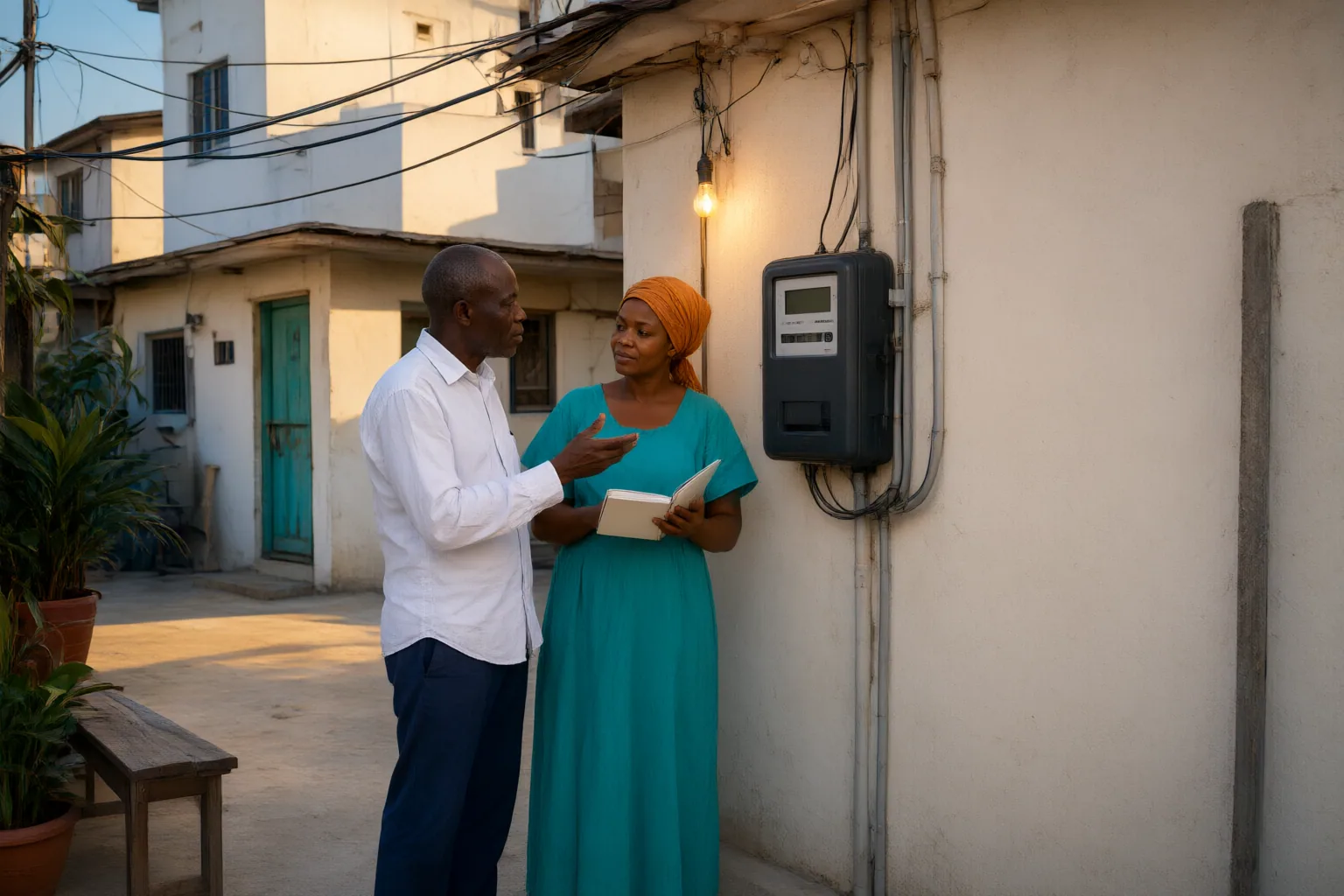
Tenants sharing one prepaid meter can reduce disagreements by documenting contributions, assigning each occupant a clear allocation, keeping purchase records visible and agreeing in advance on what happens when an allocation is exhausted. These are practical dispute-reduction measures, not an official Nigerian regulatory procedure.
Why Shared Prepaid Meter Arrangements Lead to Disputes
A flat or equal contribution may appear simple, but it can feel unfair when occupants consume different amounts of electricity. Someone who uses fewer appliances or spends less time at home may object to paying the same amount as a higher-consuming neighbour. When the shared units run out, the meter alone may not show which occupant’s consumption contributed most to the depletion.
The arrangement can also place an administrative burden on one tenant, landlord or property manager. That person may have to collect contributions, purchase units and answer questions about how quickly the balance was used. Without an agreed record, a delayed payment or unexpected depletion can become a dispute over responsibility.
The supplied research does not establish an official Nigerian procedure for dividing charges or settling disputes among tenants connected to one prepaid meter. Occupants should therefore distinguish their own sharing agreement from any regulatory rule and document it clearly enough for everyone to review.
Create a Clear Allocation and Record-Keeping Agreement
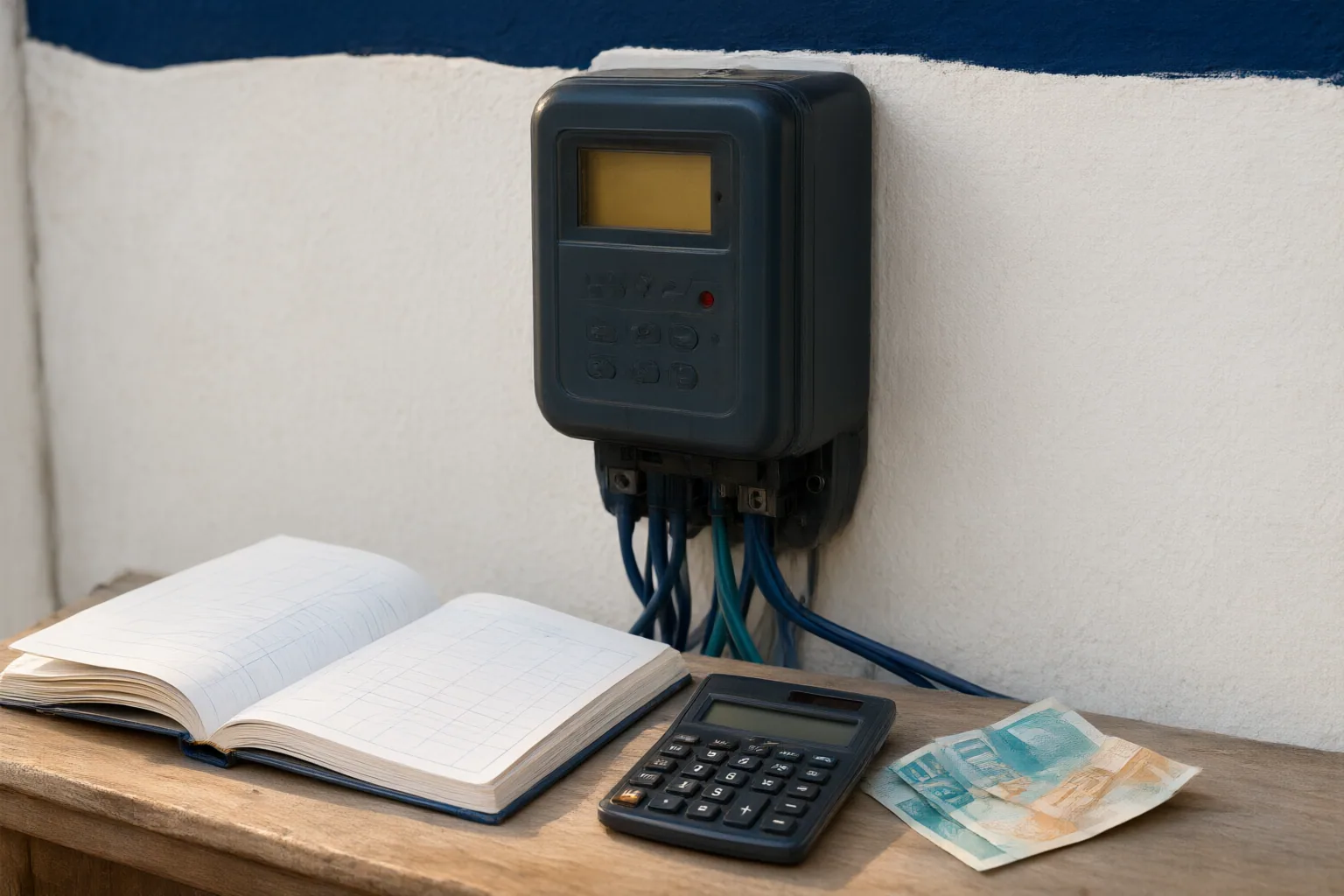
Before the next purchase, occupants can agree on a repeatable method instead of renegotiating whenever the meter balance becomes low. The agreement should identify everyone connected to the meter, state how much each person will contribute and explain how those contributions translate into electricity allocations. If tenants choose equal contributions despite different consumption patterns, that choice should be recorded as a shared decision rather than treated as an assumed rule.
For every purchase, keep a common record showing the date, total units bought, each person’s contribution and the allocation assigned to each flat, shop or room. Make the record available to all participating occupants. The aim is to give each tenant a visible allocation and reduce uncertainty about who paid, what was assigned and when the shared supply was replenished.
The agreement should also cover exhaustion and responsibility. Occupants can decide in advance whether a person whose allocation is exhausted must fund a new allocation before continuing to consume electricity. They should identify who purchases units for the main meter, who updates the records and how another occupant can check an entry. This framework is an editorial dispute-reduction approach supported by the problems described in the sources; it is not presented as an official allocation formula or legal process.
How Individual Unit-Allocation Systems Are Claimed to Work
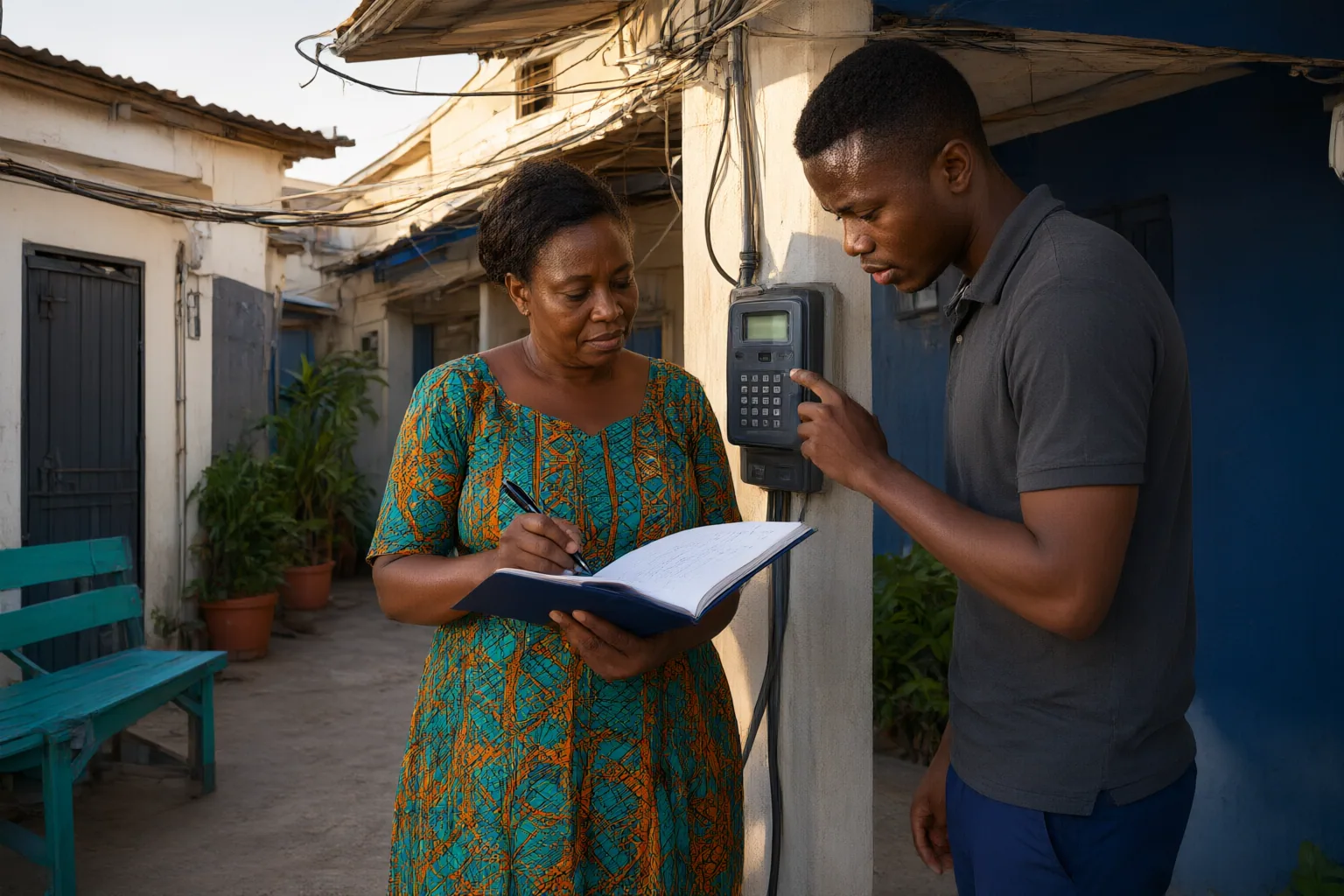
A commercial vendor, Smart ConsuMeter, describes a system intended to divide electricity from one prepaid meter among connected users. According to its website, occupants first buy units for the main prepaid meter and then use the Tuya or Smart Life app to allocate separate kilowatt-hour balances to individual flats, shops or rooms. The vendor says each balance counts down independently.
The same website claims that when one user’s allocation reaches zero, that user’s line is disconnected automatically while other allocated lines can remain powered. An Amdan Tech Facebook reel title promotes a similar arrangement in which people sharing a meter buy their own allocations and only the person whose allocation is exhausted loses supply.
The vendor also says every line connected to the shared meter must pass through its device and that one device is required for each flat or line. These installation requirements and operating capabilities come from commercial and social-media claims in the supplied research. They were not independently verified there, and the Facebook page content was not meaningfully captured beyond the supplied title. The claims should therefore be treated as descriptions of a proposed system, not proof of performance or an official Nigerian standard. Occupants considering such a system should obtain qualified installation advice before changing wiring or relying on its allocation controls.
Conclusion
A workable shared-meter arrangement depends on rules that occupants can understand and check: agreed contributions, defined allocations, visible purchase records and clearly assigned responsibility when an allocation is exhausted. Individual allocation technology is presented in the supplied sources as another way to separate balances and limit the effect of one user’s depletion, but the detailed capabilities are unverified commercial claims rather than an established official procedure.
Before the next electricity purchase, ask every occupant to review and document the contribution, allocation and record-keeping rules. If the group is considering a device-based system, seek qualified installation advice before changing any connection or wiring.
Disclosures and limitations
- This article was prepared with AI assistance from the supplied research package. Its detailed technical information comes mainly from a commercial vendor page, while limited supporting claims come from social-media titles; the described product capabilities were not independently verified.
- No product is endorsed or ranked, and no price, rating or review claim is made. Readers should consider possible commercial or affiliate interests before acting on any product-related claim.
Related reading
Sources
- PREPAID METER SOLUTION GROUP | You can solve disputes from sharing a single prepaid meter in Nigeria by **installing smart sub-meters that let each flat or tenant pay and track elec… | Facebook — Facebook Groups
- Smart ConsuMeter — Fair Prepaid Electricity for Shared Meters — Smart ConsuMeter
- Oya, come. If you are sharing one prepaid meter with other people, no need to fight with them anymore. Just get the Smart ConsuMeter. Everybody buys their own unit. When your own finish, only your light goes off. Message us on WhatsApp +234 805 259 4848 or order on smartconsumeter.com #smartconsumeter #prepaidmeter #nepa #metersharing #landlord #tenant #nigeria | Amdan Tech — facebook.com