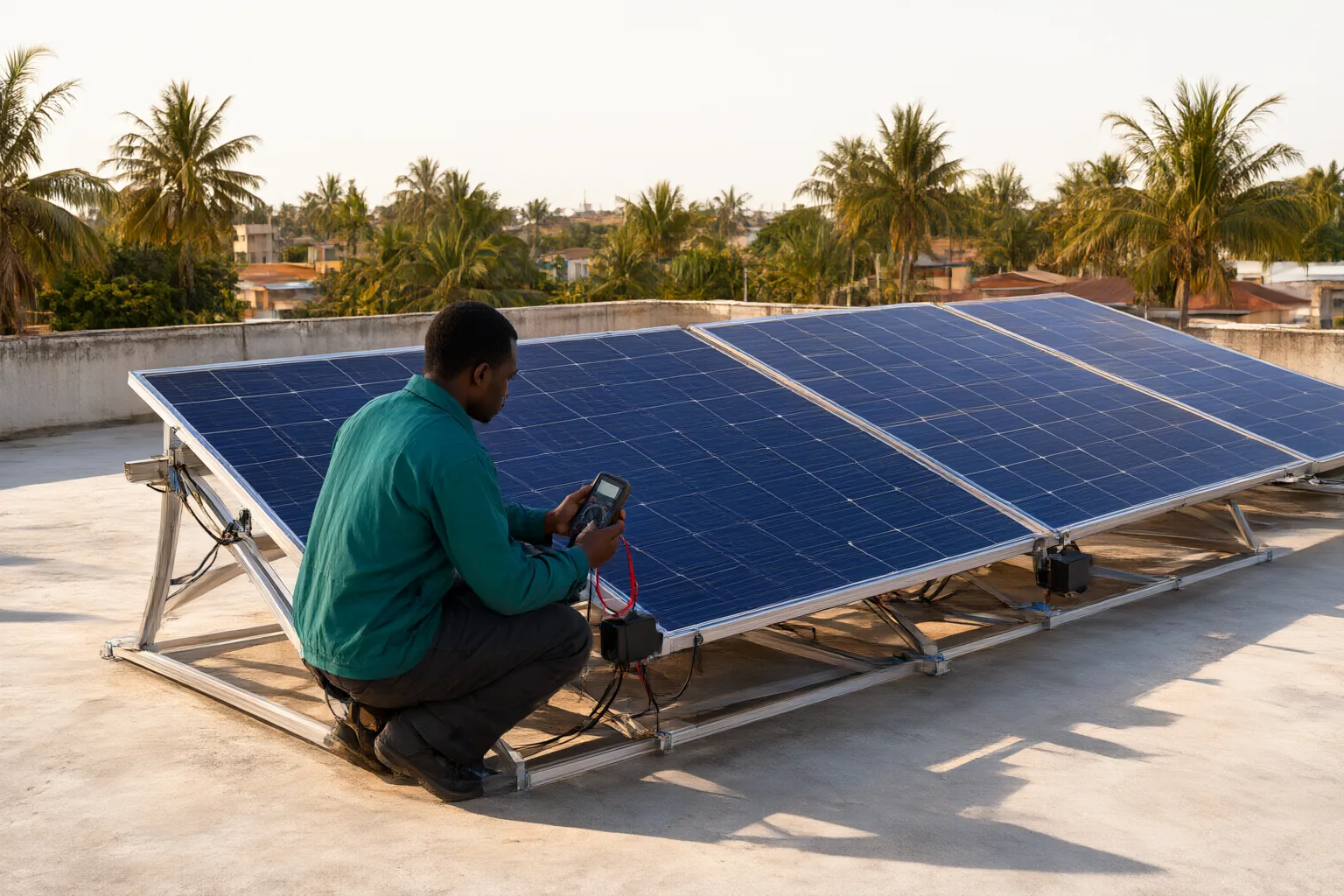
When a panel label, datasheet and seller quote show different wattage figures, do not choose one at random. Identify the exact model, obtain its matching datasheet, confirm what each number describes and judge the proposed panel within the complete system. The available evidence supports this general verification process but does not establish Nigerian labelling, certification or testing requirements.
Match the wattage claim to the exact model
Start by photographing or writing down the complete model code shown on the panel or product label. Ask the seller for the datasheet that corresponds to that exact code, not merely a brochure or webpage covering the manufacturer’s wider range. Signify advises checking performance figures against the relevant product-family datasheet and points specifiers to individual product pages for specification documents.
Model identification matters because products sold under one range or brand can carry different specifications. In CNET’s published examples, residential panels had wattage ratings from 430 W to 470 W and efficiency ratings from 22.5% to 24.1%. CNET also reports a Maxeon range spanning 360 W to 440 W, with temperature coefficients differing between models. These figures illustrate variation within published product information; they are not evidence that those models are available in Nigeria.
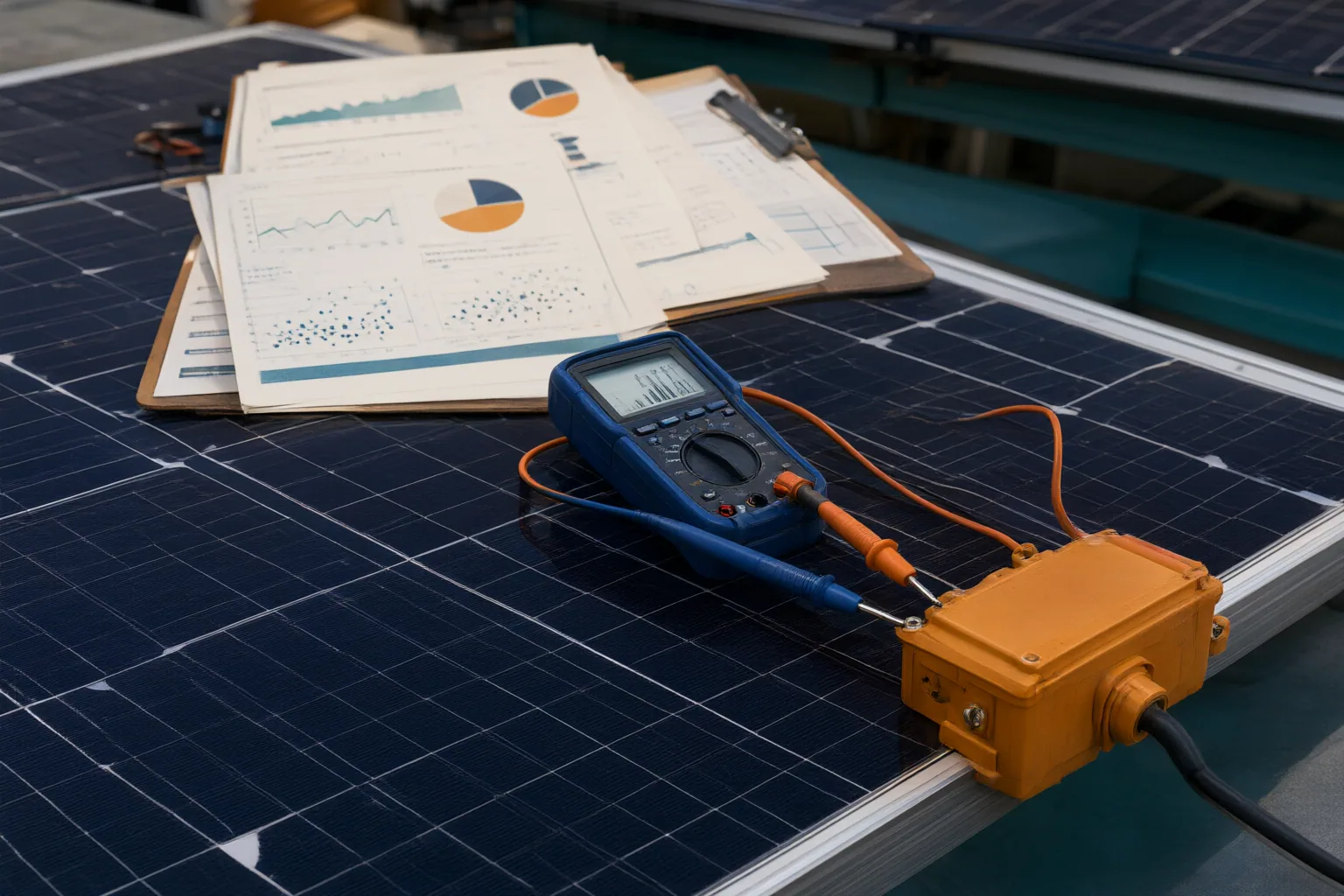
Create a simple comparison record containing the manufacturer, complete model code, wattage on the physical label, wattage in the matching datasheet and wattage stated by the seller. If the numbers conflict, ask the seller to identify the document and exact model behind the quoted figure. A general product-family page cannot by itself prove that a particular rating applies to the unit offered.
Confirm what the quoted number describes
Next, establish the unit and component attached to every figure. Panel wattage and panel efficiency describe related but different characteristics. CNET defines efficiency as the proportion of sunlight energy that the solar cells convert into usable electricity. A percentage shown for efficiency should not therefore be treated as another way of stating a wattage rating.
This distinction becomes especially important when the offer is for a solar-powered product rather than a standalone panel. Signify describes an all-in-one configuration that combines the panel, battery, light source and driver. It contrasts this with an all-in-two configuration, where the panel is separate and can be oriented independently. In such products, a seller’s prominent number could refer to the solar panel, light source, battery-related specification or another part of the package. The source evidence does not justify assuming which component it represents.
Ask for a component-by-component specification and have the seller point to the panel wattage on the matching datasheet. Also confirm whether a displayed figure applies to one panel, a product family or the proposed collection of panels. Keep wattage, efficiency and any system-level claim in separate fields so unlike figures are not compared as though they measure the same thing.

Compare the panel in the context of the whole system
A verified wattage rating is an input to the buying decision, not the entire decision. CNET says suitability depends on the buyer’s energy goals and budget, while roof size and household energy consumption can influence the equipment selected. It also advises considering total system output and total cost instead of concentrating only on an individual panel’s efficiency. Higher-efficiency panels may be more relevant when usable installation space is limited.
Compare proposals on a consistent checklist: exact panel model, panel wattage, efficiency, temperature coefficient, production warranty, usable space, expected number of panels, total proposed system output and total project cost. The supplied sources establish that these factors can matter, but they do not provide a Nigeria-specific performance benchmark or a method for predicting output at a particular property. Do not convert a nameplate figure into a promised household result without further project-specific evidence.
Review the proposed system against the electricity demand it is intended to serve. A panel with a larger wattage number is not automatically the best choice if the proposal does not fit the available space, required system output or budget. Likewise, efficiency cannot replace a system-level comparison. Request that each material claim be tied to the exact model’s documentation, then compare complete proposals using the same categories.
Conclusion
Before paying, capture the exact model code and obtain the corresponding datasheet. Check that the label, document and seller quote refer to the same model, then identify whether each number describes panel wattage, efficiency, another component or the complete system. Finally, compare the proposal with your usable space, energy goals, required system output, relevant specifications and budget. Complete these checks and ask the seller to resolve every unexplained discrepancy before you make payment.
Disclosures and limitations
- This article was prepared with AI assistance using only the supplied CNET and Signify research sources. The sources do not establish Nigerian labelling rules, certification requirements, local seller practices, product availability or Nigeria-specific test conditions; no products or affiliate offers are recommended.
Related reading
- Renewable Energy in Nigeria
- How Nigerian Households Can Compare Solar Installer Quotations
- How to Approach Renewable Energy Cost Comparisons Across Currencies and Price Years