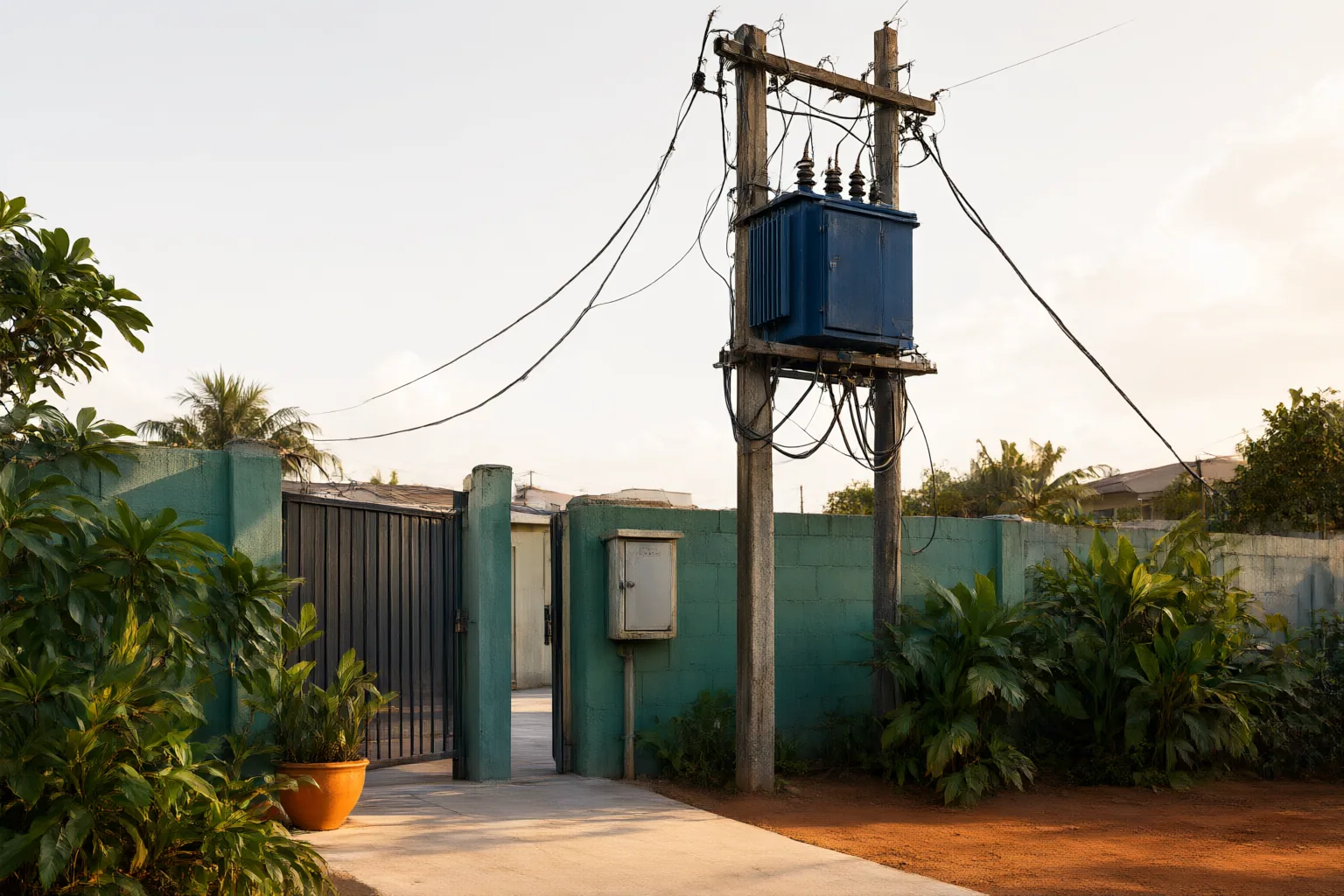
When electricity lines or other distribution equipment occupy or cross private property, first document the equipment, its location and its connection to the premises. Then ask who owns it, who maintains it and what documented land-use right supports its presence. The supplied evidence illustrates why these questions matter, but it does not establish Nigerian rights or remedies; confirm the position through Nigeria-specific records and professional guidance before taking action.
Start by identifying the equipment and connection arrangement
Begin with a clear record of what is on or above the property. Note the location of each line or item of equipment, whether it serves only the premises or appears to serve multiple properties, where it connects to the building and any visible identification. Photographs, a simple site sketch and relevant account or property details can help organise later enquiries.
The connection arrangement matters because equipment that looks similar may not have the same ownership or maintenance allocation. WEL Networks, describing its network in Waikato, New Zealand, says responsibility can vary according to whether a line is a service line, whether it is shared, where it is fused and whether it operates at low or high voltage. Those categories are useful questions to raise, but the New Zealand arrangements do not determine the position in Nigeria.
Do not assume that a line belongs to the occupier merely because it is inside the property boundary, or that every visible item belongs to a distribution company. Instead, ask the relevant Nigerian distribution company to identify the equipment and explain the connection arrangement. A tenant or occupier may also need information held by the property owner.
Establish ownership and maintenance responsibility
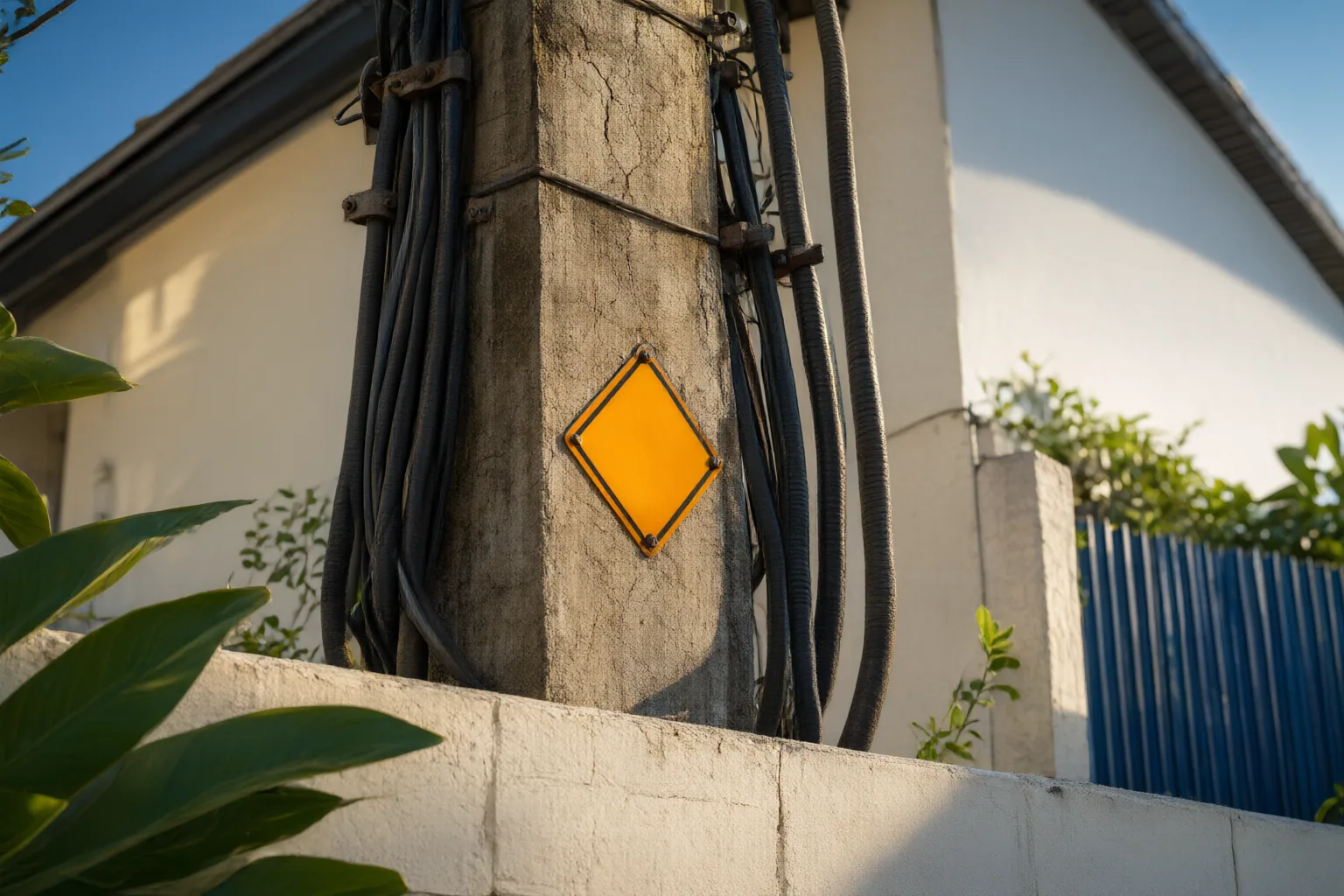
For each identified line or item, seek separate answers to two questions: who owns it, and who is responsible for inspection, repair and maintenance? These answers may not necessarily be the same. Request the documents or records supporting the allocation rather than relying only on an informal statement.
The Waikato example shows why a detailed enquiry is useful: WEL Networks says ownership and maintenance responsibility can depend on the type of line, whether it is shared, its fuse point and its voltage level. It also distinguishes different equipment and connection arrangements. This does not prove that Nigeria follows the same rules, but it cautions against treating every line, pole or related item as if one standard allocation applies.
Ask the distribution company to identify the claimed owner and responsible maintainer in writing. Property documents, connection records or other records held by the owner may provide additional context. If responsibility remains disputed, obtain Nigeria-specific legal or regulatory guidance. The supplied sources do not establish a Nigerian procedure, remedy or obligation, so they cannot resolve a particular dispute.
Check for an easement or another documented land-use right
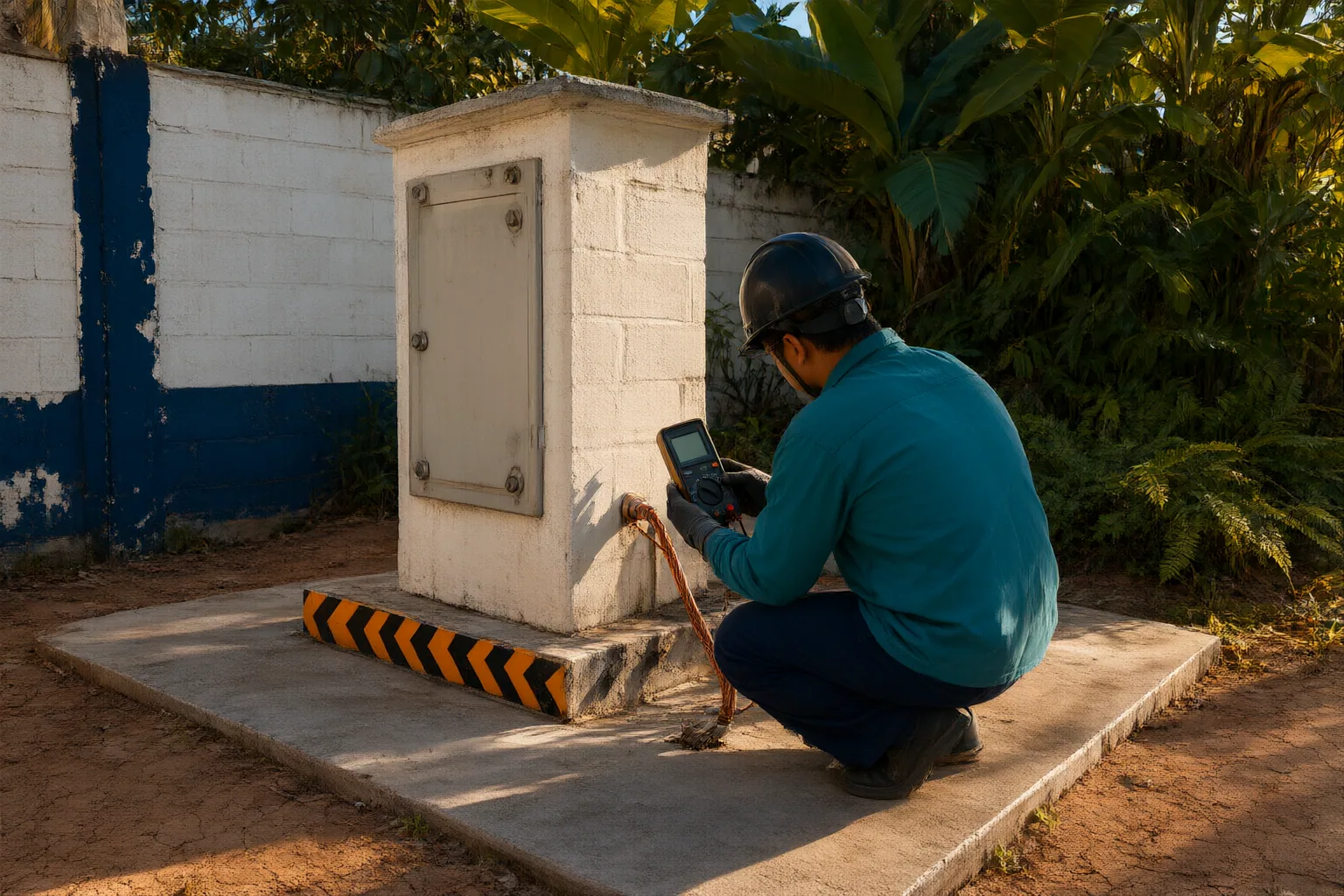
Ownership of equipment and authority to place it on land are distinct questions. After identifying the equipment and responsible parties, ask what document or land-use arrangement permits it to occupy or cross the property. Look for an easement agreement or another recorded right connected with the land, and request a copy where one is said to exist.
WEL Networks states that parts of its Waikato distribution network cross private property and that an easement agreement or existing-use rights will apply. That statement concerns New Zealand. It supports checking for land-use documentation, but it does not show that an easement exists on any Nigerian property or establish what Nigerian law requires.
Review the property records available to the owner and ask the distribution company to identify any document on which it relies. Check whether the document describes the location and type of infrastructure in question and which land or parties it covers. If no document is produced, do not treat that absence alone as proof that the infrastructure is unauthorised. The legal effect of the records, or of any claimed existing use, requires advice grounded in applicable Nigerian law and regulation.
Conclusion
Use a practical sequence when distribution equipment occupies or crosses private land:
- Record the equipment, its exact location and how it connects to the premises or nearby properties.
- Ask for identification of the equipment and its connection arrangement, including whether any line is dedicated or shared.
- Establish who claims ownership and who is responsible for inspection and maintenance.
- Request the records supporting those answers, including any easement or other documented land-use right.
- Preserve correspondence and note any unresolved disagreement.
These checks help separate equipment identification, ownership, maintenance and land-use authority instead of treating them as one issue. The supplied example demonstrates that those matters can vary with the network arrangement, but it supplies no Nigerian rights, remedies or procedures. Before altering, obstructing or removing any infrastructure, give the relevant distribution company an opportunity to clarify its records and obtain Nigeria-specific professional advice. Your concrete next step should be to photograph and map the equipment, then submit a written request for the ownership, maintenance and land-use documents associated with it.
Disclosures and limitations
- This article was prepared with AI assistance from the supplied research package. Its substantive example comes from WEL Networks in Waikato, New Zealand, and must not be treated as a statement of Nigerian law or regulation.
- The supplied sources do not establish Nigerian rights, remedies, procedures or obligations. Readers should verify their circumstances using applicable Nigerian legal, regulatory and property records before acting.
Related reading
- Electricity Consumers in Nigeria
- New Prepaid Meter Installed in Nigeria? What to Check Before the Installer Leaves
- What to Do After Buying a Nigerian Prepaid Token for the Wrong Meter Number
Sources
- Who owns what? — WEL Networks