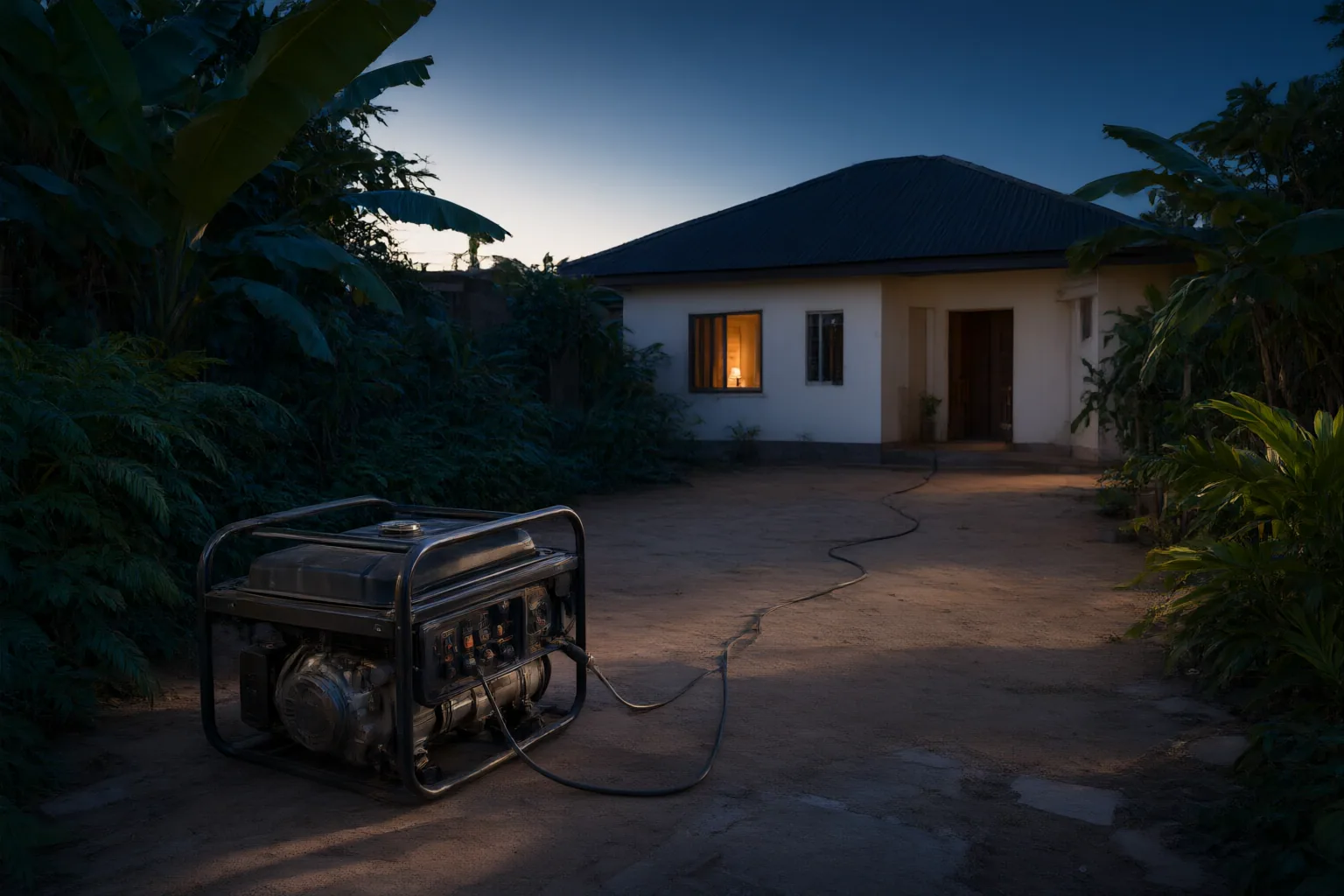
Reduce generator carbon monoxide exposure by operating portable generators outdoors, at least 20 feet from the home, directing exhaust away from openings, maintaining working carbon monoxide alarms and acting immediately when exposure is suspected.
Why Generator Exhaust Is Dangerous
Portable generators emit carbon monoxide, a poisonous gas that cannot be seen or smelled. Exposure can therefore develop without an obvious sensory warning, and the gas can kill without warning.
This risk is especially important during electricity outages, when Nigerian households may depend on generators close to living spaces. Nigerian reporting has documented fatal exposure associated with generators operated near residential areas and warns against sleeping in a room with a running generator nearby. Someone who is asleep may not recognize that exposure is developing.
Do not treat the absence of smoke or an unusual smell as proof that an area is safe. Carbon monoxide may enter a home when a generator is operated inside or when an outdoor unit is positioned too close to doors, windows, vents or other openings. Reducing exposure requires controlling where the generator operates, where its exhaust travels and whether the household has working alarms.
Place and Operate the Generator Safely
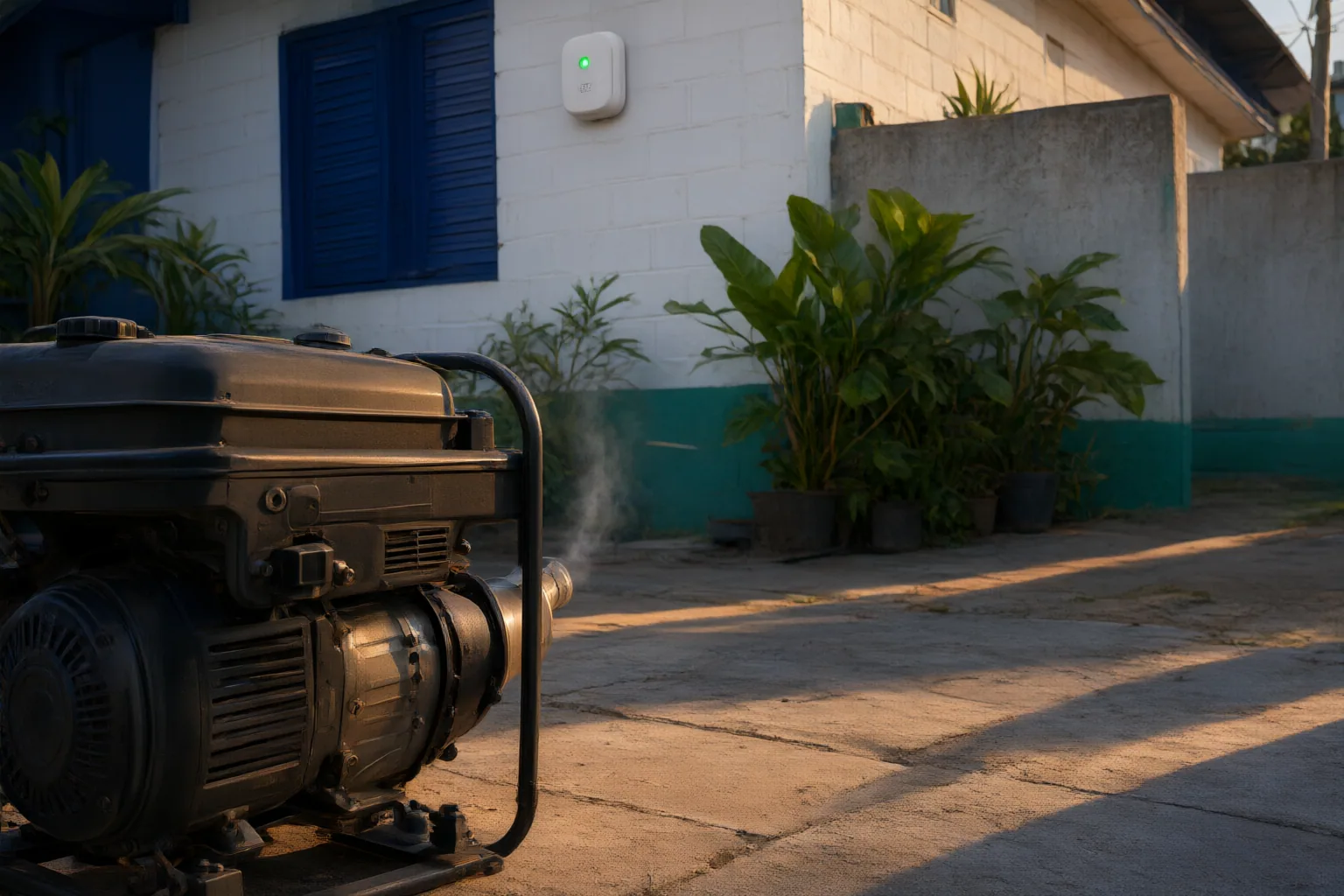
Operate a portable generator outdoors and far from windows, doors, vents and other building openings. Never run it inside a home, garage, basement, crawlspace or shed. These restrictions still apply when rain or another concern makes a sheltered location seem convenient: a partially enclosed space can allow carbon monoxide to accumulate.
UL Standards & Engagement advises placing a portable generator at least 20 feet from the home. Point the exhaust away from windows, doors and vents, and follow the instructions supplied for the specific generator. Distance alone is not enough if exhaust is directed back toward the building or can travel through an opening.
An open garage door does not make generator operation in a garage safe. Carbon monoxide can accumulate there and move into living areas even when the main door is raised. Porches and other sheltered or partly enclosed locations can present a similar accumulation risk.
Keep exhaust safety separate from electrical connection safety. Transfer switches, inlet boxes, interlock kits and extension cords do not reduce the carbon monoxide created by generator exhaust. Electrical equipment therefore does not make an unsafe generator location acceptable. Before operating the generator, check its distance from the building, the direction of its exhaust and the position of nearby openings.

Use Alarms and Know the Warning Signs
Homes using generators should have working carbon monoxide alarms on every level and near sleeping areas. Install and maintain each alarm according to its manufacturer’s instructions. Alarms are important because occupants cannot rely on sight or smell to detect the gas.
Possible symptoms of carbon monoxide poisoning include headache, dizziness, nausea, weakness and confusion. These symptoms can resemble common illnesses, which may make early exposure difficult to recognize during an outage. Treat an alarm or suspected exposure as an urgent warning rather than waiting to see whether symptoms worsen.
If exposure is suspected, everyone should leave for fresh air immediately and seek emergency help. Do not re-enter the location until it has been declared safe. Household members should know this response in advance, including anyone who may be asleep while a generator is operating nearby.
Alarms add a critical warning layer, but they do not replace safe placement. The generator must still remain outdoors, far from the home and with its exhaust directed away from openings. Maintain both precautions: prevent exhaust from entering the building and keep properly installed, working alarms available to warn occupants if carbon monoxide is detected.
Conclusion
A safer outage routine combines generator placement, exhaust direction, alarms and a clear emergency response. Keep the generator outdoors and at least 20 feet from the home, direct its exhaust away from doors, windows and vents, and never operate it in a garage or other enclosed space. Avoid sleeping near a running generator, and maintain working carbon monoxide alarms on every level and near sleeping areas.
Before the next outage, select the outdoor generator location, confirm the exhaust will point away from the building, test and maintain alarms according to their instructions, and brief everyone in the household. Make sure they know that suspected exposure means moving into fresh air immediately, seeking emergency help and staying out until the location is declared safe.
Disclosures and limitations
- This article was prepared with AI assistance using the cited consumer-safety materials and Nigerian reporting supplied in the research package; it does not represent personal product testing or firsthand experience.
- This is general safety guidance. Follow the manufacturer’s instructions for the specific generator and carbon monoxide alarms; suspected exposure requires immediate fresh air and emergency help.
Related reading
- Electricity Consumers in Nigeria
- Meter for Laboratory Testing: What Nigerian Customers Should Know When a DisCo Removes a Meter
- Relocating an Electricity Meter During Renovations in Nigeria: What to Check First
Sources
- Generator Carbon Monoxide Safety: Preventing Deadly CO Exposure — powerprepguide.com
- Generator Safety Fact Sheet — Carbon Monoxide Poisoning
- 6 Carbon Monoxide Safety During Power Outages (2026 Guide) — ProFindr — profindr.com
- Generator Carbon Monoxide Safety Guide (2026): How to Protect Your Family – Power4Everything.com — power4everything.com
- The Silent Killer: How generator fumes are wiping out families in Nigeria — Pulse Nigeria
- Generators and Engine-Driven Tools — U.S. Consumer Product Safety Commission
- Your Generator Could Save You During a Storm–but Ignoring Safety Guidelines Can Have Deadly Consequences – UL Standards & Engagement — UL Standards & Engagement