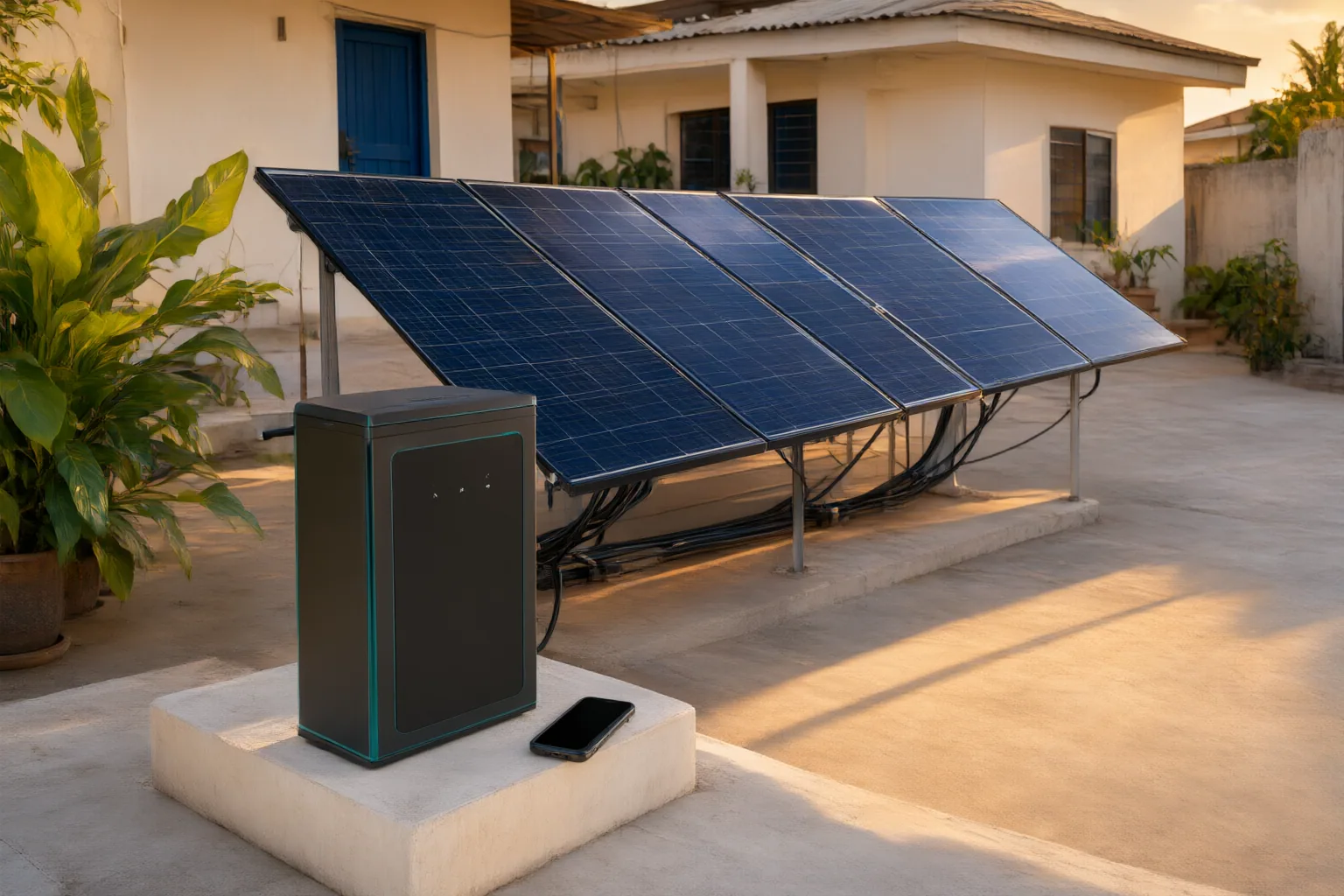
Before joining a pay-as-you-go solar plan in Nigeria, check the complete payment schedule, total cost, late-payment consequences, ownership-transfer rules, early-settlement terms, system suitability and local service coverage. These details vary by provider and product, so obtain them in writing before paying a deposit.
Calculate the Full Cost and Payment Commitment
Start with the total commitment, not the advertised deposit. Ask the provider to state the deposit, every weekly or monthly payment, the number of payments, the contract duration and the total amount payable. The agreement should also identify any fees or markup and show how the financed total compares with the system’s cash price.
This matters because a small initial payment does not reveal the full cost. Sun King, for example, describes its Nigerian EasyBuy offer as a deposit followed by scheduled weekly or monthly payments through mobile money or cash. That is a provider-specific example, not a rule for every PAYG solar contract.
Confirm whether the payment amount or duration changes with the selected system. A system intended for larger household loads may have different deposit and repayment terms. Request a dated written breakdown for the exact system offered to you, and check that its figures match the agreement before signing.
Also ask for a list of all circumstances that could change the amount due. Do not infer the total from a sales conversation or multiply a quoted instalment without confirming the number of payments. Nigerian financing guidance recommends obtaining the interest or financing cost, total payable relative to the cash price and any early-repayment charge in writing.
Check What Happens When a Payment Is Late or Missed
PAYG access may depend on keeping payments current. Sun King states that each EasyBuy payment generates a code that keeps the system active and that a missed payment pauses the system until another payment code is entered. Other Nigerian explanations similarly describe PAYG systems that providers can remotely disable while payments are overdue. These examples show why the applicable contract must be checked; they do not establish identical rules across all providers.
Ask the agreement to specify exactly when a payment becomes late and when the system can be paused or disabled. Check whether there is a grace period, whether advance notice is provided and whether late fees apply. The contract should explain how service is restored, including the amount that must be paid, the accepted payment channels, how an activation code is obtained and how quickly access can resume.
Distinguish a temporary interruption from default remedies. Ask what happens after repeated or prolonged non-payment and under what stated conditions the provider may seek repossession. Confirm how payments already made would be treated in that situation. Because consequences can vary by provider and product, rely on the written agreement rather than assuming that one company’s process applies to another.
Confirm Ownership, Early Settlement and Service Coverage
Identify who owns the panels, battery and other equipment throughout repayment. Nigerian financing guides distinguish some installer instalment arrangements, where ownership may be immediate, from PAYG or lease-to-own structures, where the provider retains ownership until all required payments are completed. The contract should state the model being offered and the exact event that transfers ownership.
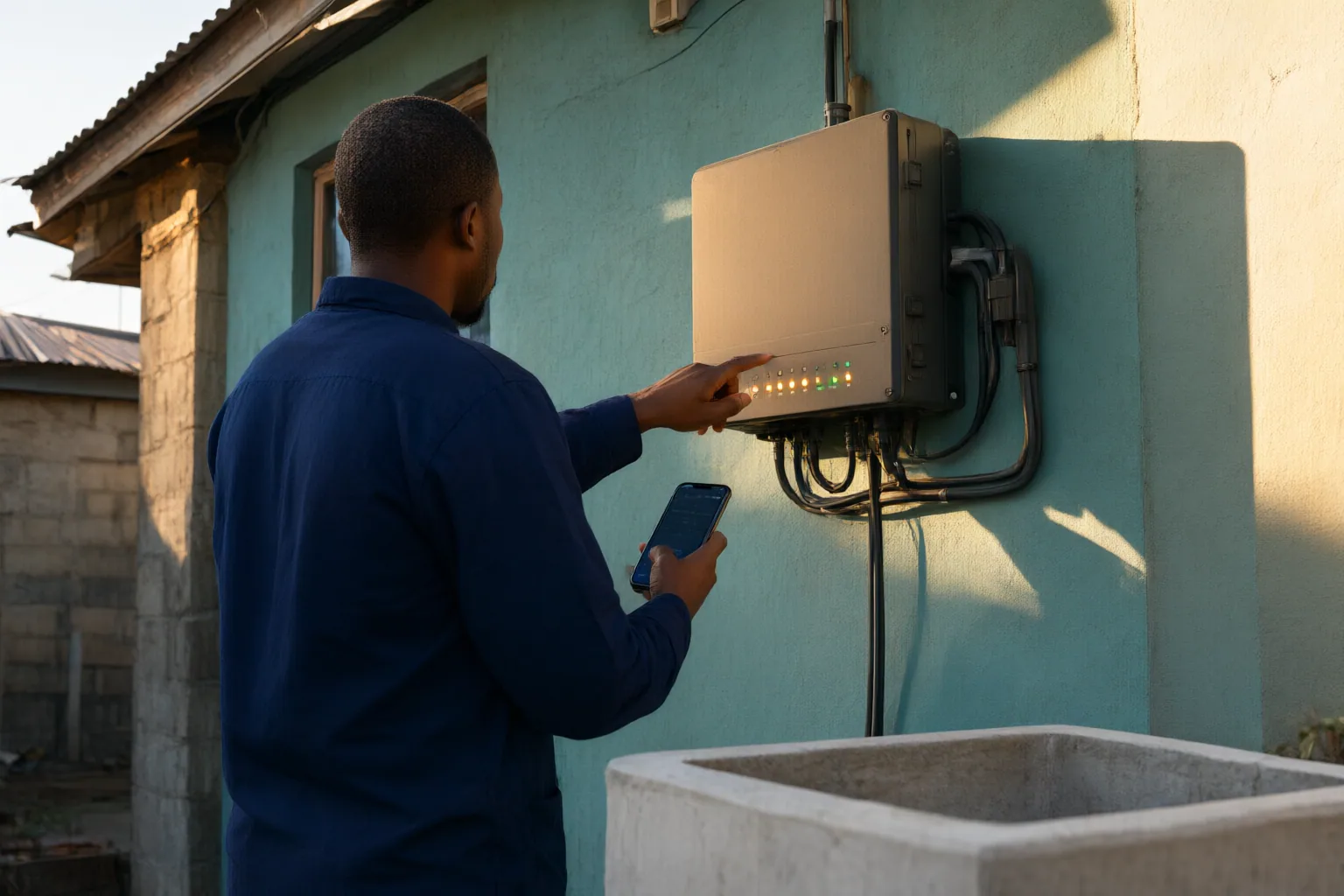
If the system uses payment-controlled access, confirm what happens after the final payment. Sun King says full payment under EasyBuy results in permanent unlocking and customer ownership. Ask your provider for written confirmation of the final-payment procedure, any proof of ownership it will issue and how permanent unlocking will be verified.
Review early settlement separately. Sun King says its contract length is fixed at purchase but permits early payoff with a discount on the remaining balance. Financing guidance also advises checking for early-repayment penalties. Your agreement should therefore explain whether early settlement is allowed, how any discount or penalty is calculated, how to request a final settlement figure and how long that quotation remains valid. Do not assume that paying the displayed balance automatically completes the transfer.
Finally, connect the financing terms to the actual system and your location. Confirm that the proposed system is intended for the household loads you expect it to support; system size can affect the deposit, payments and contract length. If you are outside a major service area, obtain written confirmation that installation, payment support and repairs are available at your specific location. Ask who provides each service and how to contact them before accepting the plan.
Conclusion
Before signing, assemble one written checklist covering the deposit, payment frequency, contract length, fees, total payable and cash-price comparison. Add the late-payment timeline, any grace period, restoration process and possible default consequences. Confirm who owns the equipment during repayment, the condition for ownership transfer, permanent unlocking and the method for calculating early settlement.
The paperwork should also identify the exact system being financed, its suitability for your intended household loads and the installation, payment-support and repair services available at your location. Before paying a deposit, request the complete agreement and cost breakdown, compare them with the provider’s written answers, and resolve every inconsistency.
Disclosures and limitations
- This article was prepared with AI assistance from the supplied provider and commercial editorial sources. Those sources are not Nigerian statutes, regulator guidance or specimen contracts, so provider-specific terms should not be treated as universal; verify all terms in the agreement offered to you. No affiliate relationship or product recommendation is presented.
Related reading
- Renewable Energy in Nigeria
- Solar Equipment in a Nigerian Rental: How Tenants and Landlords Can Agree on Ownership, Maintenance, and Removal
Sources
- Pay-As-You-Go Solar: The Smart Way to Power Your Home Without Breaking the Bank – Mose Solar — Mose Solar
- How Does EasyBuy Work in Nigeria? | Sun King — Sun King
- Solar Billing Plan | PG&E — pge.com
- Pay-As-You-Go Solar in Nigeria 2026 — PAYG Schemes Explained — gridless.com.ng
- Home Pogo Energy Electric Company Serving Texas — Pogo Energy Electric Company Serving Texas
- SunFi vs Arnergy vs BOI Solar Loan in Nigeria: Which Financing Deal is Best? — solaroptimize.io
- Miss the Solar Tax Credit? Consider Pre-Paid TPO — EnergySage
- Solar Financing in Nigeria 2026 — Pay Monthly, Lease & Loan Options — gridless.com.ng