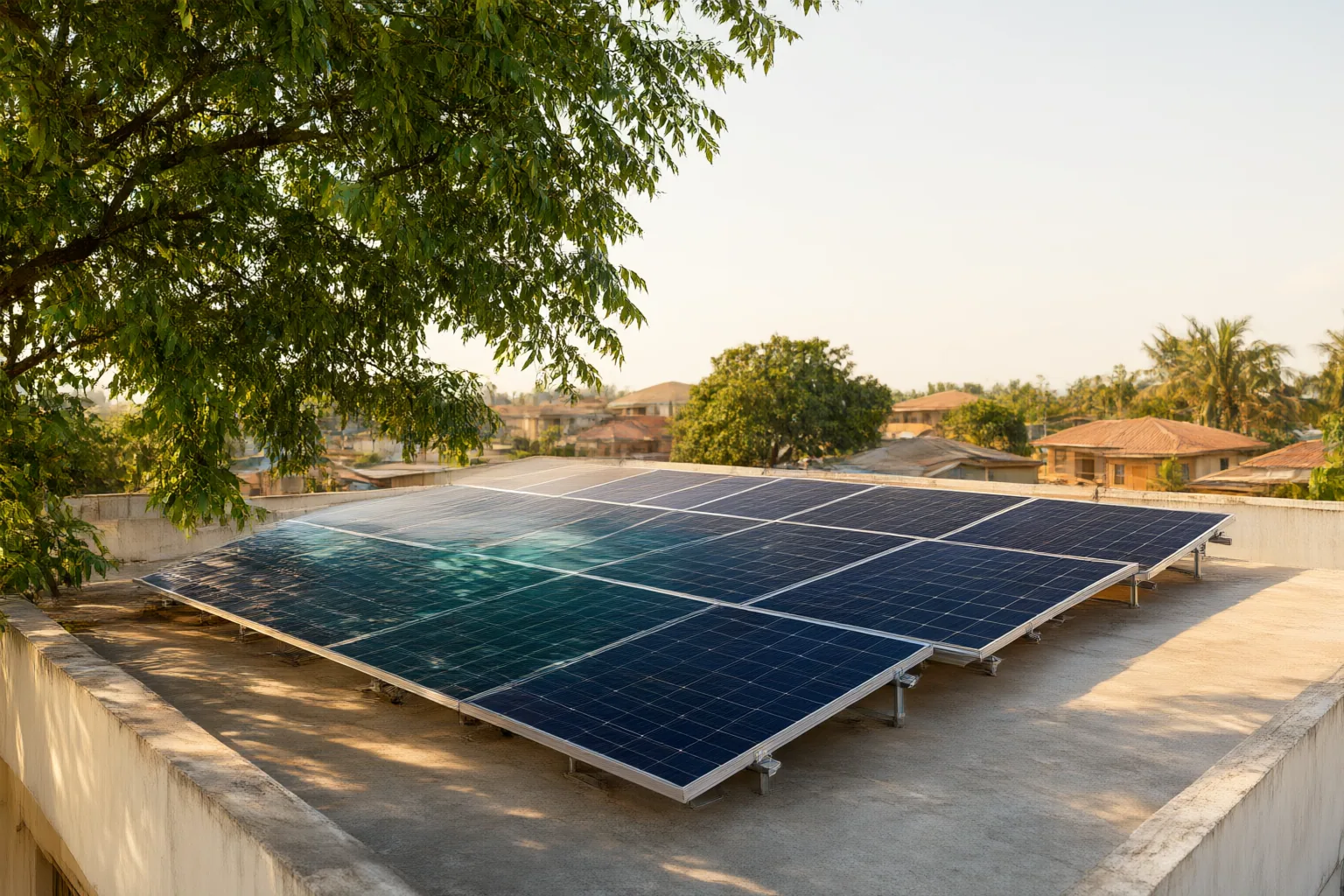
Rooftop solar shading losses can be larger than the visible shadow suggests. Households can identify them by recording shadows and system output at different times, inspecting for obstructions and uneven soiling, and asking a qualified installer to assess placement, layout, and any proposed equipment changes.
Why a Small Shadow Can Cause a Large Output Loss
A shadow does not necessarily reduce output only in proportion to the area it covers. In a series-connected photovoltaic string, modules share current. A shaded module can therefore constrain the electrical output of modules that remain in full sunlight. This is why a narrow shadow may produce a larger system-level reduction than a household might expect from looking at the roof.
Bypass diodes can route current around a shaded group of cells and help protect the module. However, they do not remove every loss caused by partial shading or mismatch within a string. Their presence should not be treated as a substitute for careful panel placement.
The practical implication is that visual shadow size alone is an incomplete measure of its effect. When output appears weak, households should consider both the location of the shadow and the way the modules are electrically connected. An installer can assess whether recurring shade is restricting a string and whether a layout change is more appropriate than relying on built-in protective components.
How to Identify Shade on a Rooftop Solar Array
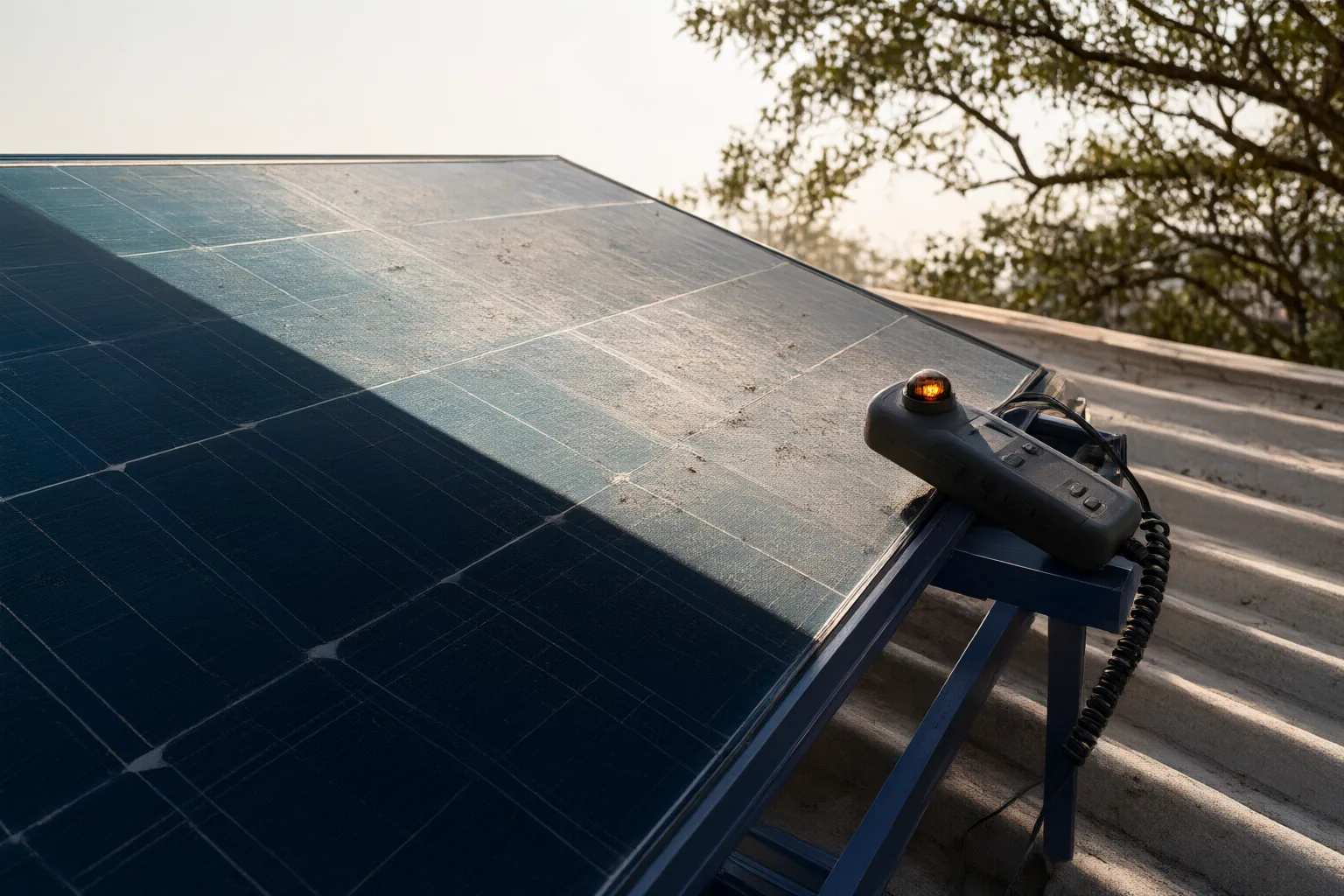
Start by identifying nearby objects that may cast distinct shadows. Possible sources include neighbouring buildings, parapet walls, trees, roof penetrations, satellite dishes, poles, rooftop structures, and adjacent rows of panels. Distant terrain may also block low-angle sunlight. Dust, sand, and other uneven soiling can similarly reduce the light reaching parts of a module, although they are not fixed structural shade.
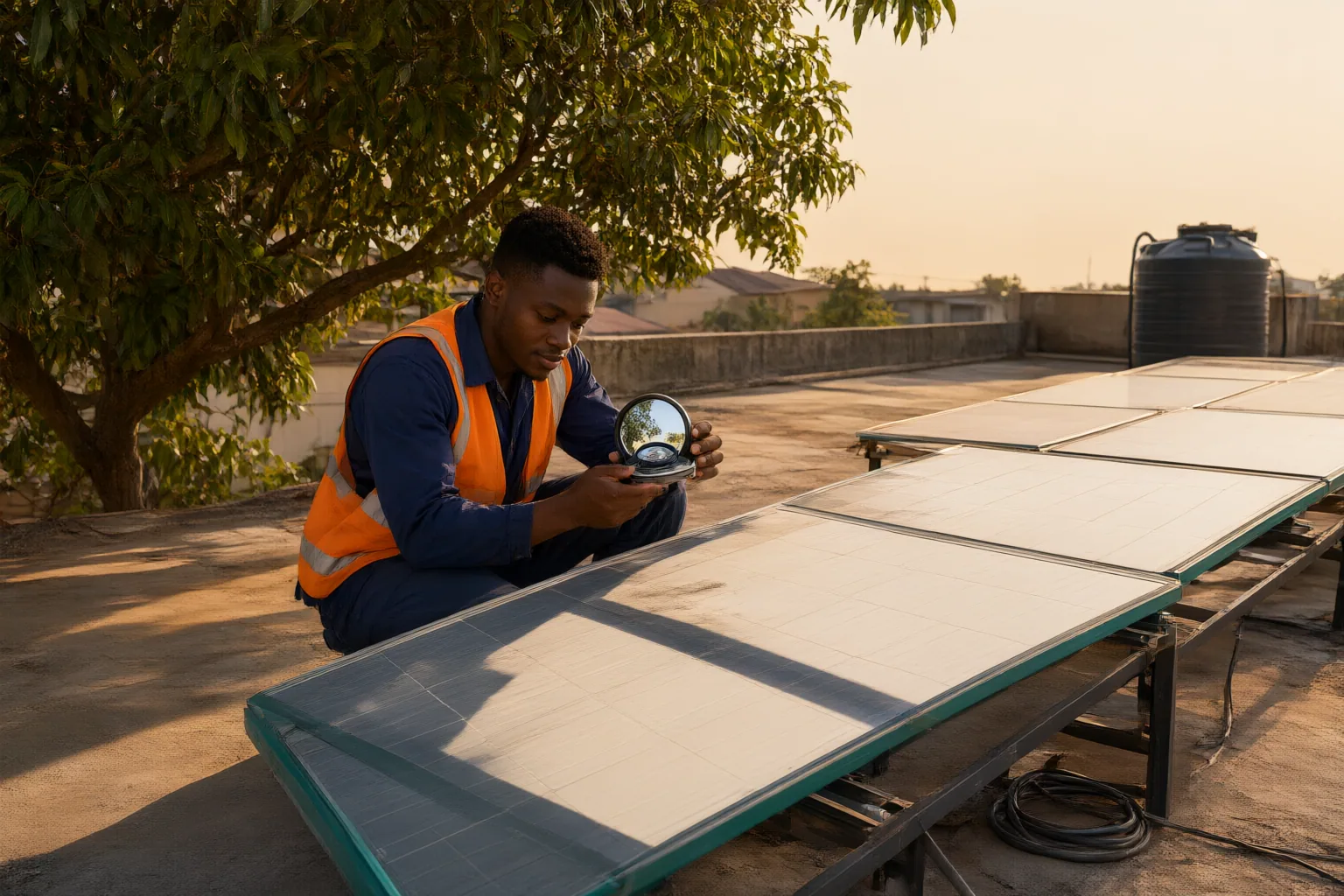
Do not judge the roof from a single visit. The sun’s position changes through the day and across seasons, so an area that looks clear at one hour may be shaded at another. Observe the array at several times, noting when a shadow begins, which modules it crosses, and when it clears. Repeat observations when seasonal conditions change where practical.
Compare these observations with available system performance records over time. Recurring reductions at similar times may help identify a pattern, while a new decline may justify checking for growing vegetation, a new structure, accumulated dirt, or another obstruction. An inspection cannot by itself prove that shade is the only cause of weak output, but combining roof observations with performance monitoring gives a household better evidence to discuss with an installer.
Keep the record simple: date, time, weather conditions, affected modules or roof area, visible obstruction, and available output reading. Photographs taken from a safe location can also help show how a shadow moves without requiring conclusions from one snapshot.
Ways to Reduce Shading Losses
The first options to discuss are changes that reduce the amount of shade reaching the panels. Depending on the roof and obstruction, this may involve moving panels away from affected areas, revising the array layout or orientation, increasing spacing between rows, or addressing removable obstructions where practical. Permanent shade from a building or parapet may require avoiding part of the roof rather than adding equipment to a poorly sited array.
Routine inspection and cleaning can address changing conditions after installation. Look for new obstructions, growing vegetation, and uneven deposits of dust or sand. Continue monitoring output so that recurring reductions can be compared with the timing and position of observed shade. Cleaning and inspection may help where soiling is involved, but they will not correct structural shading.
Microinverters and module-level power optimizers are equipment options that may reduce the extent to which shading on one module affects other modules. The supplied evidence does not establish whether either option is cost-effective for a particular Nigerian household. Before approving a change, ask the installer to explain which modules are affected, how the existing array is configured, what loss the proposal is intended to address, and why a placement or layout adjustment would or would not be preferable.
No single measure eliminates every shading loss. Bypass diodes, module-level electronics, cleaning, and monitoring serve different purposes, while unsuitable siting can remain the underlying problem. Corrective work should follow an assessment of the obstruction, its timing, and the array’s electrical configuration.
Conclusion
A useful shading check follows a sequence: document where and when shadows appear, inspect for new obstructions or uneven soiling, and compare those observations with output patterns over time. This helps distinguish a recurring shade pattern from a conclusion based on one roof visit.
If shade is persistent, have a qualified solar installer assess panel placement, row spacing, layout, orientation, and the array’s electrical configuration before altering the system. Ask for a clear explanation of any proposed equipment and remember that equipment may limit some module-to-module effects without correcting poor siting.
Begin by recording roof shadows and available output readings at several times of day, then take that record to a qualified installer for review before changes are made.
Disclosures and limitations
- This article was prepared with AI assistance from the supplied research package. Its supporting material is primarily commercial or vendor-authored guidance rather than independent Nigerian technical standards or peer-reviewed primary research, so quantitative or equipment-specific claims should be independently verified before publication.
- No product records, prices, ratings, reviews, or affiliate recommendations were supplied or included.
Related reading
- Renewable Energy in Nigeria
- How to Identify Double-Counted Renewable Energy Projects Across Nigerian Datasets
- Pay-As-You-Go Solar Plans in Nigeria: Contract Terms to Check Before You Sign
Sources
- Solar Panel Shading Losses in Nigeria: Why One Panel Can Kill Your Output – Eneronix — Eneronix
- Solar Shading Analysis: Methods & Loss Factors | SurgePV — SurgePV
- How to Minimize Shading Losses in Urban Rooftop Arrays — eureka.patsnap.com
- Limiting shading losses to maximize solar power output — RatedPower — ratedpower.com
- How Shading Affects Solar Panels 2026: Losses, Mitigation & Solutions | SurgePV — SurgePV
- Solar Shading Analysis Guide 2026: Tools, Methods & Impact Calculation | SurgePV — SurgePV