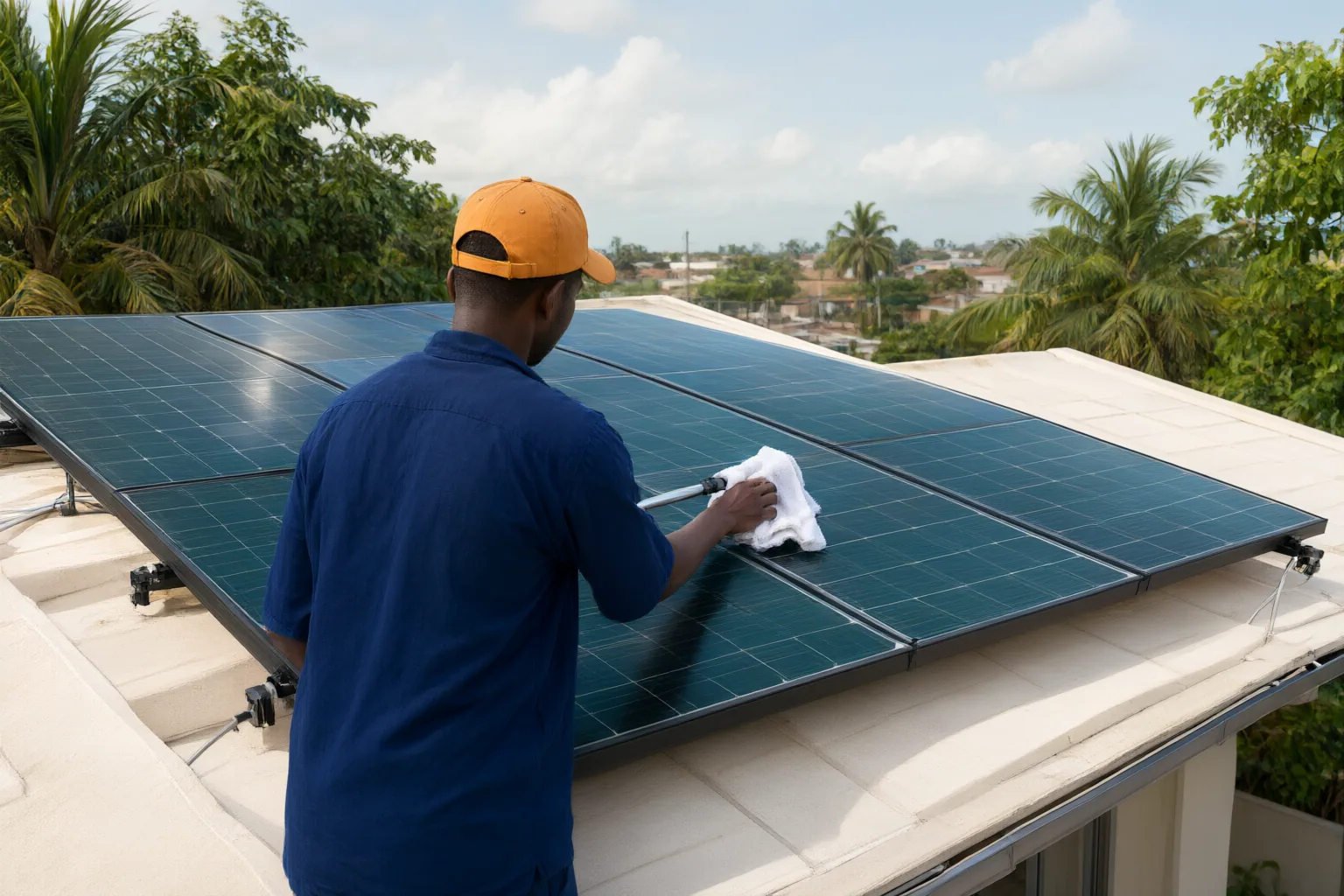
Nigerian households should monitor solar output and visible condition, clean modules gently only when dirt accumulates and access is safe, and leave damaged panels or electrical components to a trained or certified professional. Local dust and Harmattan conditions should determine cleaning frequency rather than a fixed universal schedule.
When Solar Panels Need Cleaning or Inspection
Dust, bird droppings, rain residue and Harmattan particles can obstruct sunlight and reduce the energy produced by solar panels. Possible signs include declining output, slower or reduced battery charging, and dirt that is clearly visible from a safe location. An inverter fault message may also indicate that the wider system needs attention, although cleaning may not be the solution.
Use conditions at the installation—not an inflexible calendar—to decide when maintenance is needed. Panels in dusty locations or exposed to Harmattan particles may require more frequent cleaning, while systems in cleaner environments may need attention less often. Compare current production and battery-charging performance with the system’s normal pattern, while recognising that dirt is only one possible cause of a decline.
A visual check from a safe location can also identify discoloration, cracks, broken glass, loose frames or modules that appear to have shifted. These signs call for inspection, but cracked or misaligned panels should not be treated as an ordinary cleaning job. If checking the panels would require unsafe roof access, leave the task to a trained professional.
How to Clean Modules Without Damaging Them
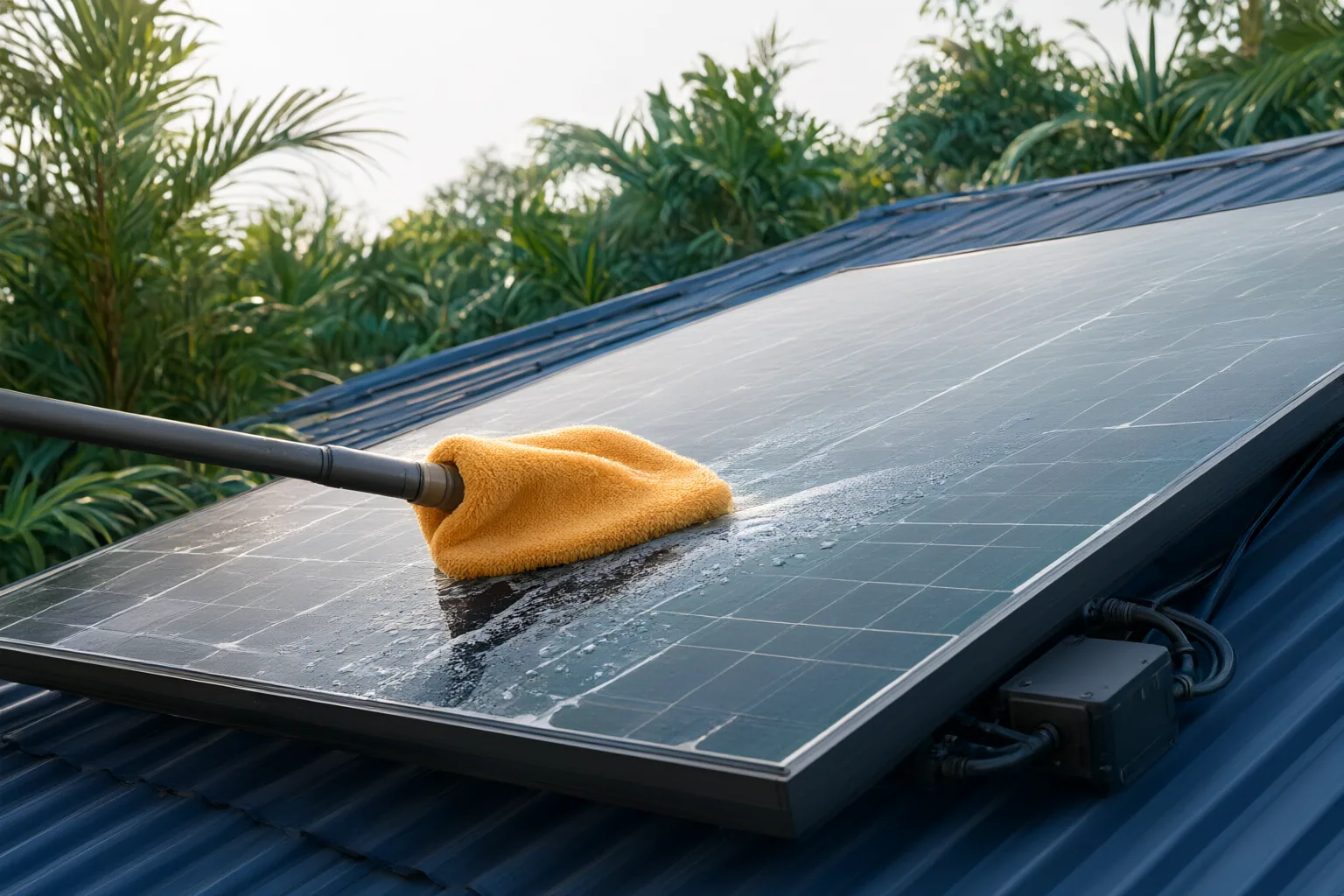
Routine cleaning should be gentle. Where the modules can be reached safely, use clean or soft water with a soft cloth, sponge or mop to remove surface deposits. Avoid abrasive materials and sharp objects, which can scratch or otherwise damage the surface. Harsh chemicals may affect module coatings, while pressure washing can damage panels or associated components.
Choose the cooler part of the day, such as early morning or late afternoon or evening. Do not apply water to panels that are hot from strong sunlight: the sudden temperature change may create thermal stress and damage the module. If the panels are still hot, delay cleaning until they have cooled.
Keep the task limited to surface dirt. Do not use cleaning as an opportunity to open equipment, tighten terminals, disconnect cables or adjust modules. Roof access presents a separate hazard, and the supplied evidence does not establish a safe procedure for untrained householders to work at height. If panels cannot be cleaned from a safe position, arrange professional service.
After cleaning, monitor output and battery charging. If performance remains unusually low, or the inverter continues to display a fault, seek a qualified inspection rather than repeating aggressive cleaning or attempting electrical repairs.
Electrical and Equipment Warning Signs That Require a Professional
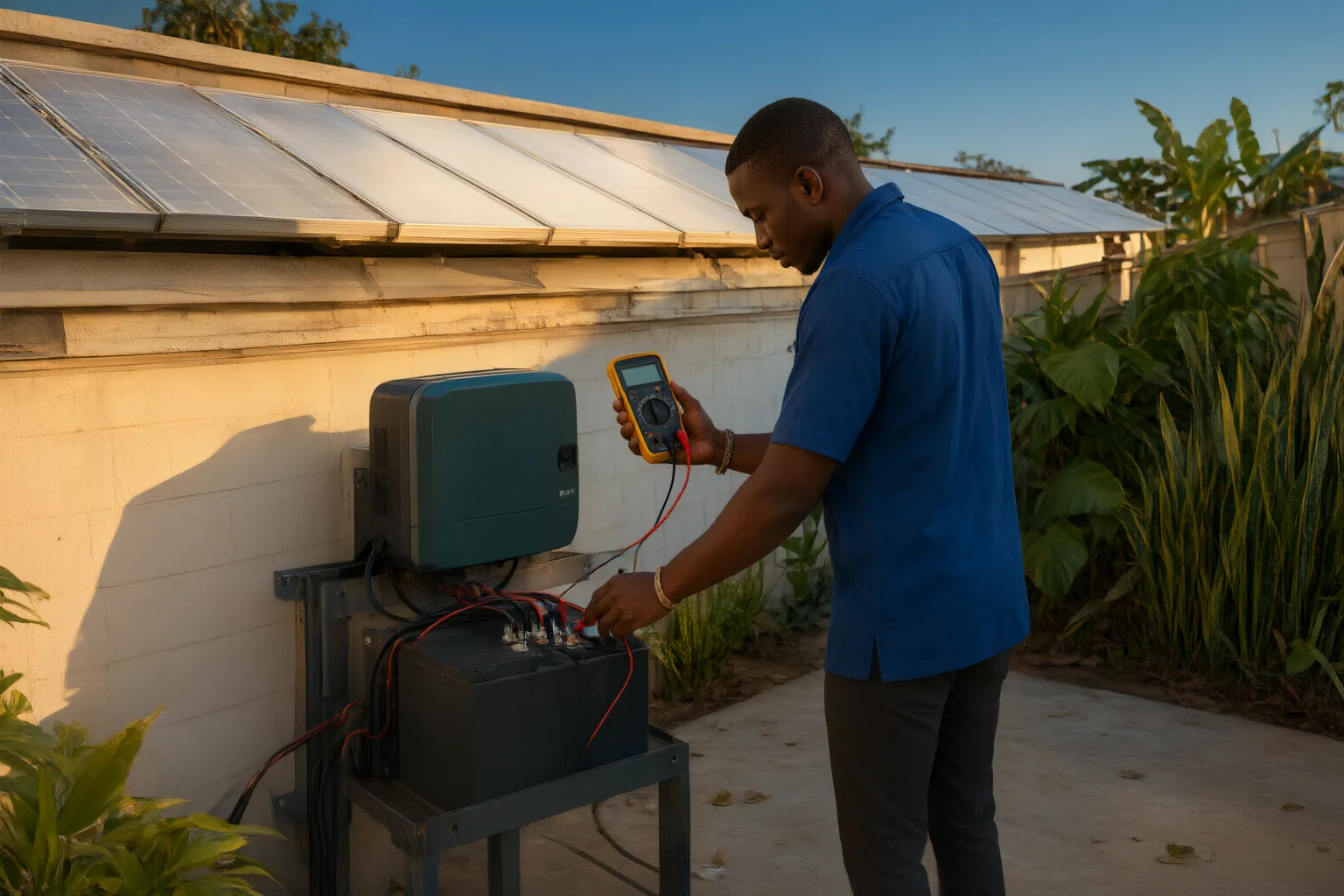
Surface cleaning and electrical maintenance are different jobs. Stop and seek trained or certified help if you see cracked glass, a loose frame, a shifted module, damaged cable insulation, burn marks, rust, overheating or loose terminals. Unusual smells, strange inverter sounds, repeated alarms, fault messages, unexplained shutdowns or a battery that is swelling are also warning signs that should not be investigated through do-it-yourself electrical work.
Keep batteries and inverters in dry, ventilated areas away from excessive heat. However, do not open equipment or touch suspect wiring to diagnose a problem. Loose or damaged wiring can affect performance and create a safety risk.
Third-party reports describing NEMSA guidance say module interconnections should use properly matched connectors that are securely locked. Poor connections can cause electrical arcing and fire. The same reporting calls for correctly rated cables, appropriate circuit and surge protection, isolators and proper earthing. These are installation and professional-inspection matters, not routine household cleaning tasks. Because the supplied material reports this guidance indirectly, the applicable details should be checked against NEMSA’s current official notice before publication or relied upon for regulatory compliance.
A professional should assess damaged modules and test cables, connectors, protection devices, isolators and earthing. Householders should not reconnect mismatched plugs, tighten overheating terminals or replace damaged electrical parts without suitable training. The safer boundary is simple: observe performance and visible condition, but leave electrical diagnosis and repair to a qualified person.
Conclusion
Safe solar maintenance begins with observation. Watch for visible dirt, falling output, reduced battery charging, panel damage and inverter warnings. Clean only when conditions require it, use water and soft materials, work when modules are cool, and proceed only when the panels are safely accessible.
Keep inverter and battery areas dry and ventilated, and do not tamper with electrical parts. If you notice cracks, shifted modules, damaged wiring, burn marks, heat, swelling, unusual smells or sounds, repeated alarms, inverter faults or connection problems, stop and contact a trained or certified solar professional.
Disclosures and limitations
- This article was prepared with AI assistance from the supplied research sources. NEMSA-related points came from third-party reporting and should be checked against the agency’s current official guidance; no products or affiliate recommendations are included.
Related reading
- Renewable Energy in Nigeria
- How Nigerian Mini-Grid Stakeholders Can Verify Which NERC Regulations Apply
- Solar Generation vs Battery Storage in a Nigerian Home Power System
Sources
- Solar Panel Maintenance: What Nigerian Homeowners Need to Know — solarbuildersng.com
- How to Maintain Your Solar System Effectively – Abuja Solar — Abuja Solar – Solar Panels and Inverters
- Renewable Energy Compliance Nigeria for Solar Installers — Glimsource
- NEMSA Issues Rooftop Solar Safety Guidelines — Breaking News, Politics, Business, Technology
- NEMSA Issues Strict Safety Guidelines On Rooftop Solar PV System Installation Amid Rising Fire Incidents – My Engineers — My Engineers
- Solar Power In Nigerian Homes: Benefits, Risks And Safety Tips — Green White Green
- NEMSA Issues Safety Guidelines for Rooftop Solar PV Installations in Nigeria | Gadsome Intergrated Resources Limited posted on the topic | LinkedIn — LinkedIn
- Expert Tips for Solar Panel Maintenance in Nigeria's Climate • The Electricity Hub — The Electricity Hub