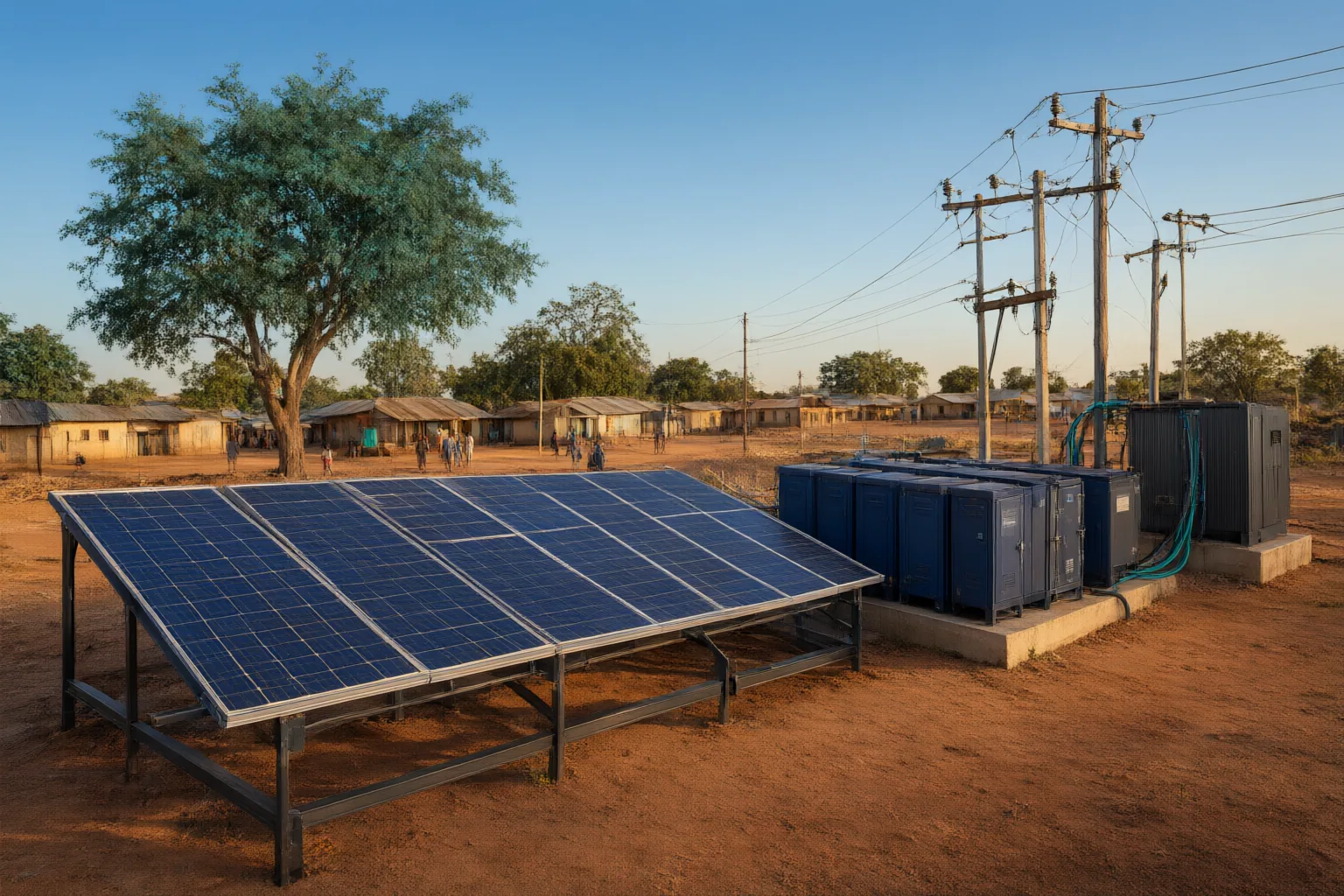
Before relying on a capacity threshold, tariff process, permit requirement, customer protection, or compensation rule, identify the operative NERC instrument and verify its date, commencement status, amendments, and application to the particular mini-grid project.
Why the Applicable NERC Instrument Must Be Checked First
The supplied sources refer to two differently dated instruments. NERC hosts a page titled “NERC MINI GRID REGULATIONS 2023,” while the Power Library describes NERC Mini-Grid Regulations 2026 as a framework under the Electricity Act 2023. That difference makes the applicable instrument the first question—not a detail to resolve after a project decision.
The supplied NERC excerpt confirms the 2023 title but does not provide its substantive provisions, status, amendment history, or relationship to the reported 2026 regulations. Meanwhile, the available details about the 2026 framework come from a professional-library summary rather than an official regulation text included in the research package.
Developers, operators, investors, consumers, advisers, researchers, and journalists should therefore avoid transferring a threshold or procedure from either reference directly into a project analysis. First establish which dated instrument is operative, whether it has commenced, whether another instrument has amended or replaced it, and whether the relevant provision applies to the project. This protects later decisions about capacity, tariffs, permitting, customer rights, disputes, and compensation from resting on an unconfirmed version.
A Step-by-Step Regulation Verification Checklist
Use a documented verification sequence before treating any mini-grid rule as controlling:
- Locate the official publication. Obtain the relevant instrument from an official NERC publication. A page title or third-party summary can help identify a document, but it is not a substitute for the operative text.
- Record the exact identity. Note the instrument’s full title and date. This is essential because the supplied material separately identifies a NERC page for 2023 regulations and a Power Library summary of 2026 regulations.
- Confirm legal status. Check the official publication for commencement information and determine whether amendments, replacements, transitional provisions, or other status information affect the text. The supplied NERC excerpt does not answer those questions for the 2023 instrument.
- Match the rule to the project. Establish the project’s relevant classification and circumstances before selecting a capacity, registration, permitting, tariff, customer-service, dispute, or compensation provision.
- Trace every important claim to the official text. For each rule being used, record the relevant provision in the verified instrument. Do not rely solely on an article, database entry, or professional summary for a regulatory, investment, or commercial decision.
- Escalate unresolved questions. Where the official materials do not clearly establish the operative version or its application, seek qualified regulatory or legal support before acting.
This process also creates a useful review trail: decision-makers can see which instrument was checked, what status information was available, and which project facts were used to determine applicability.
Project Rules to Confirm Against the Official Text
The Power Library summary says the 2026 framework distinguishes isolated from interconnected mini-grids and describes capacity thresholds of up to 5 MW and 10 MW, respectively. These figures should be treated as reported details until they are checked against an official NERC publication and matched to the project’s classification.
The same summary says the framework covers registration, permitting, portfolio applications, tariffs, commercial arrangements, technical compliance, health and safety, customer service, dispute resolution, and compensation when the national grid reaches a mini-grid service area. Each issue can affect a different part of a project, so confirmation should be provision-specific rather than based on the regulation’s general description.
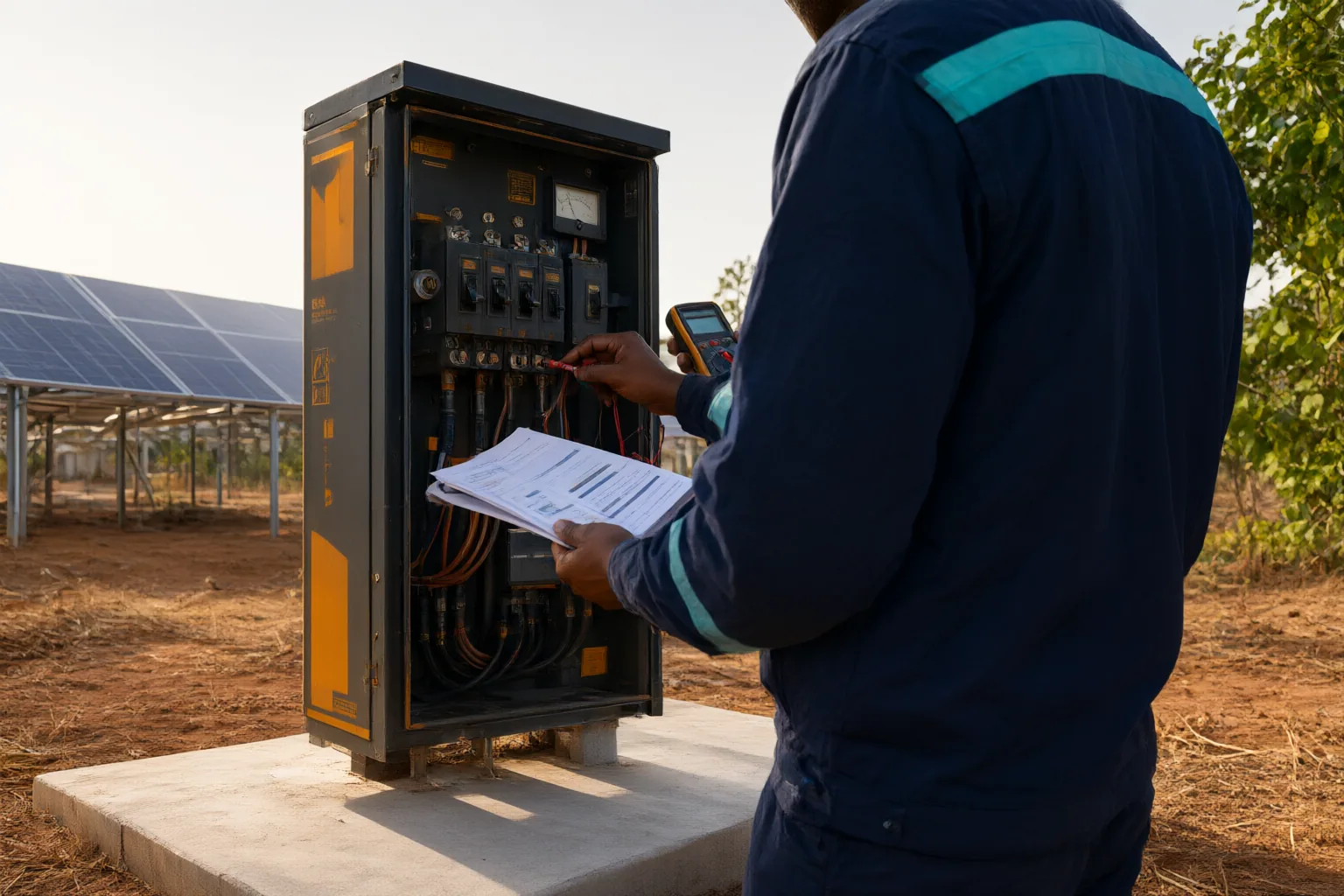
For a proposed or operating mini-grid, verify at least:
- whether the project is classified as isolated or interconnected;
- which capacity threshold applies to that classification;
- whether registration, a permit, or a portfolio application is relevant;
- what the operative text requires for tariffs and commercial arrangements;
- which technical, health, and safety obligations apply;
- what customer-service and dispute-resolution protections govern the relationship with consumers; and
- what compensation provisions apply if the national grid reaches the existing service area.
Do not assume that confirmation of one item settles the others. A verified capacity provision, for example, does not by itself establish the applicable tariff process or compensation outcome. Check each material issue in the operative text and against the project’s actual circumstances.
Conclusion
A reliable mini-grid regulatory analysis begins with the instrument, not a quoted threshold or summarized procedure. Locate the official NERC publication, confirm its exact title and date, establish commencement and amendment status, and then match its provisions to the project’s classification and circumstances. Use third-party summaries as leads rather than final authority.
Before making a regulatory, investment, tariff, or compensation decision, obtain the relevant official NERC instrument and have any unresolved questions about its status or project-specific application reviewed with qualified regulatory or legal support.
Disclosures and limitations
- This article was prepared with AI assistance using only the supplied NERC page excerpt and Power Library summary. Readers should verify operative rules and commencement status through an official NERC publication.
Related reading
- Renewable Energy in Nigeria
- Solar Generation vs Battery Storage in a Nigerian Home Power System
- How Nigerian Homeowners Can Assess Rooftop Solar Suitability Before Requesting Quotes
Sources
- NIGERIAN ELECTRICITY REGULATORY COMMISSION — nerc.gov.ng
- NERC Mini-Grid Regulations 2026 – Power Library — powerlibrary.theelectricityhub.com