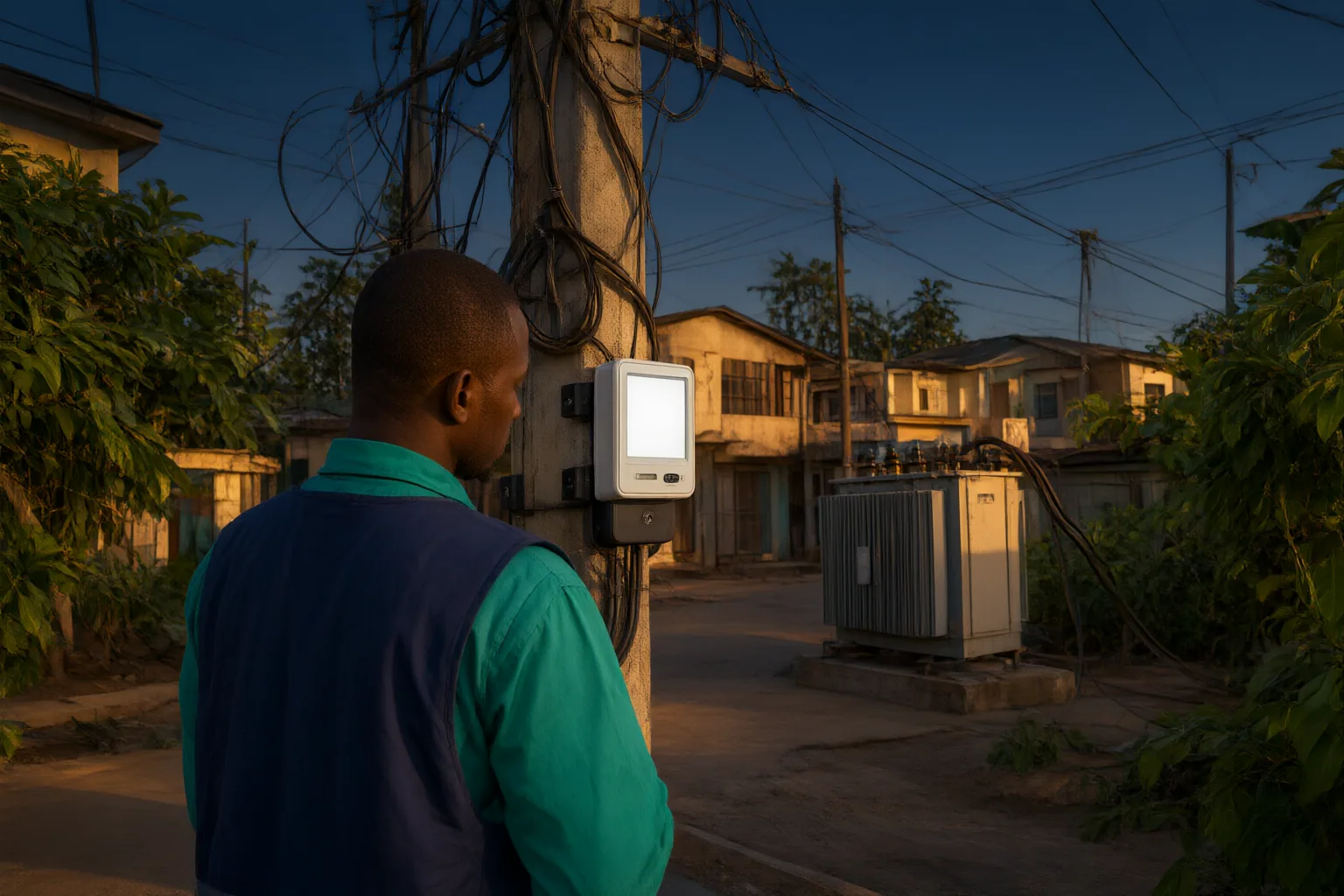
The available evidence describes a service-linked tariff system in which electricity charges are associated with expected daily supply, alongside substantial metering and billing challenges. It does not establish a complete, currently verified set of official customer-service rules, complaint procedures, compensation rights or response deadlines.
What “customer service standards” means in the available evidence
In the supplied sources, Nigeria electricity customer service standards are best understood through three connected issues: tariff bands, billing accuracy and service reliability. The evidence does not provide a current NERC rulebook defining enforceable complaint procedures, compensation or response times.
BBC News Pidgin reported that the service-reflective tariff introduced in 2020 classified customers from Band A to Band E according to daily electricity supply: 20 hours for Band A, 16 for Band B, 12 for Band C, eight for Band D and four for Band E. The Conversation later described the classification as based on daily feeder supply, identifying Band A as 20 hours or more and Band E as four to seven hours.
These accounts support a practical principle: the service band assigned to a customer is intended to connect the charge paid with an expected level of supply. However, the BBC description is historical, while The Conversation is a secondary analysis. Neither should be treated as independent confirmation of the rules or rates in force today.
How tariff bands connect charges with expected electricity supply
The band system makes supply duration relevant to both pricing and customer expectations. A customer identified as Band A would reasonably compare actual service with the higher supply duration associated with that classification, while customers in lower bands would compare service with the shorter reported thresholds. The sources do not establish a universal process through which every customer can verify or challenge a band assignment.
The Conversation reported that in April 2024 the tariff increase applying mainly to Band A customers raised the price from ₦67 to ₦225 per kilowatt-hour. This is a dated, secondary-source account—not confirmation of a current tariff. It nevertheless illustrates why consumers may closely examine whether charges and delivered service correspond. The same source reported nationwide labour protests and picketing of regulatory and distribution-company offices after the 2024 increase, reflecting concern about affordability and the service received in return.
BBC News Pidgin reported that factors cited by NERC when explaining the 2020 adjustment included inflation, gas prices, exchange rates, electricity sales volumes, unit generation costs, and aggregate technical, commercial and collection losses. The report provides historical context for tariff decisions, but it does not prove that identical calculations or thresholds apply now.
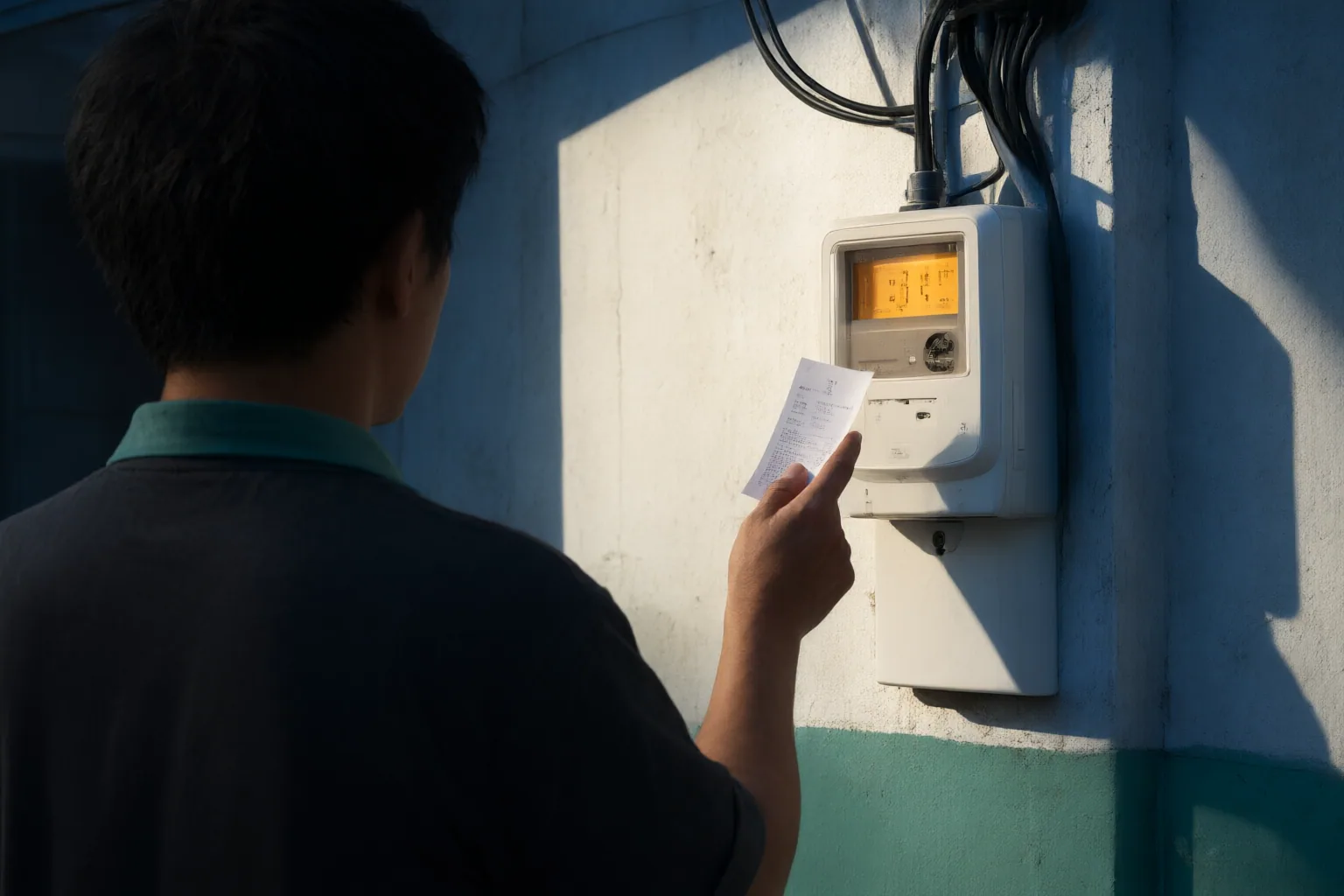
Metering gaps, estimated bills and service-reliability concerns
Metering affects whether a bill can be tied directly to measured consumption. According to The Conversation, 6.29 million of the 13.5 million registered customers across 12 distribution companies had meters as of December 2024. That represented a metering rate of 46.57%, leaving more than half of registered customers exposed to estimated billing because of the metering gap.
For consumers, this gap creates a basic confidence problem. Without an installed meter, a customer cannot use actual meter readings as the foundation for checking consumption charges. The source links this situation with billing disputes and weaker willingness to pay. That does not, by itself, establish a particular legal remedy, billing cap or compensation entitlement.
Distribution losses form part of the wider service and revenue context. The Conversation reported aggregate technical, commercial and collection losses of 36.36% across distribution companies in the first quarter of 2024, rising to 39.10% in the third quarter. These figures describe system-level losses; they should not be used to infer the cause of an individual customer’s bill or outage.
The evidence therefore supports careful documentation. A metered customer can retain dated readings and bills for comparison. An unmetered customer can preserve bills, payment records and a log of observed supply interruptions. Such records may clarify the facts of a dispute, although the supplied sources do not confirm how a distribution company or regulator must respond.
Conclusion
The evidence shows why tariff classification, expected supply, meter status and billing records belong in the same customer-service conversation. It also has firm limits: it does not verify today’s rates, current band thresholds, statutory response periods, compensation rights or an official complaint pathway.
Check the tariff band stated on your account or bill and compare it with the supply duration associated with that band in current official materials. Keep bills, payment evidence, meter readings where available, and a dated record of supply. Before acting on a dispute, consult current NERC or distribution-company information rather than treating the historical figures in this article as present rules.
Disclosures and limitations
- This article was prepared with AI assistance using only the supplied BBC News Pidgin and The Conversation research summaries. The cited policy and tariff descriptions are historical or secondary-source claims and were not independently verified against current official documents.
- No products are recommended in this article, and no affiliate relationship or commercial endorsement is represented.
Related reading
- Data & Reports for Nigeria’s Electricity Sector
- Nigeria Meter Reading and Billing Verification: What Consumers Can Check
- Nigeria Electricity Service Quality: What Consumers Can Assess and Verify
Sources
- New electricity tariffs in Nigeria 2020 hike for kilowatt unit of energy frustrate pipo from Ikeja to Abuja – See how much you go pay now & why NERC announce sudden hike – BBC News Pidgin — BBC News Pidgin
- Nigeria raised electricity prices to improve supply. Why it hasn’t worked — The Conversation
- Nigeria Energy Situation – energypedia — energypedia.info
- Nigeria Renewable Energy Market Growth | Industry Analysis, Size & Forecast Report — Mordor Intelligence
- Electricity prices by user group in Nigeria 2025| Statista — Statista
- Matters Pertaining To Nigeria's New Electricity Pricing — VIZTADAILY