Before requesting rooftop solar quotes, document your roof’s condition and geometry, observe shade, develop a preliminary production estimate and decide whether you need power during grid outages. These checks create a clearer baseline for a site-specific installer assessment.
Check the Roof Before Discussing System Size
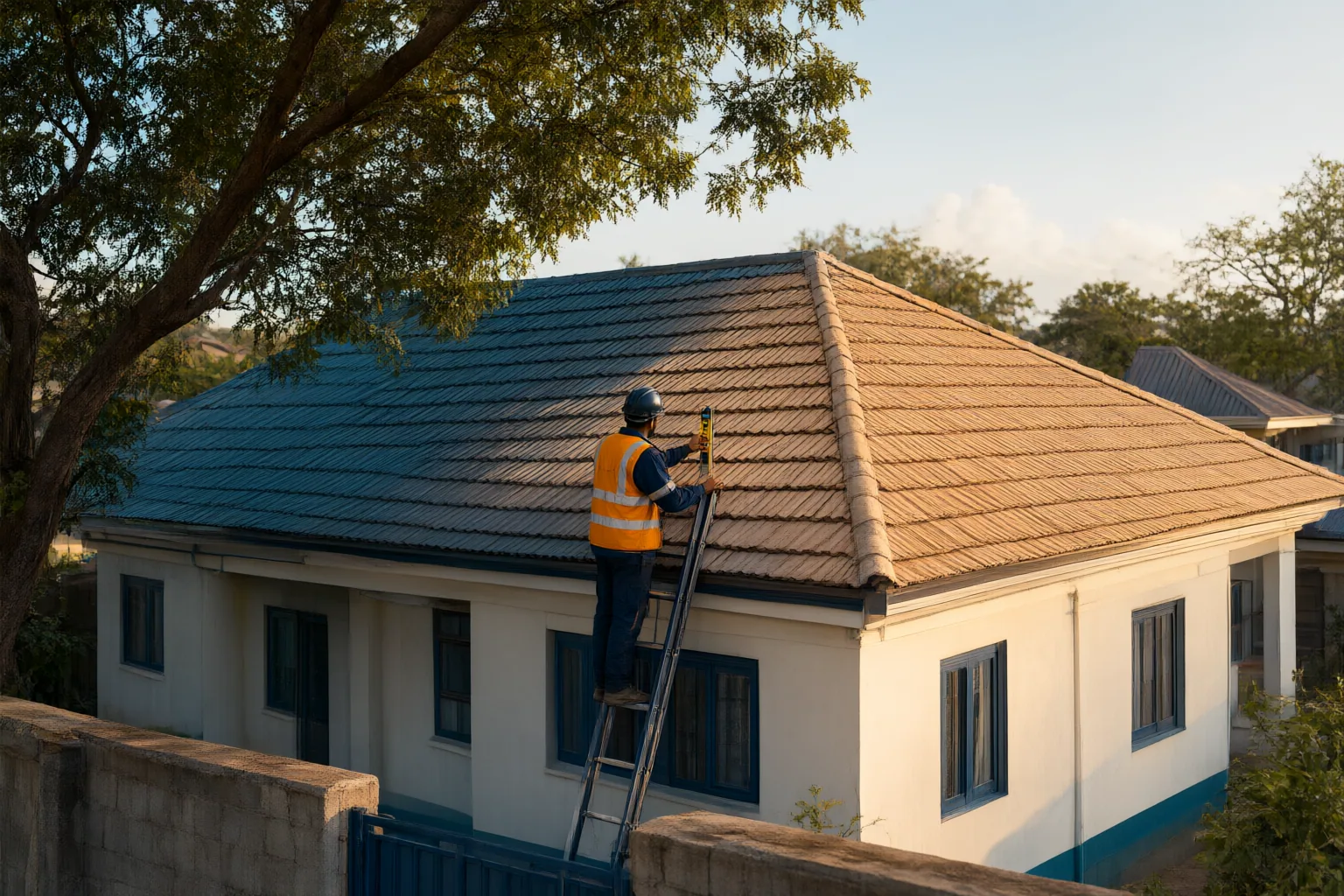
Begin with the physical surface that would support the panels. Record the roof’s apparent condition, approximate usable area, shape, slope and remaining life. The cited homeowner guidance identifies each of these as relevant to rooftop solar suitability. An ageing roof may deserve particular attention before equipment is planned around it, although the supplied sources do not establish a Nigeria-specific threshold for acceptable roof life.
Observe shade across the roof, especially shade from trees. Excessive tree shade can make a rooftop less suitable because it limits the sunlight reaching the proposed panel area. Note which sections are shaded and whether the pattern changes during the day. This is an initial record, not a substitute for a professional site assessment.
Sketch or photograph the roof layout for your own comparison of quotes. Identify sections that appear unobstructed and record unusual shapes or slopes that an installer should examine. Do not use this screening exercise to decide system size by itself. Instead, give prospective installers the same roof notes and ask each one to explain how the actual roof condition, usable area, shape, slope and shade informed the proposed design. These considerations come from general physical guidance published for a U.S. audience; they are not presented here as Nigerian regulations or installer requirements.
Assess Sunlight and Create a Preliminary Production Estimate
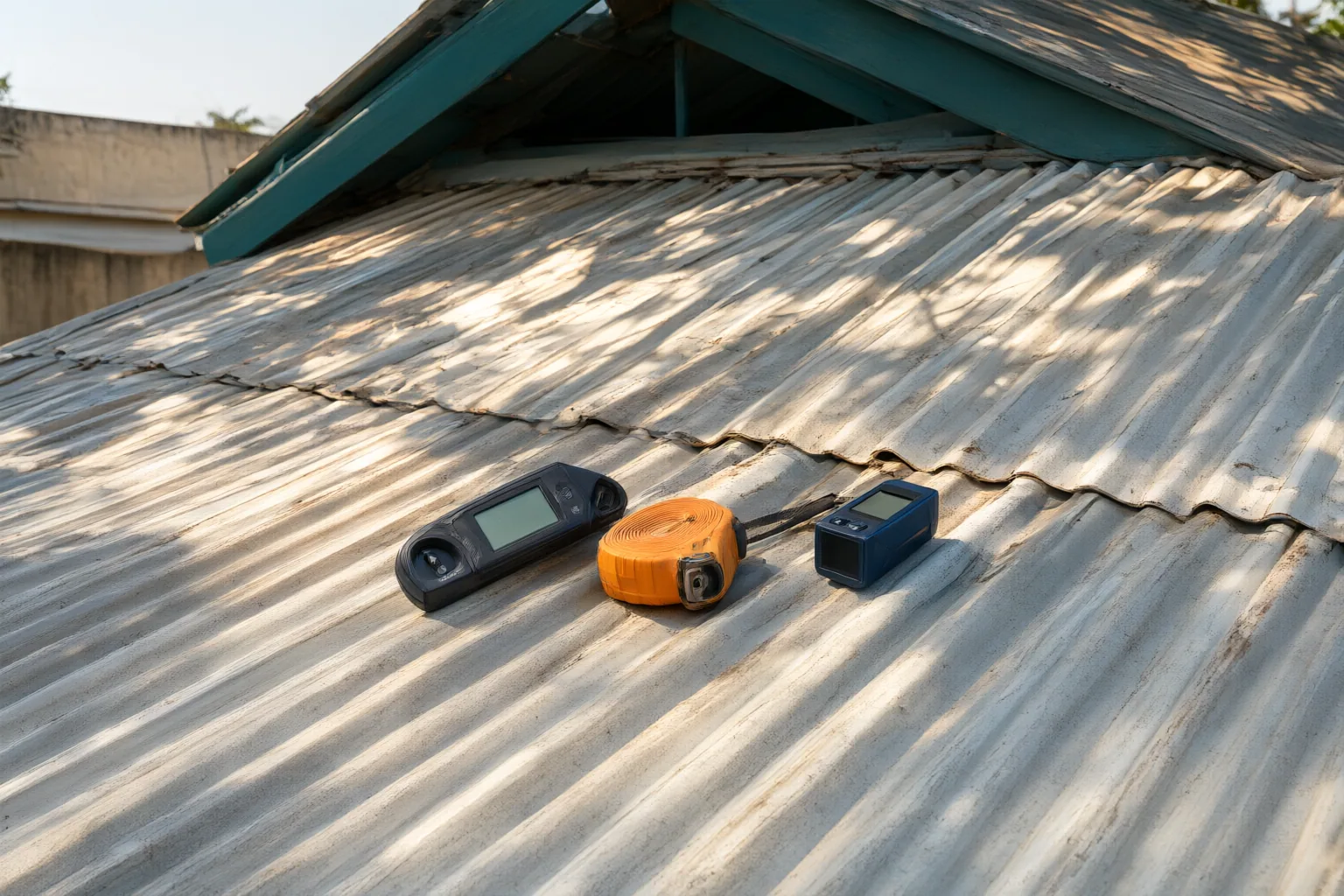
Photovoltaic panels convert sunlight directly into electric power, so the available solar resource is central to any production estimate. The amount of available sunlight is not identical everywhere: geography affects solar-energy potential, and daytime cloud cover can reduce the light reaching solar cells. A household should therefore avoid inferring expected generation merely from the fact that a proposed system uses solar panels.
Combine your shade observations with a preliminary address-based estimate. The cited homeowner guide describes PVWatts as a tool that can estimate the production and energy cost of grid-connected photovoltaic systems for addresses worldwide. Its output can provide a starting reference for discussing projected production, but it should not be treated as a final promise for a particular roof.
Keep a copy of the preliminary result and the assumptions shown with it. When requesting quotes, ask each installer for a custom generation estimate based on the actual site, as the homeowner guide recommends. Ask the installer to explain in writing how the estimate accounts for the proposed panel area, observed shade and the sunlight assumptions used. If an installer’s projection differs substantially from your preliminary reference, request an explanation rather than assuming either figure is automatically correct.
The supplied evidence does not establish Nigeria-specific solar yield, preferred roof orientation or installation cost. Those figures should not be inserted into the assessment without additional, relevant evidence.
Define What the System Must Do During Outages
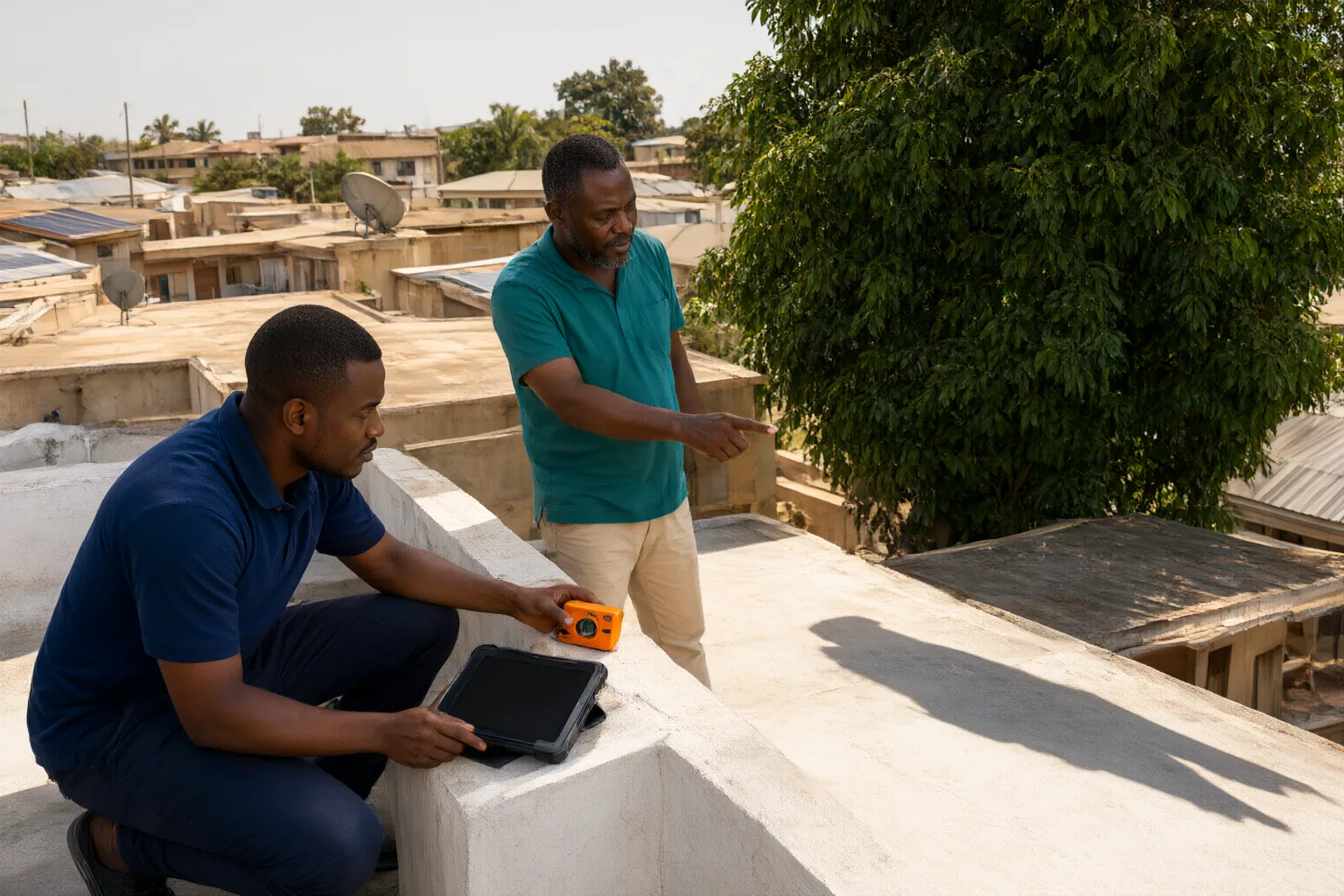
State your outage objective before comparing system proposals. One homeowner may primarily want electricity generated when sunlight is available, while another may expect selected electrical needs to remain powered during a grid disruption. Those are different expectations and should be made explicit in every request for a quote.
Do not assume that rooftop panels alone will automatically supply electricity during an outage. The cited resilience guidance associates maintaining or restoring electricity during grid disruptions with solar combined with storage or a microgrid; it does not present panels alone as sufficient for that function.
Write down whether outage support is required and ask prospective installers to describe the system configuration proposed for that objective. Their response should distinguish the panels’ generation role from any storage or broader microgrid arrangement included for resilience. Ask them to explain what their generation estimate covers and whether the quoted design addresses your stated outage expectation.
This step does not determine a suitable storage size or technical configuration: the supplied sources provide no Nigeria-specific equipment or household-load data. Its purpose is to prevent a basic mismatch between what the homeowner expects and what the quoted solar system is intended to do.
Conclusion
Prepare one written baseline before contacting installers. Record the roof’s condition and remaining life; note its usable area, shape and slope; observe significant tree shade; save a preliminary production estimate; and state clearly whether you expect electricity during grid outages.
Give the same information to every prospective installer and request a site-specific generation estimate. Ask each installer to explain the assumptions behind that estimate and how the actual roof and shade affected the proposal. If outage power is part of your objective, require the explanation to identify the storage or microgrid arrangement intended to support it rather than treating panels alone as backup power.
Use this documented baseline to compare the explanations accompanying quotes without assuming unsupported Nigerian costs, yields, rules or qualifications. Your next action is to assemble the roof notes, shade observations, preliminary estimate and outage requirements, then request an on-site assessment and written generation assumptions from each prospective installer.
Disclosures and limitations
- This article was prepared with AI assistance using only the supplied U.S. Department of Energy and solar-power reference material. General roof and sunlight considerations are not presented as Nigeria-specific regulations, costs, yields or installer standards.
- No products or affiliate offers are recommended in this guide. Readers should independently assess any commercial quote and request site-specific assumptions in writing.
Related reading
- Renewable Energy in Nigeria
- How Nigerian Households Can Match a Solar Solution to Essential Electricity Loads
- What Nigerian Mini-Grid Developers and Communities Should Verify About Permits, Tariffs, Consumer Protections, and Grid Arrival
Sources
- Nigeria – Wikipedia — en.wikipedia.org
- Solar Energy — Energy.gov
- SOLAR | Division of Information Technology — it.stonybrook.edu
- Solar energy – Wikipedia — en.wikipedia.org
- Solar power – Wikipedia — en.wikipedia.org
- Nigeria — Wikipédia — fr.wikipedia.org
- Nigeria – Wikipedia, la enciclopedia libre — es.wikipedia.org
- Homeowner’s Guide to Solar — Energy.gov