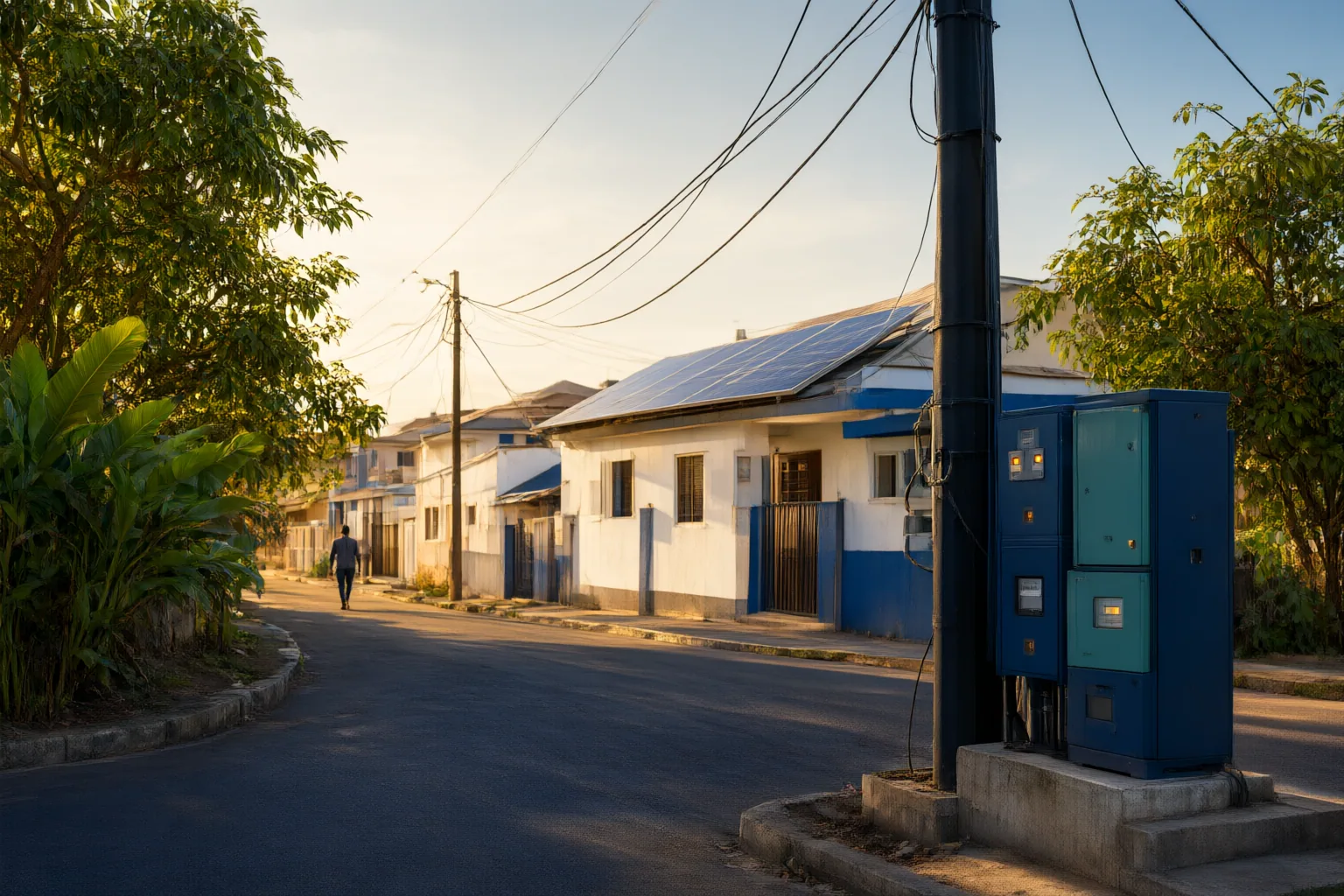
A Nigerian electricity bill may be affected by the customer’s approved service band, the hours of electricity supplied and, for unmetered customers, estimated-billing limits. Consumers can challenge a bill or band classification that appears inconsistent with these principles, but the available sources do not provide current tariff rates or a sample bill for numerical calculations.
What determines an electricity bill in Nigeria?
Service-band billing connects electricity charges with the level of supply expected under an approved classification. The FCCPC states that customers should be billed according to the hours of electricity supplied under their approved band and may contest the band assigned to them.
The supplied account of how this framework began is historical. BBC News Pidgin reported that the Service Reflective Tariff took effect on 1 September 2020 and linked charges to expected daily supply hours across bands A to E. Those historical descriptions should not be read as a current tariff schedule.
BBC also reported that the 2020 tariff review considered inflation, gas prices, exchange rates, average electricity sales, generation costs and distribution losses. Some factors differed between distribution companies. This helps explain why charges cannot be assessed from a band label alone, but the research package contains no current distribution-company tariff order, current rate table or bill sample. It therefore cannot support a verified line-by-line calculation of a present-day bill.
The central consumer question is whether the billed classification corresponds with the electricity service actually supplied. This matters because consumers interviewed in the 2020 BBC report questioned higher charges when they did not see a matching improvement in reliability.
How to check your service band and estimated bill
Start by identifying the approved service band connected to the bill, then compare it with the hours of electricity actually supplied. If the classification does not reflect the supply received, the FCCPC says the customer may contest the assigned tariff band. A comparison over time is more useful than treating the band name as proof that the expected service was delivered.
For an unmetered account, examine whether the estimated charge stays within the applicable estimated-billing cap. The FCCPC states that unmetered customers should not face a cost increase beyond what is chargeable to metered customers in the same area and directs consumers to the applicable cap. The relevant checks are therefore the cap and the amount chargeable to comparable metered customers nearby.
The supplied evidence does not identify the current cap for a particular location, provide current tariff rates or include a sample bill. It would be unsafe to infer a valid naira amount or reproduce a present-day calculation from the historical 2020 reporting. Instead, use the approved band, observed supply hours and the applicable estimated-billing cap as the points of comparison. An apparent mismatch in any of these areas provides a clear issue to raise with the distribution company.
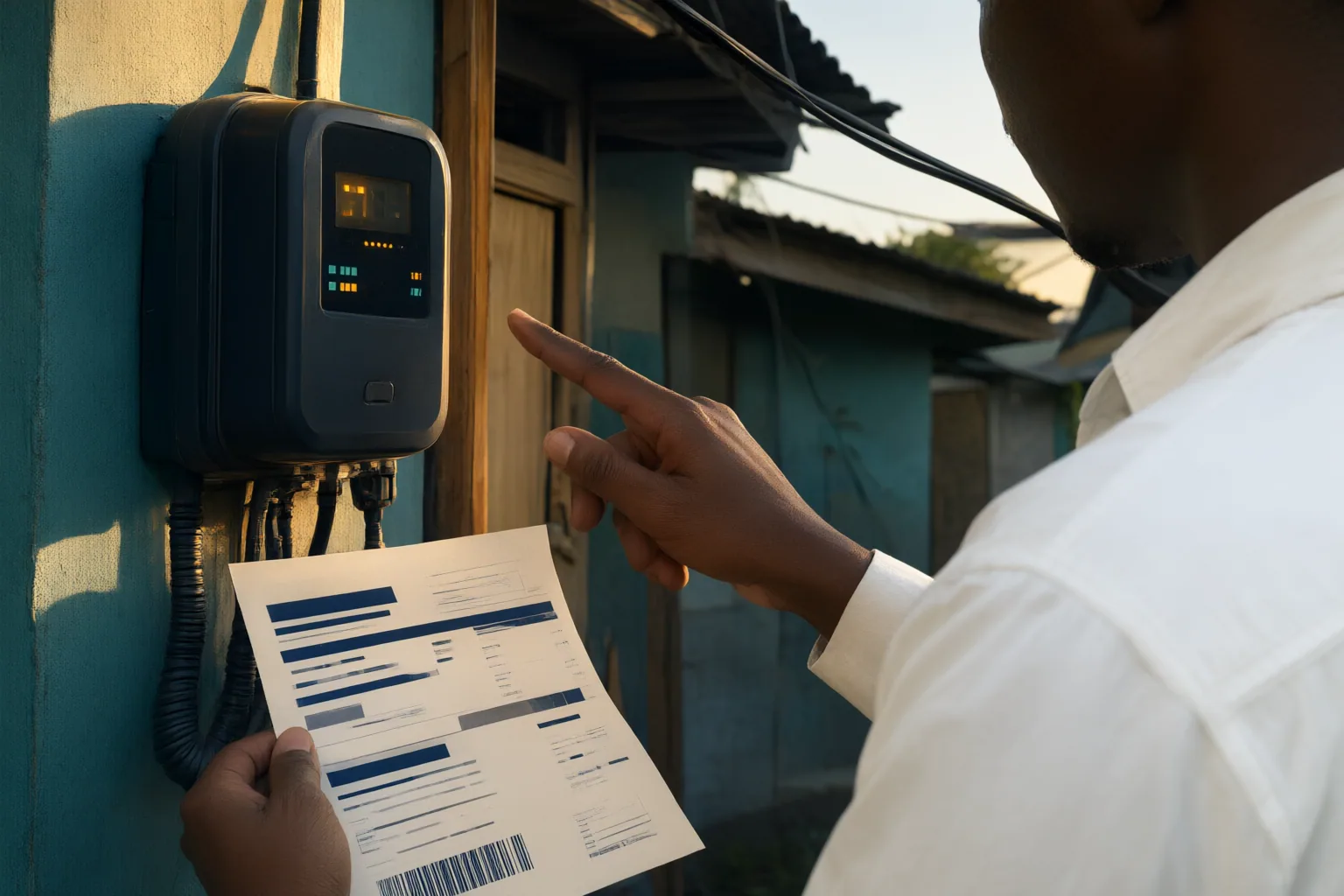
What to do when you dispute a bill
The FCCPC says an electricity customer may contest a bill. While the dispute is being resolved, the customer may withhold payment of the disputed bill and pay the last bill that was not disputed. This distinction matters: the guidance does not describe a dispute as a reason to ignore every payment obligation.
A complaint can focus on the specific inconsistency shown by the available information—for example, a service band that does not reflect the hours supplied or an estimated charge that appears to exceed the applicable cap. The FCCPC also says customers may contest their tariff-band classification, so the bill amount and the underlying band can be challenged separately when appropriate.
Timing and notice are also relevant. According to the FCCPC, the payment date must be at least ten working days after the bill is delivered. It also states that the distribution company must provide written notice before disconnection. These protections can help a customer distinguish a formal payment or disconnection process from an unsupported demand.
Because the supplied FCCPC material has no publication or update date in this research package, these points should be treated as the official consumer-rights guidance contained in that source, not as proof of a newly announced rule. Present the disputed amount, the last undisputed bill and any band or estimated-billing mismatch clearly when contacting the distribution company.
Conclusion
Understanding a Nigerian electricity bill begins with three evidence-supported checks: whether the approved band matches actual supply hours, whether an unmetered estimate respects the applicable cap, and whether the required dispute and notice protections are followed. The September 2020 band account explains the historical framework but is not a current tariff schedule.
Record your supply hours, compare them with your approved band, check any estimated charge against the applicable cap, and formally dispute an apparent mismatch with your distribution company.
Disclosures and limitations
- This article was prepared with AI assistance from the supplied BBC News Pidgin and FCCPC source material. The BBC tariff information is historical reporting from September 2020, and no current tariff schedule or bill sample was provided.
Related reading
- Renewable Energy in Nigeria
- Nigeria Electricity Consumer Complaints: Issues, Regulators and Current Limitations
- Nigeria Prepaid Electricity Meter: What the Available Supplier Information Shows
Sources
- How Differential Electricity Rates Affect Businesses — linkedin.com
- New electricity tariffs in Nigeria 2020 hike for kilowatt unit of energy frustrate pipo from Ikeja to Abuja – See how much you go pay now & why NERC announce sudden hike – BBC News Pidgin — BBC News Pidgin
- Network tariffs | www.acer.europa.eu — acer.europa.eu
- LoginToLoan – Smart Investing Starts Here — logintoloans.com
- electricity consumer rights & responsibilities – Federal Competition & Consumer Protection Commission — Federal Competition & Consumer Protection Commission
- Upcoming Changes in Electricity Tariff Policy — linkedin.com