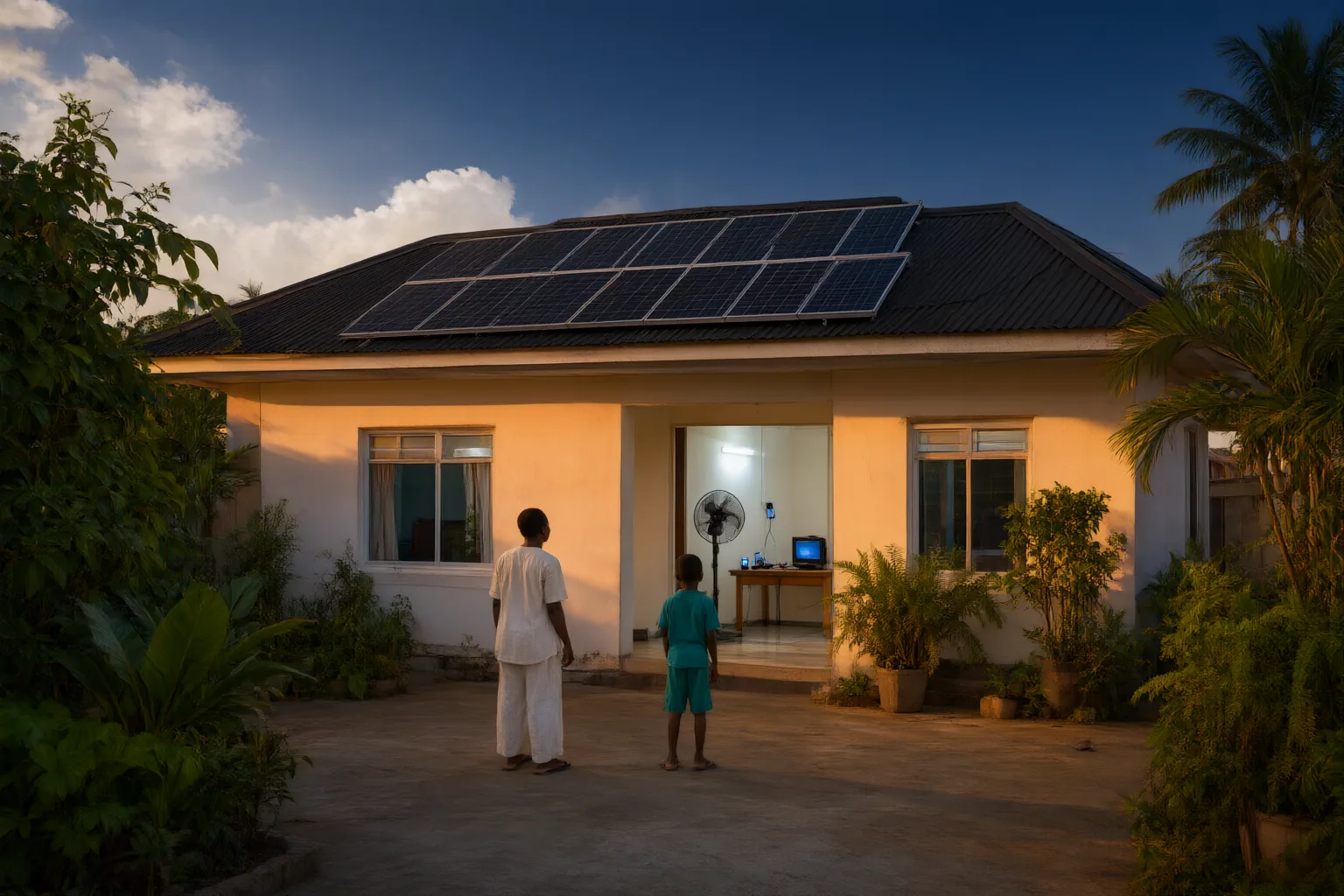
Choose a household solar solution by first identifying the electricity uses that must continue during an outage. Separate portable lighting and phone charging, compatible devices such as certain televisions, radios and fans, and equipment requiring AC power. This load-first approach helps distinguish among a solar lantern, a solar home system and an inverter system without relying on unsupported performance assumptions.
Start With the Essential Loads You Need to Keep Running
Begin with a prioritised list of what your household needs during an outage. The supplied provider page identifies uses including lighting, phone charging and certain compatible televisions, radios and fans, while placing broader household or business AC needs in a separate inverter-system category.
Group your intended uses before comparing offers. One group might contain portable lighting and phone charging. Another might include lighting plus devices specifically listed as compatible with a solar home system. A third should contain anything for which you need AC supply. Mark which uses are essential and which can be left off when electricity is limited.
Take this list to each provider and ask it to identify, in writing, which proposed solution supports every listed use. Do not assume that the name of a system establishes what it can operate. The supplied research does not provide appliance wattages, battery-capacity calculations, prices, operating durations or engineering sizing rules. It therefore cannot establish the exact system size any household needs. Those details must come from a proposal based on the intended loads rather than from unsupported estimates.
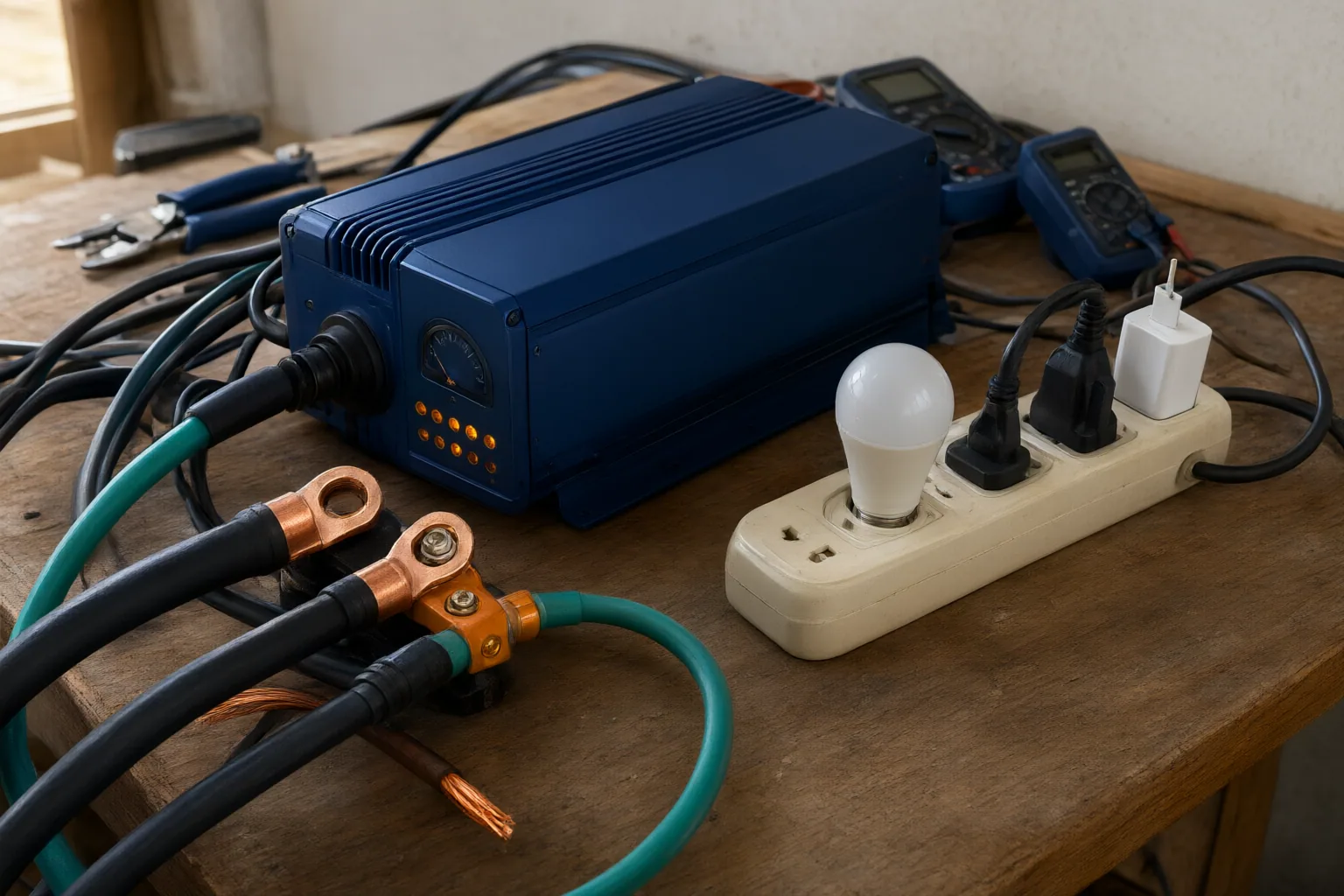
Compare Solar Lanterns, Home Systems and AC Inverter Systems
The documented categories describe different scopes of electricity service. They should be treated as a starting point for comparison, not as endorsements or performance guarantees.
A portable solar lantern is presented primarily as a lighting solution, with phone charging available among its functions. This category most closely matches a household whose essential list is limited to portable light and charging a phone.
A solar home system is presented as supporting lighting and specified compatible devices, including televisions, radios and fans. Compatibility is important: the source does not establish that every device in those classes will work with every home system. A household considering this category should ask the provider to identify the compatible equipment and confirm that the proposed package covers the exact uses on its list.
A solar inverter system is described as supplying AC power for homes or businesses. It is the relevant category to investigate when essential equipment requires AC electricity rather than the limited functions or compatible devices associated with the other categories. However, the source does not establish capacity, battery duration, performance or cost for a particular installation.
Compare offers line by line against your prioritised loads. Ask the provider to separate included components and supported uses from optional additions. Provider-hosted testimonials mentioning outages, generator fuel, maintenance costs and operating equipment are not independent evidence of what another household will experience, so they should not replace documented specifications for the proposed system.
Account for How Solar Electricity Works and Why Conditions Matter
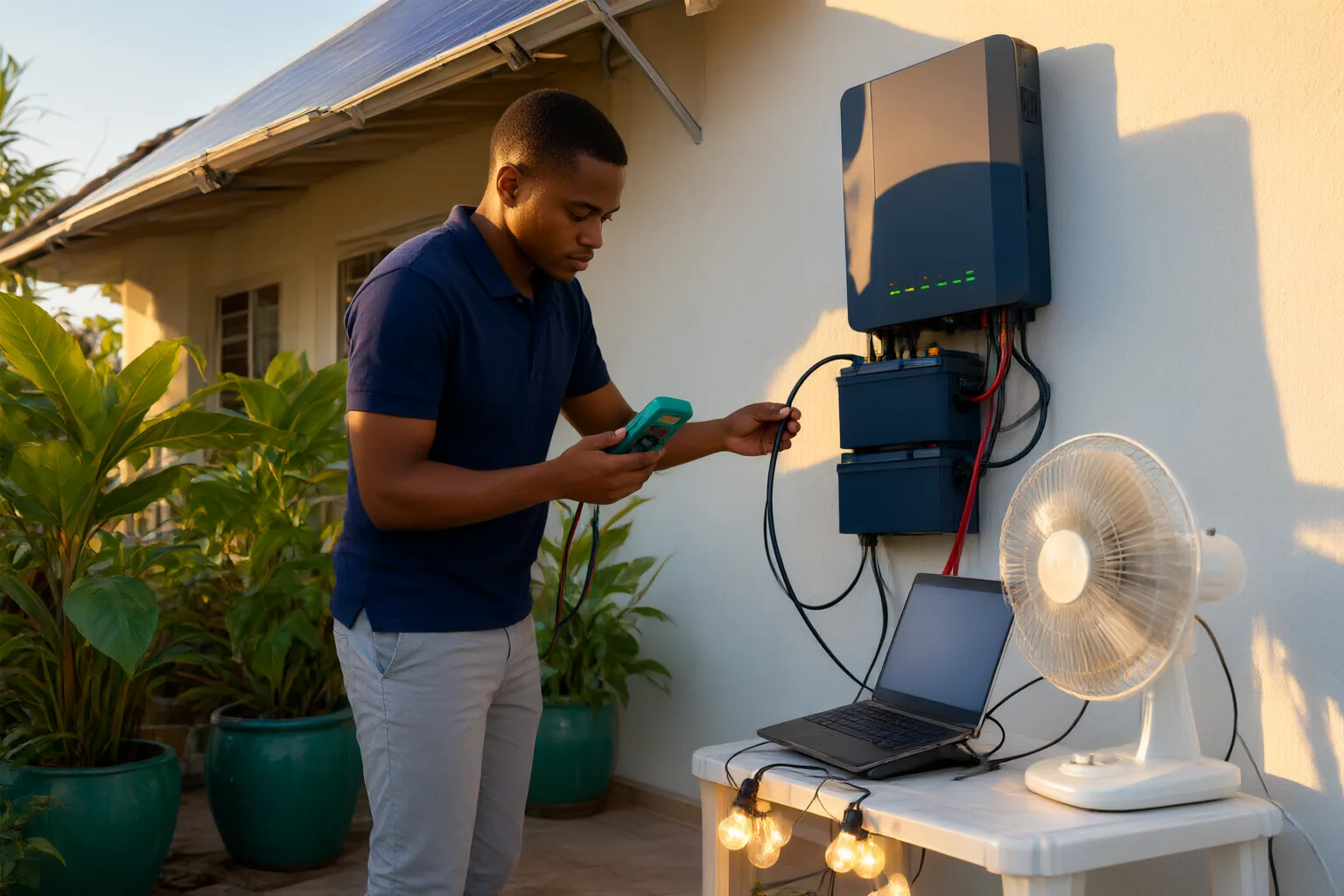
Solar energy is broader than household photovoltaic electricity. The supplied references describe solar electricity, solar thermal energy and solar architecture as different ways of harnessing solar energy. Active techniques include photovoltaic systems, concentrated solar power and solar water heating. For the household electricity options discussed here, the relevant principle is photovoltaic conversion: photovoltaic systems convert sunlight directly into electric power. Concentrated solar power is different because it uses mirrors or lenses to produce heat that can drive electricity generation.
Available sunlight is not identical in every setting. The solar-power reference states that geography affects solar potential and that daytime cloud cover can reduce the light available to solar cells. These facts are reasons to ask how a proposal accounts for the household’s location and intended uses. They do not, on their own, establish an output figure, charging time or operating duration for a proposed system.
When reviewing an offer, ask the provider to connect its proposal to both your load list and the conditions it has considered. Request written confirmation of supported uses instead of inferring performance from the general fact that a system uses photovoltaic technology. The supplied evidence provides no location-specific production estimates or battery calculations for an individual Nigerian household.
Conclusion
A practical decision starts with loads, not a product label. Identify the uses that must continue during an outage, rank them and separate portable lighting and phone charging from compatible-device needs and broader AC requirements. Then investigate the corresponding category: a solar lantern, a solar home system or an AC inverter system.
These categories narrow the comparison, but they do not prove that a particular package can support a particular household. Geography and cloud cover can affect the sunlight available to photovoltaic cells, while the supplied sources provide no sizing calculations or performance outcomes. Before buying, prepare a prioritised load list and ask the provider to document which proposed system supports each load.
Disclosures and limitations
- This article was prepared with AI assistance using only the supplied research package and was not based on personal product testing, purchasing or interviews.
- The Nigeria-specific category information comes from a commercial solar provider and is not an independent endorsement. Technical background comes from secondary reference sources; no affiliate relationship or commission is established by the supplied materials.
Related reading
- Renewable Energy in Nigeria
- What Nigerian Mini-Grid Developers and Communities Should Verify About Permits, Tariffs, Consumer Protections, and Grid Arrival
- How Nigerian Households Can Evaluate a Solar Installer and System Proposal
Sources
- SOLAR | Division of Information Technology — it.stonybrook.edu
- Sun King – Affordable Solar Systems in Nigeria — Sun King
- History of Nigeria – Wikipedia — en.wikipedia.org
- Solar energy – Wikipedia — en.wikipedia.org
- Nigeria — Wikipédia — fr.wikipedia.org
- Solar power – Wikipedia — en.wikipedia.org
- Nigeria – Wikipedia, la enciclopedia libre — es.wikipedia.org