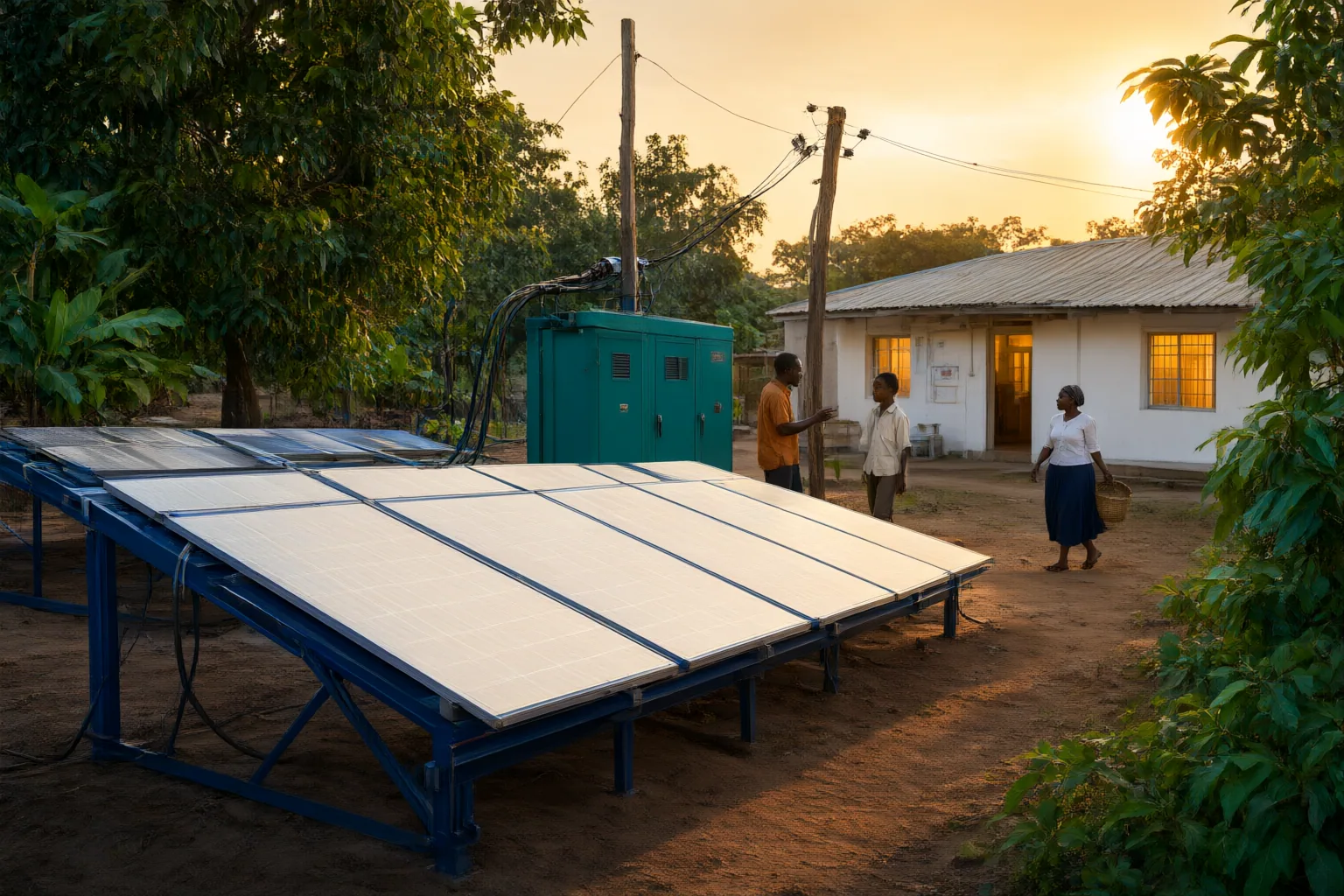
Solar mini-grids can extend electricity access by bringing solar power to communities beyond large-scale grid infrastructure. Available evidence points to their potential to serve homes and important local facilities, while accessible payment arrangements can help rural customers use solar electricity without relying on smartphones or internet access.
Why Solar Mini-Grids Matter Beyond the Conventional Grid
Solar power offers a practical route to electricity in places that large-scale grid infrastructure does not reach. An African solar overview links the continent’s sunlight with the ability to supply many such areas, making community-scale solar relevant where conventional grid access is absent or insufficient.
A documented Nigerian village example shows what this can mean locally. The World Bank describes a solar mini-grid there as giving residents their first access to electricity and characterizes that electricity as reliable, affordable and sustainable. The available evidence does not establish that every mini-grid will deliver identical results, but it illustrates the central role of the model: supplying electricity within a community that previously lacked it.
For off-grid Nigerian communities, the value of a mini-grid therefore begins with location. Solar generation can be deployed where extensive grid infrastructure is unavailable, while the electricity is directed toward users in that community. This makes mini-grids a concrete option for extending access rather than requiring residents to wait for large-scale infrastructure to arrive.
What Community Needs a Mini-Grid Can Serve
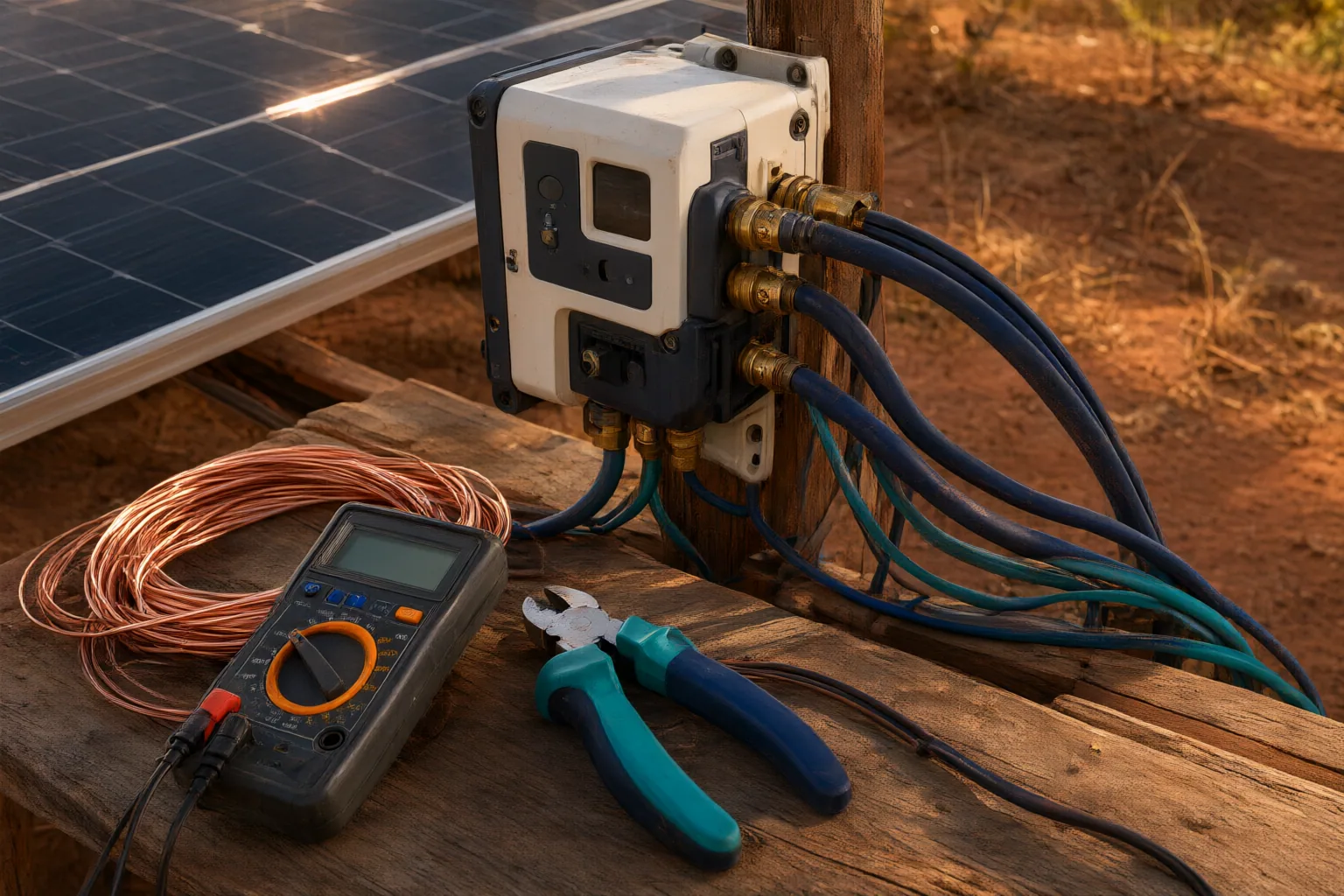
Electricity access is not only a household concern. A reported rural mini-grid project for the Ode Omi community was intended to electrify households, schools, hospitals, businesses and religious organizations. The source describes planned coverage, not confirmed completion or achieved results, but the range of intended users shows how a community project can be framed around shared local needs.
Homes represent one part of that picture. Schools and hospitals are also named among the intended users, placing education and health facilities within the proposed electricity-access plan. Businesses connect the same plan to local livelihoods, while religious organizations reflect another category of community institution.
This range matters when assessing a proposal. A mini-grid intended only for one group may not address all the electricity limitations affecting a community. Listing the households, essential facilities, enterprises and organizations that need service creates a clearer basis for judging whether a proposed project matches local priorities. Ode Omi should be treated as an example of intended scope rather than proof that all of those users ultimately received electricity.
Making Solar Electricity and Payments More Accessible
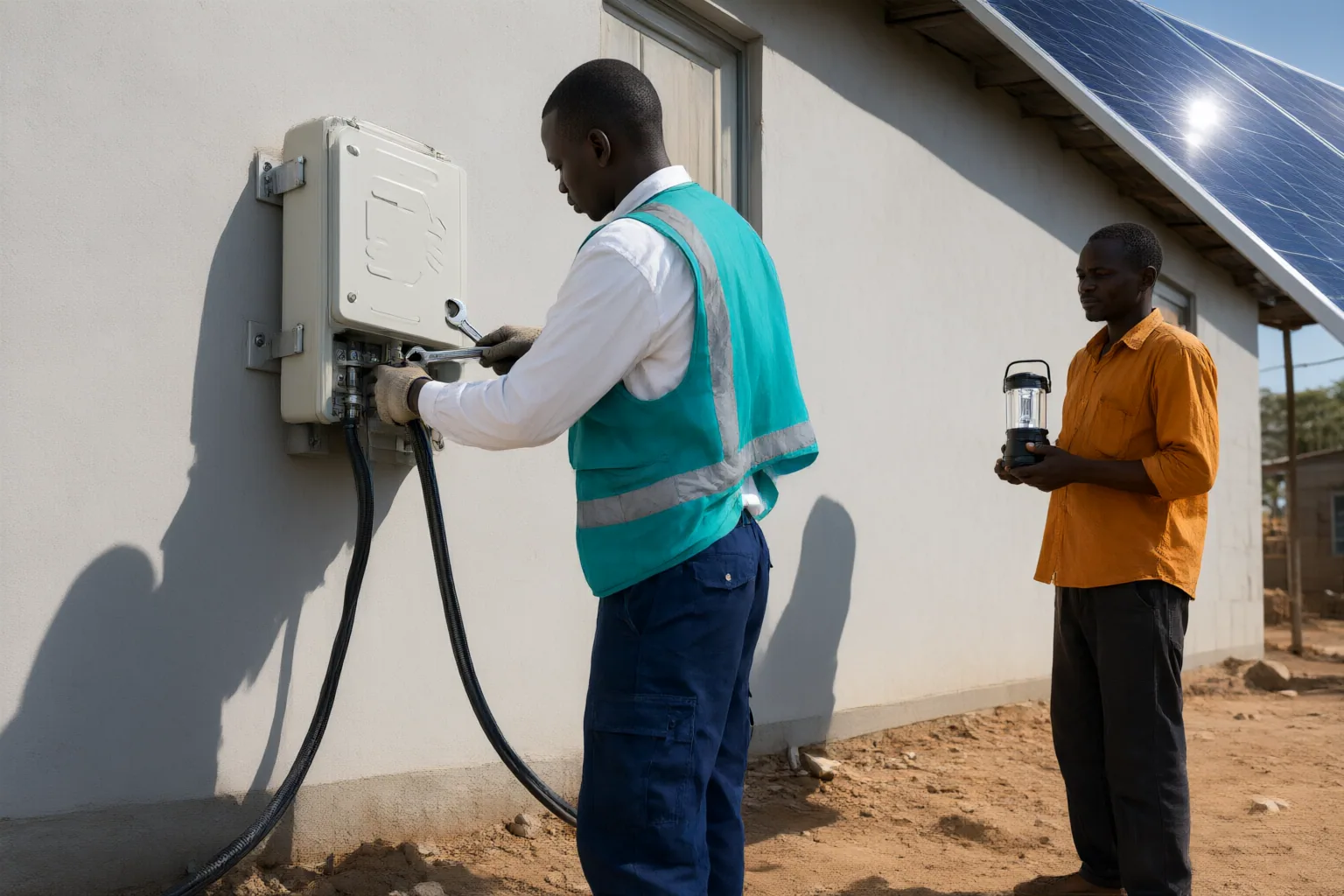
Physical electricity supply is only one part of access. Rural customers may also need a payment arrangement that works with the tools available to them. The African solar overview describes pay-as-you-go solar as a model using mobile-money payments and says it can serve rural customers who do not have smartphones or internet access.
That model should not be presented as a feature of every solar mini-grid. The supplied evidence identifies pay-as-you-go solar as a related way to make solar electricity payments accessible; it does not say that all Nigerian mini-grids use it. Communities assessing a project should therefore examine the actual payment method offered instead of assuming that mobile-money or pay-as-you-go terms are included.
The distinction is useful because an electricity project can reach an off-grid location while its payment arrangements still determine who can participate. Where prospective customers lack smartphones or internet connectivity, a model designed to accommodate those limitations may broaden practical access. Any assessment should consider both sides together: whether the system reaches the community and whether its stated payment process is usable by the rural customers it is meant to serve.
Conclusion
Solar mini-grids can extend electricity access by supplying communities outside large-scale grid infrastructure. The Nigerian village example reported by the World Bank shows first-time electricity described as reliable, affordable and sustainable, while the Ode Omi proposal demonstrates how planned coverage can include homes, schools, hospitals, businesses and religious organizations. Pay-as-you-go solar also provides a relevant example of payments designed for rural customers without smartphones or internet access, although it should not be assumed to apply to every mini-grid.
Before supporting or assessing a proposal, identify the homes, schools, health facilities, businesses and other community organizations that need dependable power. Then examine the users the mini-grid is intended to serve and the payment approach it actually offers. Compare both with the community’s real access needs rather than treating the presence of solar generation alone as sufficient evidence of fit.
Disclosures and limitations
- This article was prepared with AI assistance from the supplied World Bank, African solar overview and Ode Omi project materials. Claims remain within those sources’ stated evidence, and planned project outcomes are not presented as completed results.
Related reading
- Renewable Energy in Nigeria
- Nigeria Electricity Data Sources and Reporting Methods: A Practical Verification Guide
- Nigeria Electricity Connection and Disconnection Notices: What the Available Evidence Establishes
Sources
- Solar Mini Grids Put Nigeria on Path to Energy for All by 2030 — World Bank Blogs
- Solar power in Africa – Wikipedia — en.wikipedia.org
- Off-grid Solar Solutions and Projects | pv magazine Global — pv magazine Global
- Nigérie postavit své největší venkovské solární Mini Grid – Novinky – DS Nová energie — cz.dsnsolar.com
- Smart Grids | EUR-Lex — eur-lex.europa.eu
- EPC Services | Panasonic — lsin.panasonic.com
- Energy & Renewable Energy Law Firm in India | Projects & FDI | AZB — azb
- List of regional organizations by population – Wikipedia — en.wikipedia.org