
Renewable-energy forecasts can describe Nigeria’s wider market, but they do not prove that a particular cable, bulb or other electrical product meets applicable standards. Buyers should evaluate product-specific SON documentation or identification separately and confirm which requirements apply to the relevant product category.
Market Growth Claims Are Not Product Conformity Evidence
A renewable-energy market claim answers a different question from product conformity evidence. Mordor Intelligence reports that Nigeria’s renewable-energy market was valued at 3.59 GW in 2025 and estimates that it will grow from 4.51 GW in 2026 to 14.07 GW by 2031. Those figures are attributed estimates produced through the company’s proprietary framework and updated using information available in 2026; they are not official Nigerian statistics or confirmed future outcomes.
The same report identifies declining solar-module prices, policy conditions, financing, grid instability, transmission and distribution losses, foreign-exchange shortages and import duties as market influences. These factors can help a buyer understand sector conditions, costs or availability, but they say nothing conclusive about the quality or conformity of a specific item offered by a supplier.
That distinction matters because the Standards Organisation of Nigeria identifies poor-quality electric cables and bulbs as examples of products that can endanger life. A forecast about market capacity, investment or technology therefore cannot replace evidence connected to the individual electrical product. Treat growth language as market context and assess product conformity through the relevant product-level evidence.
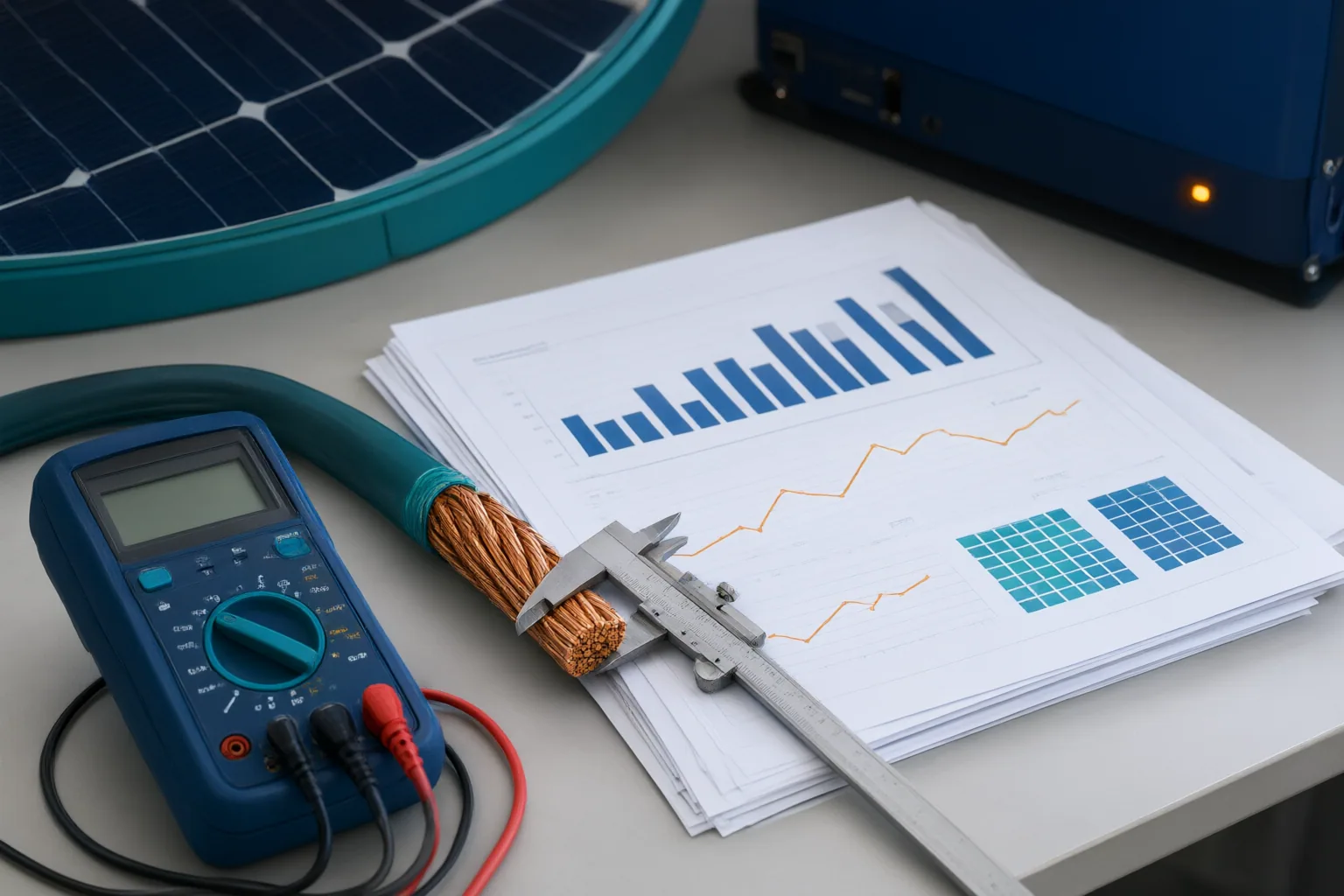
Distinguish Product Registration, SONCAP-Related Certification and Authentication Marks
SON describes several distinct forms of documentation or identification. It specifically states that a Product Registration Certificate is different from a Product Certificate associated with a SONCAP Certificate. Buyers should not treat the names as interchangeable or assume that possession of one automatically establishes possession of another.
SON also describes the Product Authentication Mark as a mark affixed to products to demonstrate conformity to approved standards. According to SON, its product-specific stickers include security features and a QR code that can be scanned with a smartphone. This physical or scannable identifier should likewise be distinguished from the two certificate types.
When a supplier presents “SON approval” as a broad claim, ask which exact document or mark is being shown and which particular product it covers. Check that the evidence relates to the item under consideration rather than merely to the supplier, another product or a general market statement.
The available SON information is general and does not establish that every renewable-energy product category follows identical requirements. A Product Registration Certificate, SONCAP-related Product Certificate or Product Authentication Mark should therefore be interpreted according to the applicable category, rather than being treated as universally required evidence for every item.
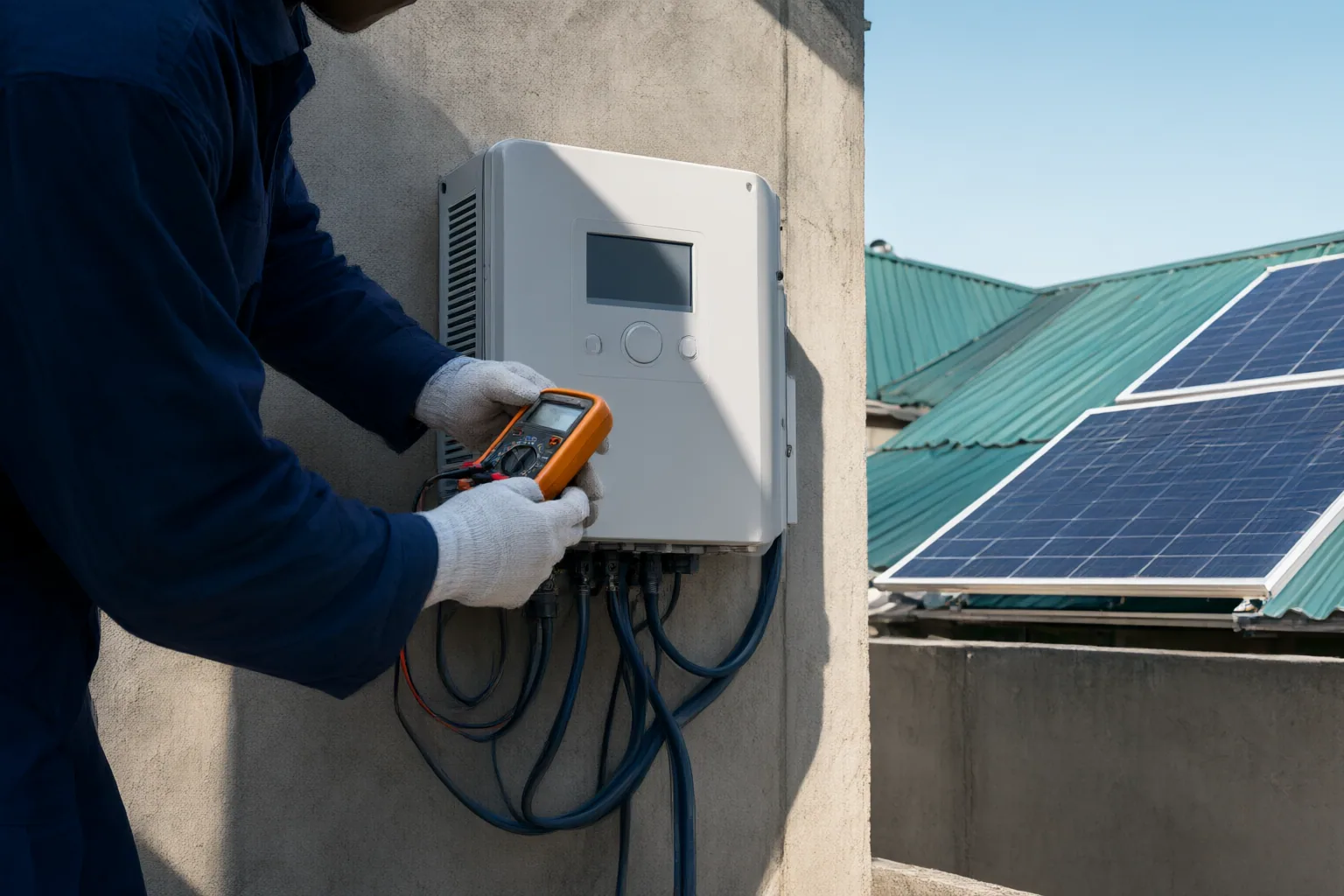
A Practical Evidence Check Before Buying
Begin by classifying each supplier statement. Claims about national capacity, growth forecasts, solar-module prices, financing or investment conditions concern the wider market. Claims that a particular product meets approved standards concern that product and require corresponding evidence. Do not allow a persuasive sector narrative to stand in for product-level documentation or identification.
Next, ask the supplier to name the specific SON-related evidence presented for the exact product. Determine whether it is a Product Registration Certificate, a Product Certificate associated with SONCAP, or a Product Authentication Mark. If a Product Authentication Mark is present, examine the product-specific sticker, its security features and its scannable QR code as described by SON. The existence of these features does not remove the need to establish that the mark applies to the product being purchased.
For context, SON says product-registration documentation includes Corporate Affairs Commission registration, a trademark certificate, authority to distribute the products in Nigeria, an application form, a laboratory test result and evidence of payment. This list helps buyers understand that registration involves supporting records, but it should not be converted into a universal checklist for every category of renewable-energy equipment. Confirm the requirements that apply to the specific category with SON.
Finally, keep commercial pressures separate from conformity. Foreign-exchange shortages and import duties may affect the cost or availability of imported equipment, while financing and declining module prices may influence purchasing decisions. None of these conditions substitutes for relevant product evidence. Before paying, record the precise product being considered, the claim made for it and the exact document or mark offered in support.
Conclusion
Nigeria’s renewable-energy forecasts and market drivers provide useful sector context, but they cannot verify the safety, quality or conformity of an individual electrical product. Product Registration Certificates, SONCAP-related Product Certificates and Product Authentication Marks are distinct, and the requirements may differ by product category.
Before committing to a purchase, separate the supplier’s market narrative from its product-specific claim. Inspect the relevant document or authentication mark, ensure that it relates to the particular item, and confirm with SON which evidence and category requirements apply.
Disclosures and limitations
- This article was prepared with AI assistance using only the supplied research package. Market estimates are attributed to Mordor Intelligence, while product-conformity information is attributed to the Standards Organisation of Nigeria.
- No specific product or affiliate offer is recommended. If commercial links are added later, any affiliate relationship should be clearly disclosed and should not be treated as evidence of product conformity.
Related reading
- Data & Reports for Nigeria’s Electricity Sector
- What Nigerian Consumers Should Verify Before Ordering a Prepaid Electricity Meter
- Why Nigerian Electricity DisCos Lose Revenue—and How Metering and Distributed Energy Could Help
Sources
- About — Climate Now
- Fleet flexibility for energy suppliers | TOGL — TOGL
- Privacy Policy – Porsche Newsroom — Porsche Newsroom
- Permitting for net-zero projects – Your Europe — Your Europe
- Study permit: Who can apply – Canada.ca — canada.ca
- FAQs – Standards Organisation of Nigeria — son.gov.ng
- Nigeria Renewable Energy Market Growth | Industry Analysis, Size & Forecast Report — Mordor Intelligence
- Nigeria — Group-IPS