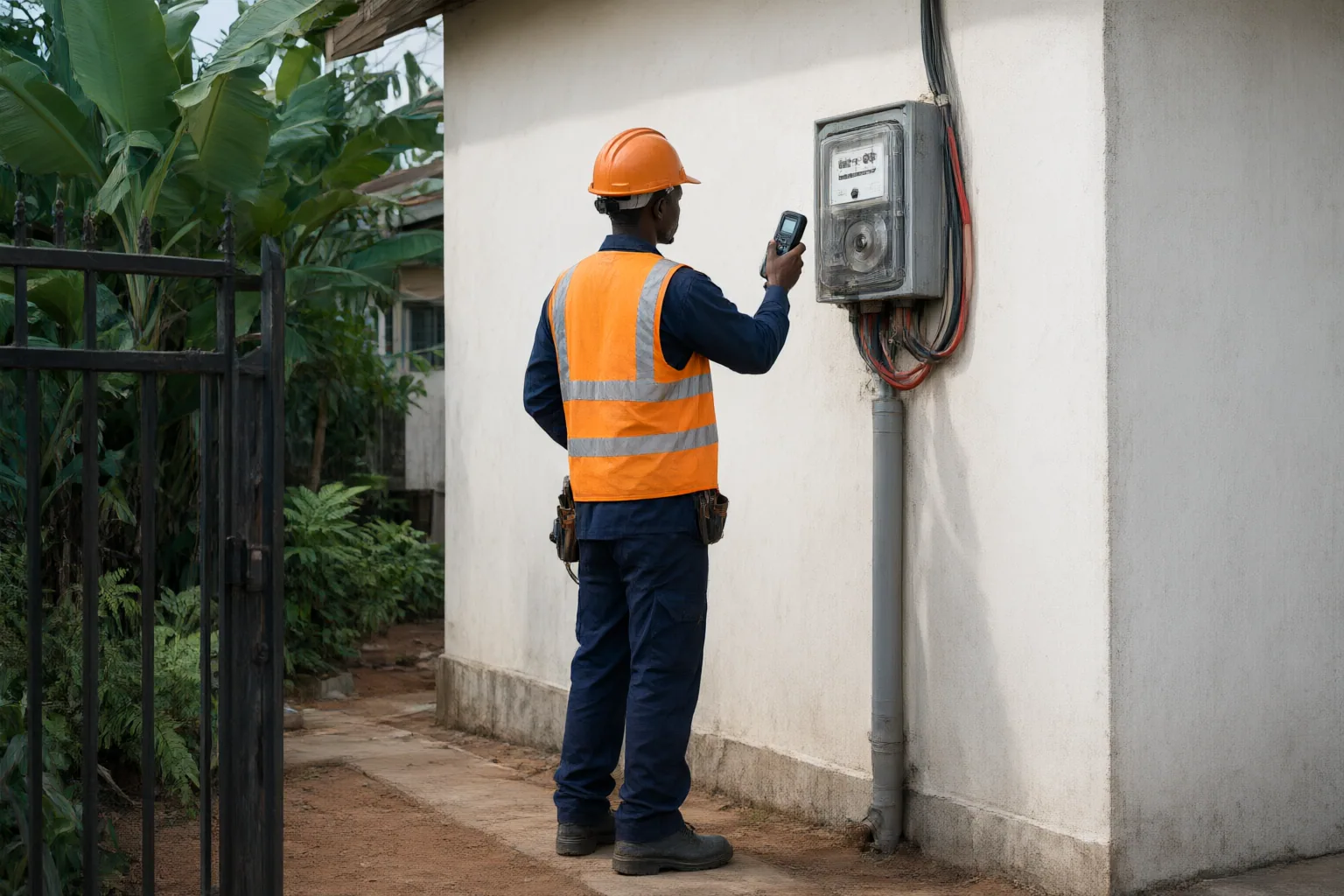
Ikeja Electric’s terms require customers to provide reasonable and necessary access for specified electricity-service work, including inspecting, testing, reading, maintaining, replacing or removing equipment. Customers may demand the company identity card of an official requesting entry. These terms are specific to Ikeja Electric and should not be treated as nationwide rules for every Nigerian distribution company.
When Ikeja Electric’s terms allow access to customer premises
Ikeja Electric’s published terms say a customer must provide the operator with reasonable and necessary access to the premises for listed electricity-service activities. Those activities include connecting or disconnecting service; inspecting, testing, altering, replacing or maintaining equipment; reading a meter; and removing a service line, meter, other apparatus or any part of that apparatus.
This means that an access request may relate to more than a meter replacement. It may concern a service line, meter reading, inspection, test, maintenance task or another item of electricity-service apparatus. Customers can therefore ask which listed activity is being performed and which equipment is involved.
The wording supplied does not establish unrestricted entry for any purpose. It links access to identified electricity-service tasks and describes the access as reasonable and necessary. However, the research material does not define notice periods, permitted entry hours, consent limits, emergency exceptions or remedies when access is refused. No conclusion on those matters should be drawn from this source alone.
Most importantly, this evidence comes from Ikeja Electric’s terms. It should not be presented as a universal legal rule applying identically to every electricity distribution company or every customer in Nigeria. Customers outside Ikeja Electric’s service area should consult their own distribution company’s current terms rather than assume the wording is the same.
How customers can verify the person requesting entry
Ikeja Electric’s terms provide a direct identity check: an official of the operator must produce the operator’s identity card when the customer demands it. A customer faced with an entry request can therefore ask to see the company identity card before relying on the person’s claimed authority.
The customer can also ask for a clear explanation of the visit. Relevant questions include whether the worker intends to inspect, test, read, maintain, alter, replace or remove equipment, and whether the work concerns a meter, service line or another apparatus. These questions connect the request to the service activities listed in the terms.
The available source does not support claims about how much advance notice must be given, the hours during which an official may request entry, or any special power to enter during an emergency. It also does not establish a nationwide verification process for all distributors. The supported practical step is narrower: when dealing with a person claiming to be an Ikeja Electric official, demand the operator’s identity card and clarify the stated purpose and equipment involved.
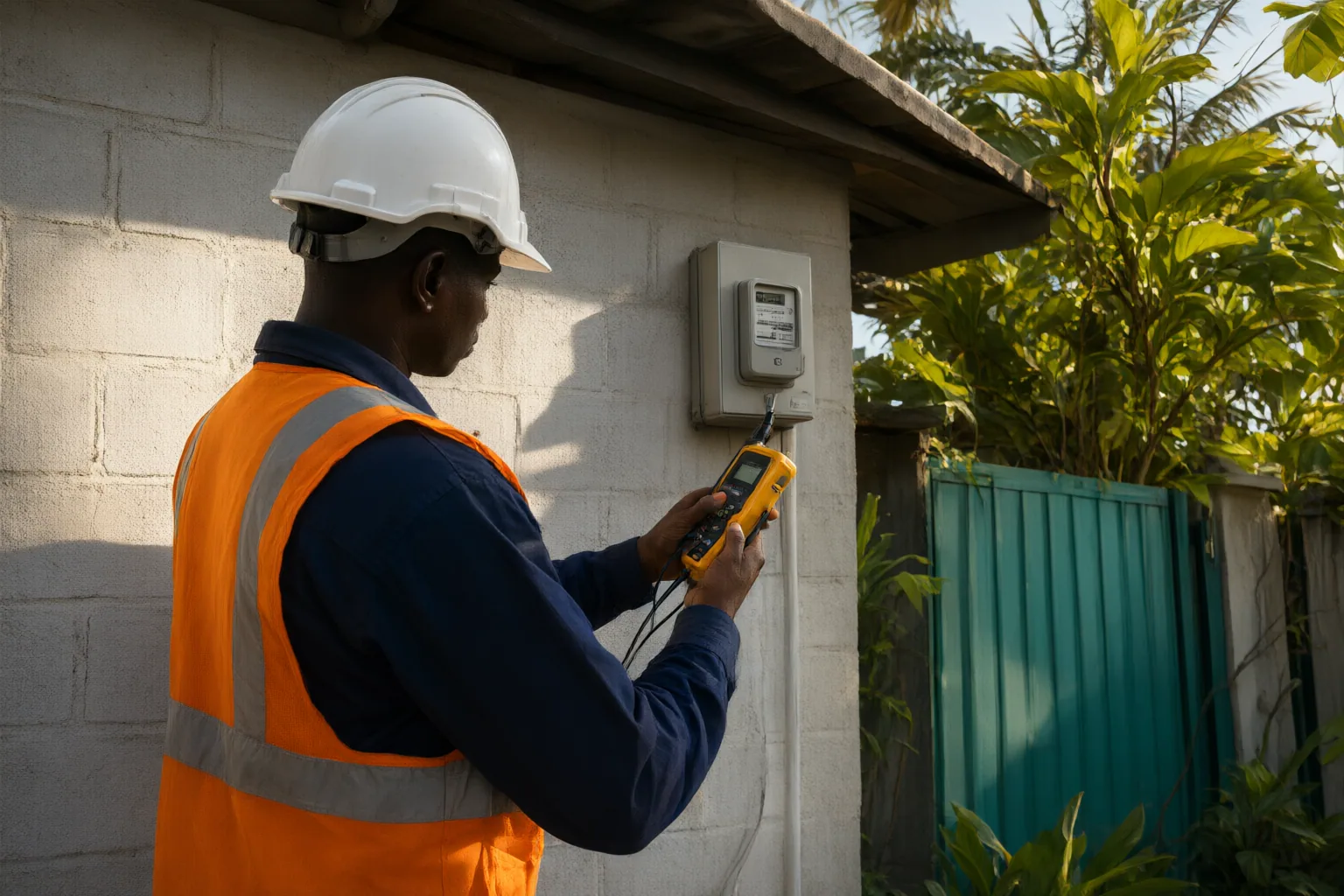
Inspections, customer installations and planned modifications
Access may also relate to the condition of a customer’s electrical installation. Ikeja Electric’s terms say the operator may inspect or test a customer’s wiring, appliances, equipment and installations before connecting the customer. They also state that the operator is not compelled to begin or continue supply unless it is reasonably satisfied with the customer’s installation or equipment.
The terms place responsibility for wiring, appliances, equipment and electrical installations at the premises on the customer. They require those installations to comply with applicable Nigerian electricity-supply and installation standards. Consequently, an inspection request before connection is not limited to equipment owned or operated by the distributor; it may involve assessing customer-side installations relevant to whether supply can safely begin or continue.
The supplied material also indicates that Ikeja Electric’s terms address notice and retesting where planned modifications or additions may increase capacity. The research package does not provide the detailed wording, timing or procedure for those requirements, so customers should not infer a specific notice period from this article. Before making such a change, the prudent evidence-based step is to consult the current terms and clarify the applicable notice and retesting process with the operator.
These provisions should not be converted into general claims about every Nigerian distributor. They describe the responsibilities and connection conditions found in the supplied Ikeja Electric material.
Conclusion
Ikeja Electric’s terms support access that is reasonable and necessary for specified service tasks, including inspection, testing, meter reading, maintenance, replacement and removal. They also give customers a concrete verification measure: an official must show the operator’s identity card when demanded.
Generic guidance about whether machinery should be repaired or replaced does not establish Nigerian electricity workers’ access rights; such decisions can depend on financial, operational, safety and strategic factors. Likewise, Ikeja Electric’s terms alone do not prove a single nationwide access rule.
Before allowing access, ask why entry is required, identify the meter, service line or other apparatus involved, and demand the official’s company identity card. If the property is outside Ikeja Electric’s service area, check the current terms issued by the customer’s own distribution company.
Disclosures and limitations
- This article was prepared with AI assistance from the supplied research package. Its material statements are limited to the identified Ikeja Electric terms and the separately identified generic maintenance source; no regulator, statute or court source was supplied.
- This article contains no product recommendation or disclosed affiliate offer. It provides source-limited general information, not a claim that Ikeja Electric’s terms govern every Nigerian distribution company.
Related reading
- Electricity Consumers in Nigeria
- Circuit Breakers, Earth-Leakage Protection and Surge Protectors: How Nigerian Consumers Can Tell Them Apart
- How Nigerian Electricity Customers Should Respond to a Meter Bypass or Tampering Allegation