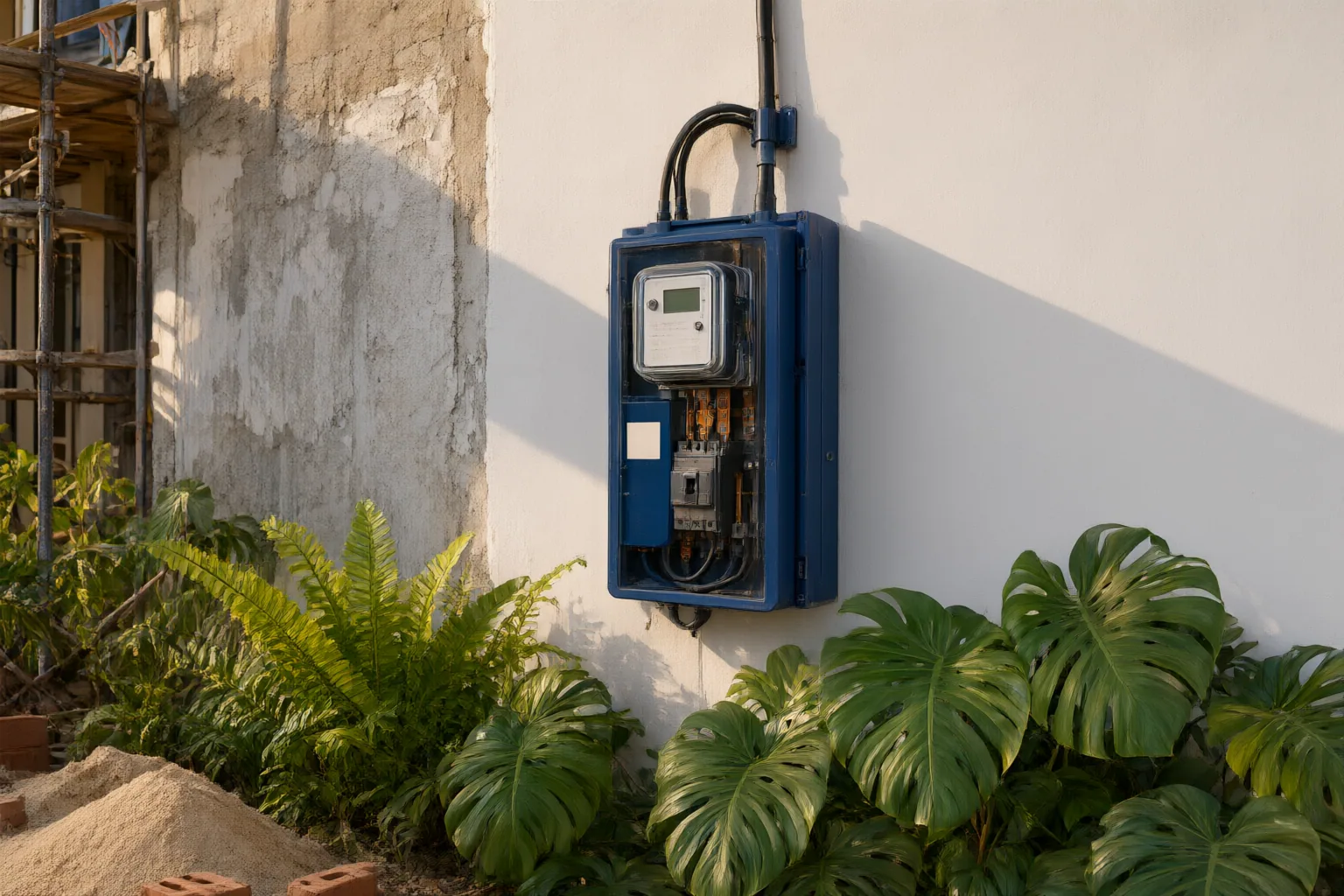
Before changing walls, entrances or electrical layouts, contact your serving electricity distribution company (DisCo). Confirm whether the proposed meter position satisfies its safety, technical and access requirements, and do not move or interfere with the meter while awaiting authorization.
Check who controls the meter and approves its location
A renovation may make the existing meter position inconvenient, but the property owner does not have sole authority to choose a replacement location. Nigerian legal commentary cited for this guide says the DisCo owns the meter and makes the final placement decision, although the customer may suggest a suitable point.
Treat the proposed location as a request rather than a settled part of the building design. Show the serving DisCo how the renovation could affect the existing meter and ask it to assess the alternative before related construction begins. This helps prevent completed walls, gates or other features from conflicting with the approved position.
NERC identifies a properly installed, functional meter and safe, reliable electricity supply as consumer rights. It also lists compliance with connection requirements stipulated by NERC and the DisCo among consumer obligations. Those rights and obligations make early coordination important: consumers can seek proper installation, but the placement must still meet the applicable requirements.
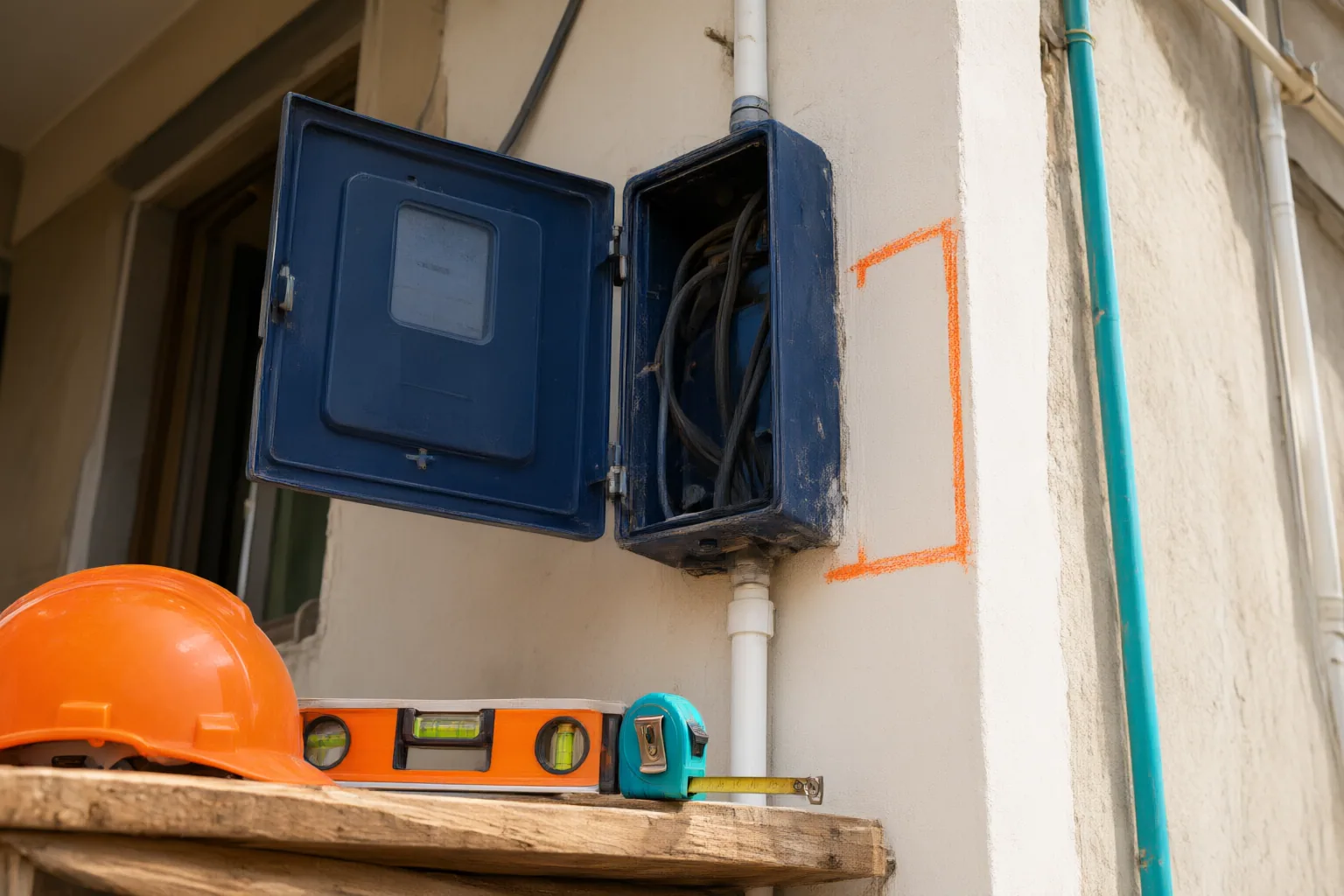
Assess safety, access and proximity before finalizing renovation plans
The cited legal commentary says a DisCo’s placement assessment includes safety, technical requirements, inspection access, meter reading and maintenance. It also cites the NERC Distribution Metering Code as requiring installation as close as practicable to the connection point. A location chosen only for appearance or convenience may therefore be unsuitable.
Before finalizing the renovation layout, consider whether the proposed point would remain safely reachable and visible for legitimate DisCo activities. Check whether new walls, fences, extensions or other planned features could obstruct inspection, reading or maintenance. Also consider whether the proposed move would place the meter farther from the connection point, because proximity is part of the cited placement rule.
These checks are planning aids, not a substitute for the DisCo’s technical assessment. A consumer may identify an apparently practical position, but the serving DisCo still determines whether it meets the relevant conditions. Where possible, obtain that assessment before committing to construction around either the existing meter or the proposed location.
Confirm the relocation process with the serving DisCo
The available sources do not establish one nationwide relocation application procedure, document list, fee, processing period or contractor rule. Confirm each of those points directly with the DisCo serving the premises. Ask how to submit the request, what property or account information it needs, whether any charge applies, how the proposed point will be assessed, when work may begin and who may perform meter-related work. Keep the DisCo’s response and any complaint records for reference.
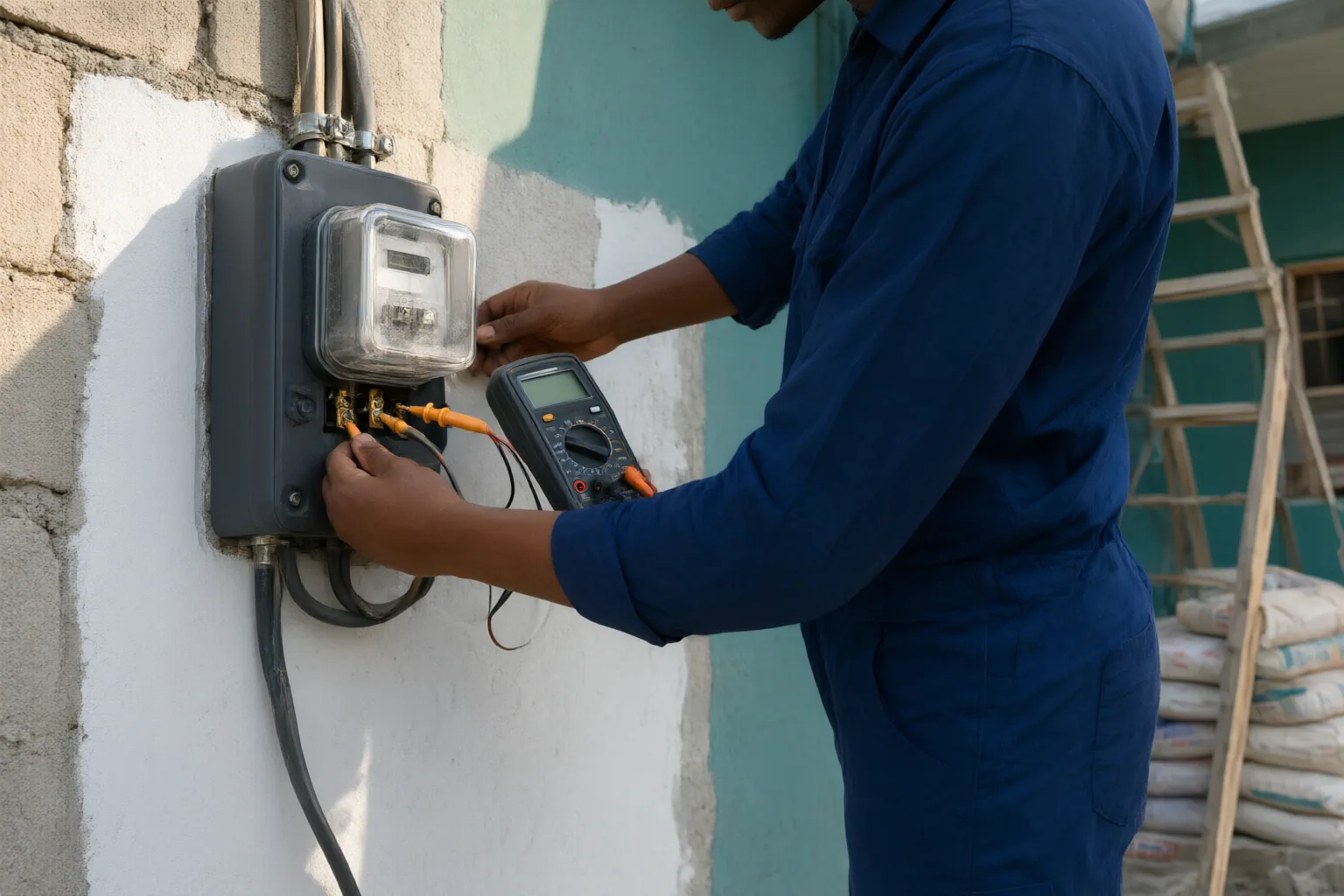
Do not treat ordinary renovation work as permission to disconnect, reposition or alter metering equipment. NERC says consumers must ensure that DisCo-owned metering and other electrical equipment on their premises is not tampered with or bypassed and must notify the DisCo about tampering or bypass. IBEDC’s published obligations similarly address protection of electrical installations, compliance with the Distribution Code, and prevention of tampering with or bypass of DisCo-owned metering equipment.
Plan the building work so that the existing installation remains protected until the DisCo confirms what is required. Contractors working on the renovation should know that the meter is utility-owned equipment and that a proposed architectural layout does not override the DisCo’s placement decision. If the meter or associated equipment appears disturbed, report the issue to the serving DisCo instead of attempting an adjustment.
Conclusion
Check ownership and approval authority first, then assess whether the proposed location can satisfy safety, technical, access, reading, maintenance and connection-point considerations. Confirm the actual application steps, documents, fees, timing and contractor requirements with the serving DisCo because those details are not established by the supplied sources.
If a relocation-related complaint is not resolved, NERC says the customer should first take it to the nearest business unit of the serving DisCo. An unresolved complaint may then be escalated to the relevant NERC Forum Office.
Before any meter-related renovation work starts, contact your serving DisCo, present the proposed location, request confirmation of its requirements and wait for authorization rather than moving or altering the equipment yourself.
Disclosures and limitations
- This article was prepared with AI assistance from the supplied NERC and IBEDC consumer information and cited Nigerian legal commentary; it does not claim first-hand product or service experience.
- Placement details drawn from secondary legal commentary should be checked against current NERC rules and the serving DisCo’s requirements before action is taken.
Related reading
- Electricity Consumers in Nigeria
- How to Check a Replacement Meter’s Serial Number Against Your Electricity Account
- How Nigerian Prepaid Customers Can Check Their Electricity Vending History and Recover Meter Tokens
Sources
- NIGERIAN ELECTRICITY REGULATORY COMMISSION — nerc.gov.ng
- Who Really Decides Where Your Meter Should Sit?⚡ – Gigawatt Lawyer — Gigawatt Lawyer
- Moving an Electrical Panel (17 Things You Should Know) — Home Inspection Insider
- IBEDC – Customer Rights — ibedc.com