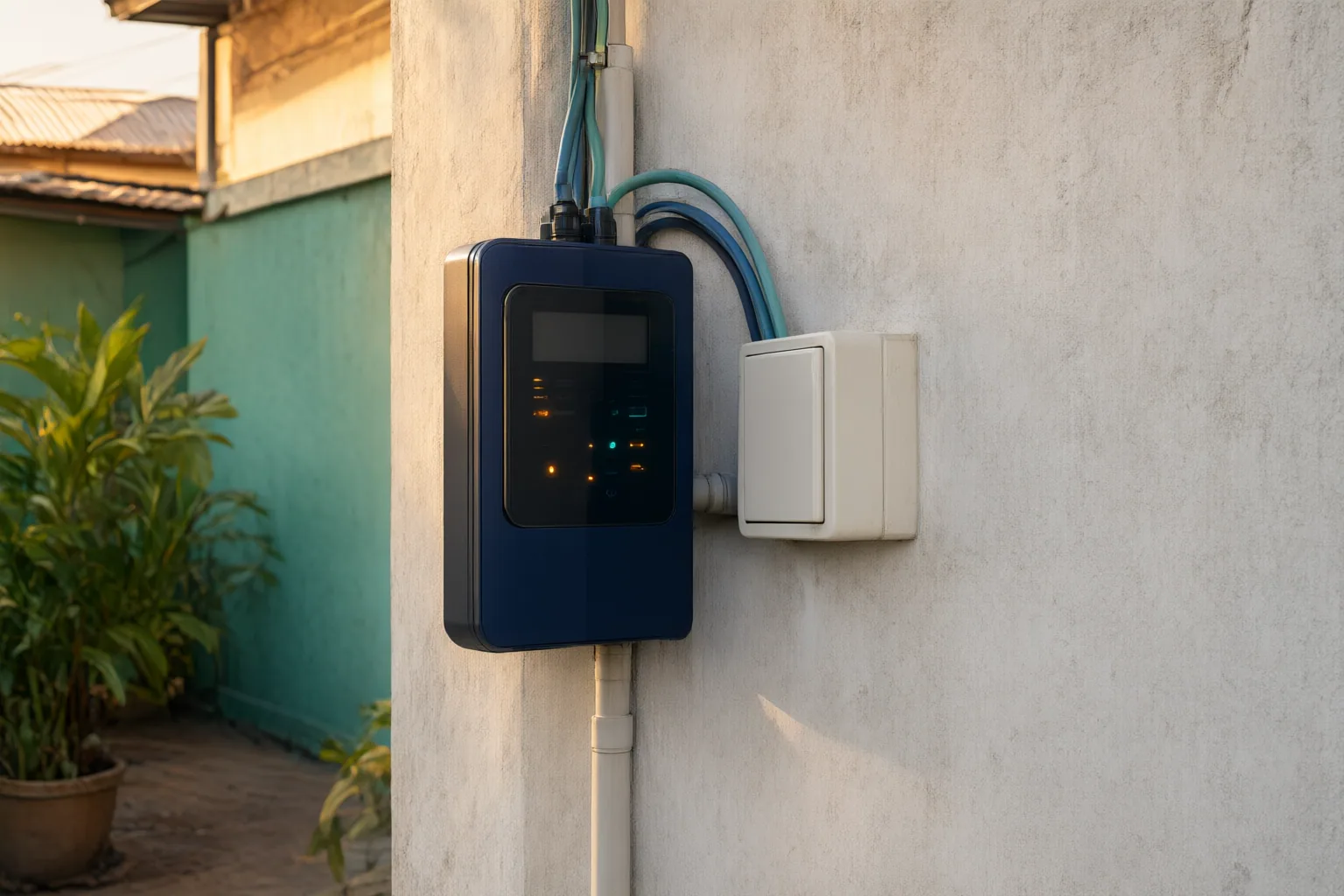
Identify the fixed number printed or stamped on the replacement meter, then compare the complete identifier with the meter-number field in your account records. Do not confuse the fixed identifier with the changing consumption reading, and request confirmation from your electricity provider if the records do not clearly correspond.
Find the fixed identifier on the replacement meter
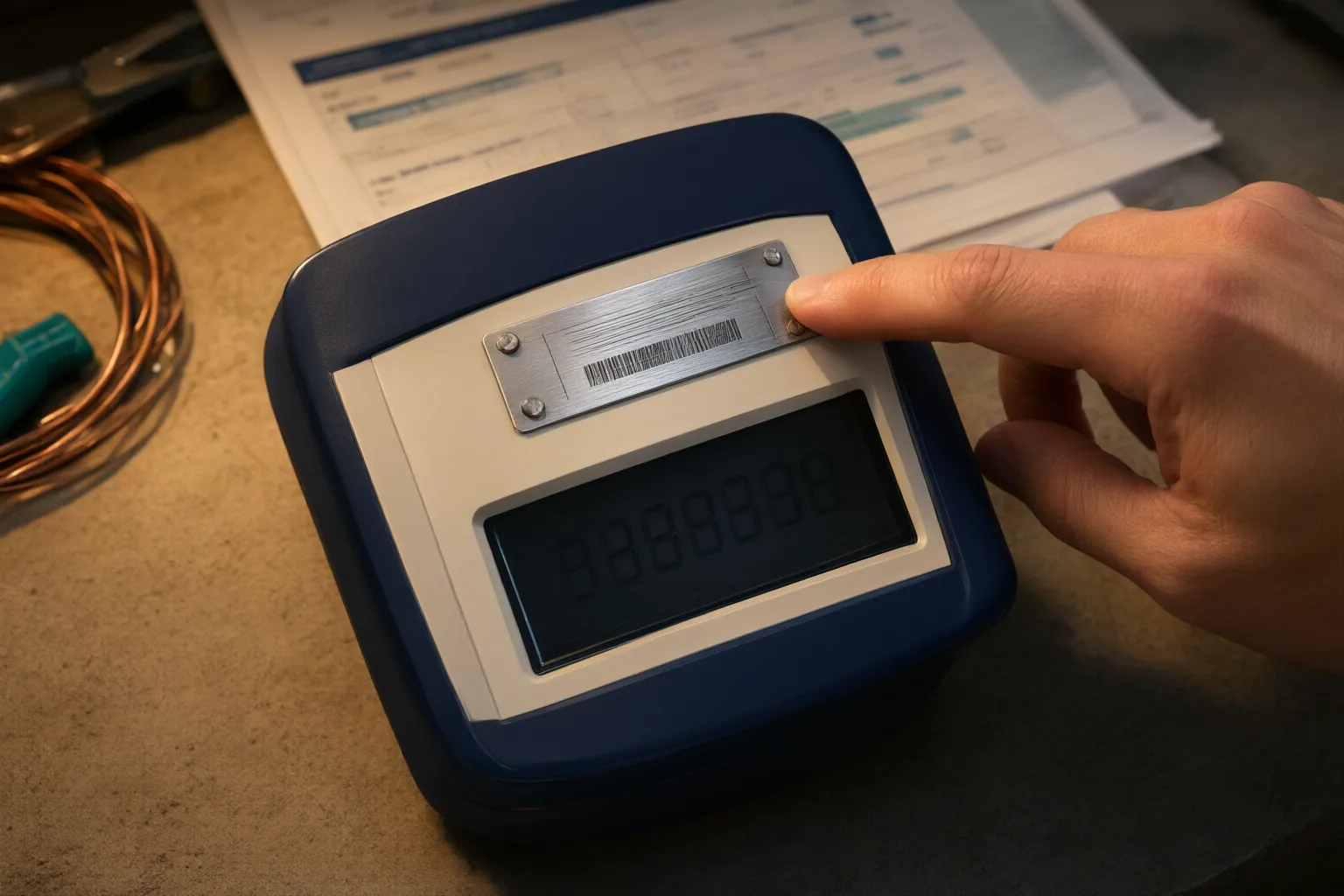
Start by examining the face of the replacement meter for a number that is printed or stamped on the unit. General meter guidance indicates that a serial number may appear near a barcode on a modern meter or beside the dials on an older mechanical meter. Treat those locations as orientation only: the cited guidance concerns Great Britain and does not establish how every meter installed in Nigeria is arranged.
The important distinction is between a fixed identifier and the meter reading. A serial number identifies the meter, while a reading changes as electricity consumption is recorded. If the screen cycles through several values, do not assume every displayed number is the serial number. Look first for a stable number physically marked on the meter face or associated with its barcode.
Record the entire identifier exactly as shown, including any letters, leading zeroes, spaces or separators. A clear photograph can preserve what was visible on the replacement meter when you performed the check. It also lets you compare the number carefully without repeatedly approaching the installation.
Locate the corresponding identifier in your account records
Review a recent bill or other account record and look around the meter-readings section. The relevant field may use a label such as “Meter Number,” “Serial No.,” “Meter ID” or “MSN.” These examples come from general guidance rather than a confirmed Nigeria-wide billing standard, so the wording and placement used by an individual electricity provider may differ.
Once you identify the likely field, compare it with the fixed number recorded from the replacement meter. Check the complete string character by character. Pay particular attention to letters that resemble numbers, leading zeroes and long sequences in which a single different character can be easy to miss. Compare the identifier itself, not the consumption reading or another changing value shown on the meter.
A clear match means the visible fixed identifier and the selected account field contain the same characters. It does not, by itself, prove every aspect of the provider’s internal account linkage. If the account record contains several possible meter-related numbers, avoid choosing one solely because its length looks similar; use the field label and seek provider confirmation when the meaning remains uncertain.
What to do when the identifiers are unclear or different
A difference does not automatically reveal why the records fail to correspond. Manufacturer documentation shows that, depending on configuration, a meter ID can be based on a manufacturing barcode or on a defined customer serial number. This means two identifiers associated with one unit may serve different purposes and should not automatically be treated as interchangeable.
First, repeat the comparison using the fixed marking on the meter rather than the changing reading. Check whether the bill or account record offers another clearly labelled identifier, such as “Meter Number,” “Serial No.,” “Meter ID” or “MSN.” Preserve a photograph of the meter identifier and a copy of the account record used for the comparison.
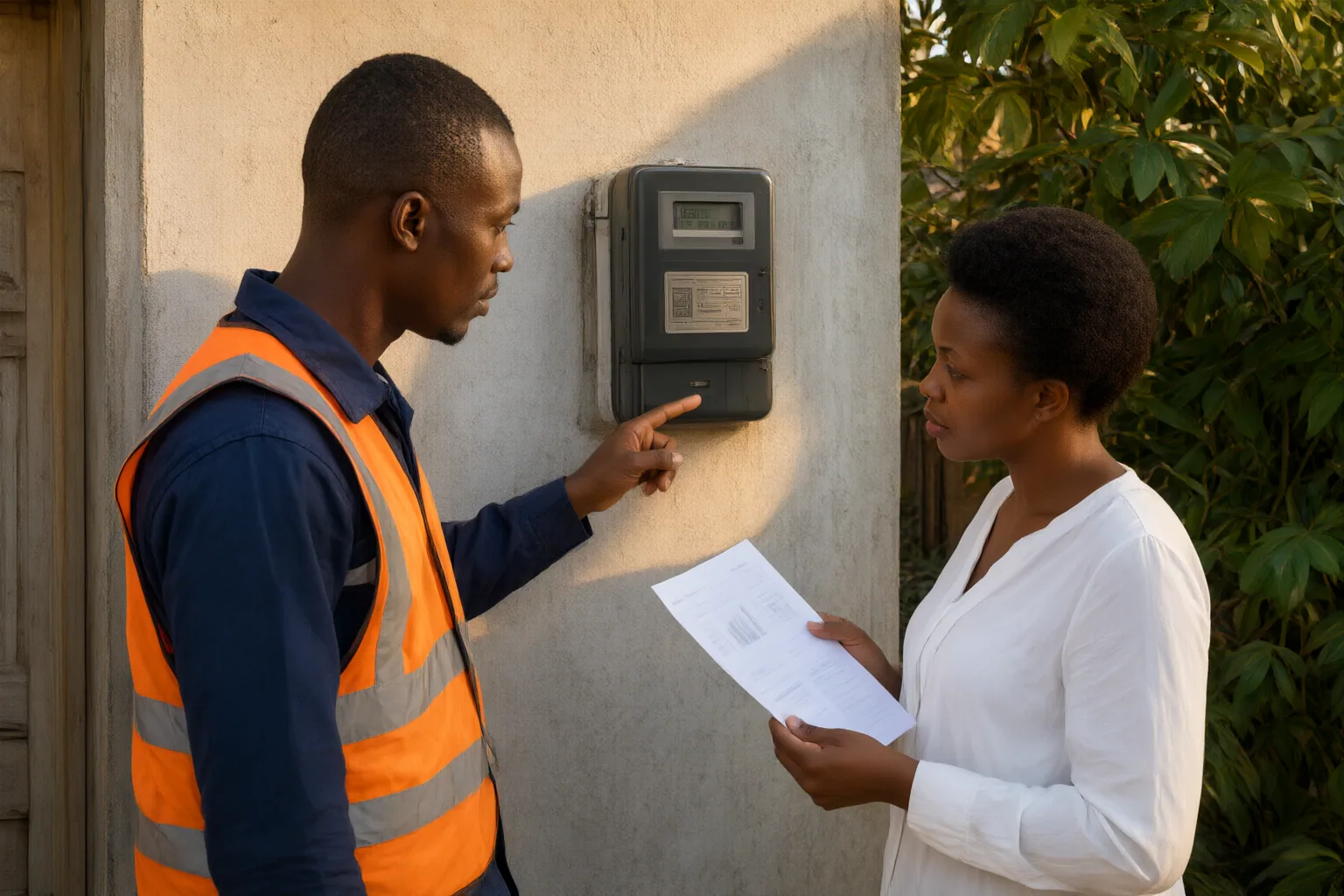
If the characters still differ, or if it is unclear which account field should match the meter, ask your electricity provider to confirm which visible identifier is linked to the account. Supply the two identifiers as they appear and describe their labels rather than assuming one is an error. The available evidence does not establish a single Nigeria-wide contact channel, form or escalation process, so use the provider-facing route available for your own account and request confirmation of the linkage.
Conclusion
The check has four parts: find the fixed identifier on the replacement meter, distinguish it from the changing consumption reading, compare every character with the relevant meter field in your account records, and retain a clear record of both. Different labels or identifier configurations can create ambiguity, so an apparent mismatch should be confirmed rather than explained by guesswork.
Photograph the fixed identifier on the replacement meter now, compare it carefully with the meter identifier shown in your account records, and ask your electricity provider to confirm the account linkage if the numbers or labels do not clearly correspond.
Disclosures and limitations
- This article was prepared with AI assistance from the supplied Sensus documentation and Selectra UK guidance. The Selectra material concerns Great Britain, while the Sensus material describes manufacturer identifier configurations; neither source establishes a Nigeria-wide replacement-meter verification procedure.
Related reading
- Electricity Consumers in Nigeria
- When May Electricity Distribution Workers Enter a Customer’s Property? What Ikeja Electric’s Terms Say
Sources
- Serial number — order.sensus.com
- Serial Number Validation | FreeStyle – Abbott — freestylecheck.com
- Meter Serial Number: Where to Find It on Gas & Electric — Selectra UK