Record every supply interruption with the same fields, then assess how often interruptions occur separately from how long they last. This creates a more consistent basis for cautious comparisons, although it is not an official Nigerian reporting format or a substitute for system-level reliability analysis.
Why Both Interruption Duration and Frequency Matter
A useful outage record answers two different questions: how many interruption events occurred, and how long each event lasted. Keeping these measures separate prevents a day with several short interruptions from being treated as equivalent to a day with one prolonged interruption.
This distinction reflects the approach used in a study of selected Nigerian distribution networks. The study assessed reliability with SAIDI, SAIFI and CAIDI—indices that address different aspects of interruption duration and frequency. It describes reliability indices as measures connected to overall supply quality and system behaviour during disturbances.
A personal log cannot reproduce those system-level indices because the supplied research does not establish that consumer records contain the required system data. Still, the distinction behind the indices offers a practical principle: count interruption events and measure their duration separately. Treat the resulting log as a record of what was observed at a particular location, not as an official reliability score.
What to Record in a Consumer Outage Log
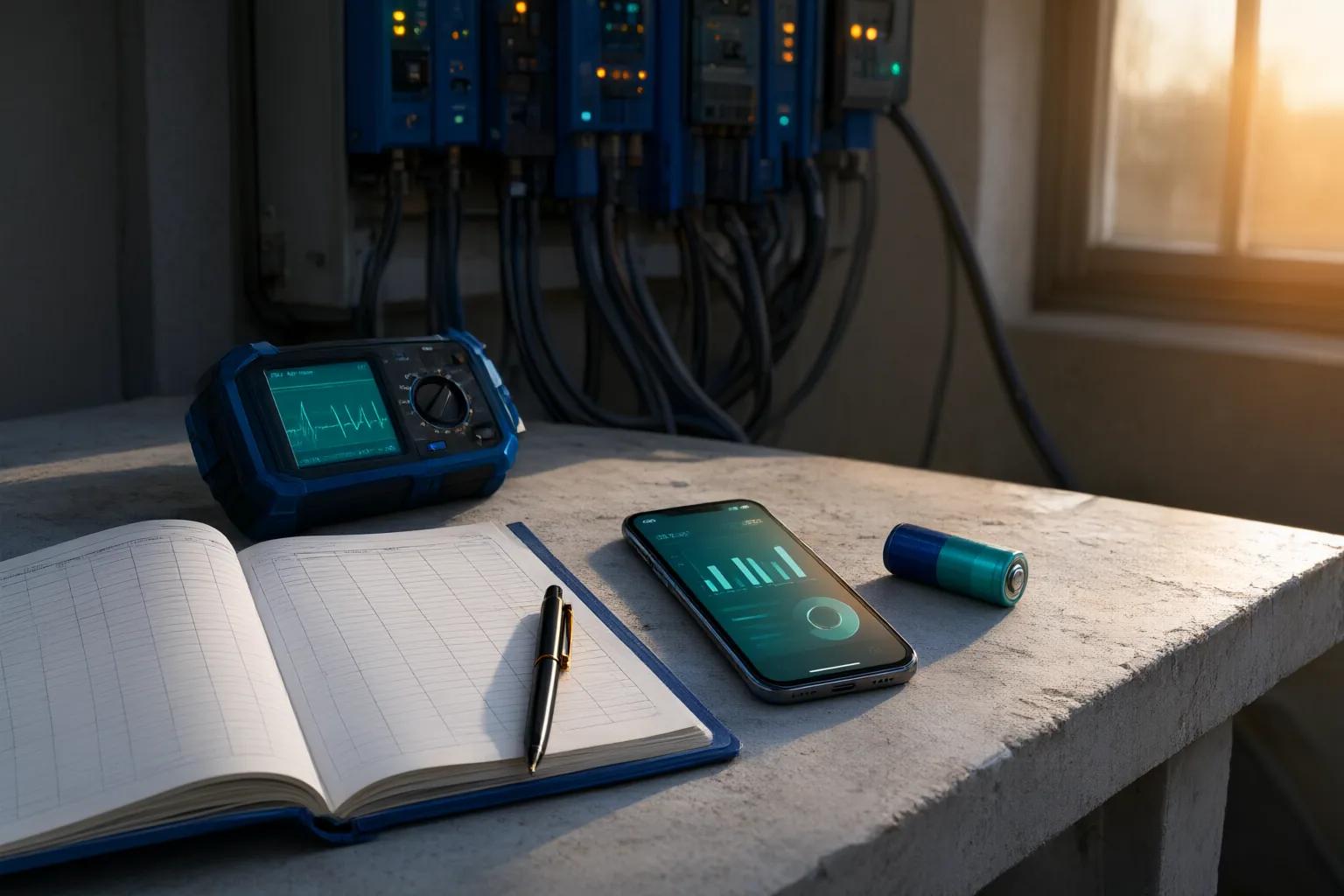
As editorial guidance, create one entry for each interruption and use the same fields every time:
- Date of the interruption
- Time the supply stopped
- Time the supply returned
- Duration calculated from those times
- A separate event number or count
- A brief, consistently worded note that helps interpret the entry
For an interruption that crosses midnight, keep the dates attached to both the start and restoration times so the duration remains understandable. If an exact time was not observed, label the entry accordingly instead of presenting an estimate as precise. Apply the same convention whenever circumstances are uncertain.
The event count and duration should remain separate even when they appear in the same row. This allows the records to show whether a period was characterised by repeated interruptions, lengthy interruptions, or both. Use a consistent observation window, such as a clearly labelled sequence of days or weeks, so later summaries describe the same span of time.
This proposed structure is not an official Nigerian consumer form. The supplied research does not specify a consumer logging format, reporting channel, minimum interruption threshold or regulatory procedure. It is therefore a practical editorial framework for organising personal observations, not a statement of regulatory compliance.

How to Compare Records Without Overstating the Results
Begin with modest summaries: count the recorded interruption events and add their durations for a defined observation period. You may also describe a typical duration, but state how you derived it and preserve the underlying entries. Compare only matching time windows and identify the location covered by each log. Records from different periods or places may reflect different conditions and should not be treated as directly equivalent without qualification.
Separate observations from conclusions. “This log contains eight interruptions during the stated period” reports what the record shows. A claim that one distribution company is more reliable than another goes much further and is not supported by the supplied evidence alone.
The Nigerian study analysed outage data from ten locations across the Ibadan, Ikeja and Port Harcourt distribution networks. That scope supports explaining the value of distinct duration- and frequency-based measures, but it does not establish current service-quality benchmarks or justify nationwide rankings of distribution companies. A consumer log is narrower still: it describes recorded experience at its stated location and during its stated period.
Documenting disruptions can nevertheless be practically useful. A separate source notes that supply chains depend on energy, transport and communications infrastructure and that vulnerabilities can have cascading effects. This provides broad context for why interruption records may matter, but it does not supply a consumer measurement method or evidence for provider comparisons.
Conclusion
A useful personal interruption record separates frequency from duration, follows the same method over time and stays within its evidential limits. It can support cautious comparisons between matching periods or clearly identified locations, but it should not be presented as an official format, a system reliability index or proof of a nationwide provider ranking.
Start a dated interruption log now. Record every event with the same fields, define the period being reviewed, and examine both the number of interruptions and their durations before drawing any service-quality comparison.
Disclosures and limitations
- This article was prepared with AI assistance using only the supplied research package. Its logging suggestions are editorial guidance, while the cited study and contextual source provide the factual basis and define the evidence limits.
Related reading
- Data & Reports for Nigeria’s Electricity Sector
- How to Interpret Daily Generation, Energy Sent Out, and Peak Demand Figures in Nigerian Power-Sector Reports
- How Journalists Can Distinguish Installed Capacity, Available Capacity and Actual Electricity Output in Nigerian Data