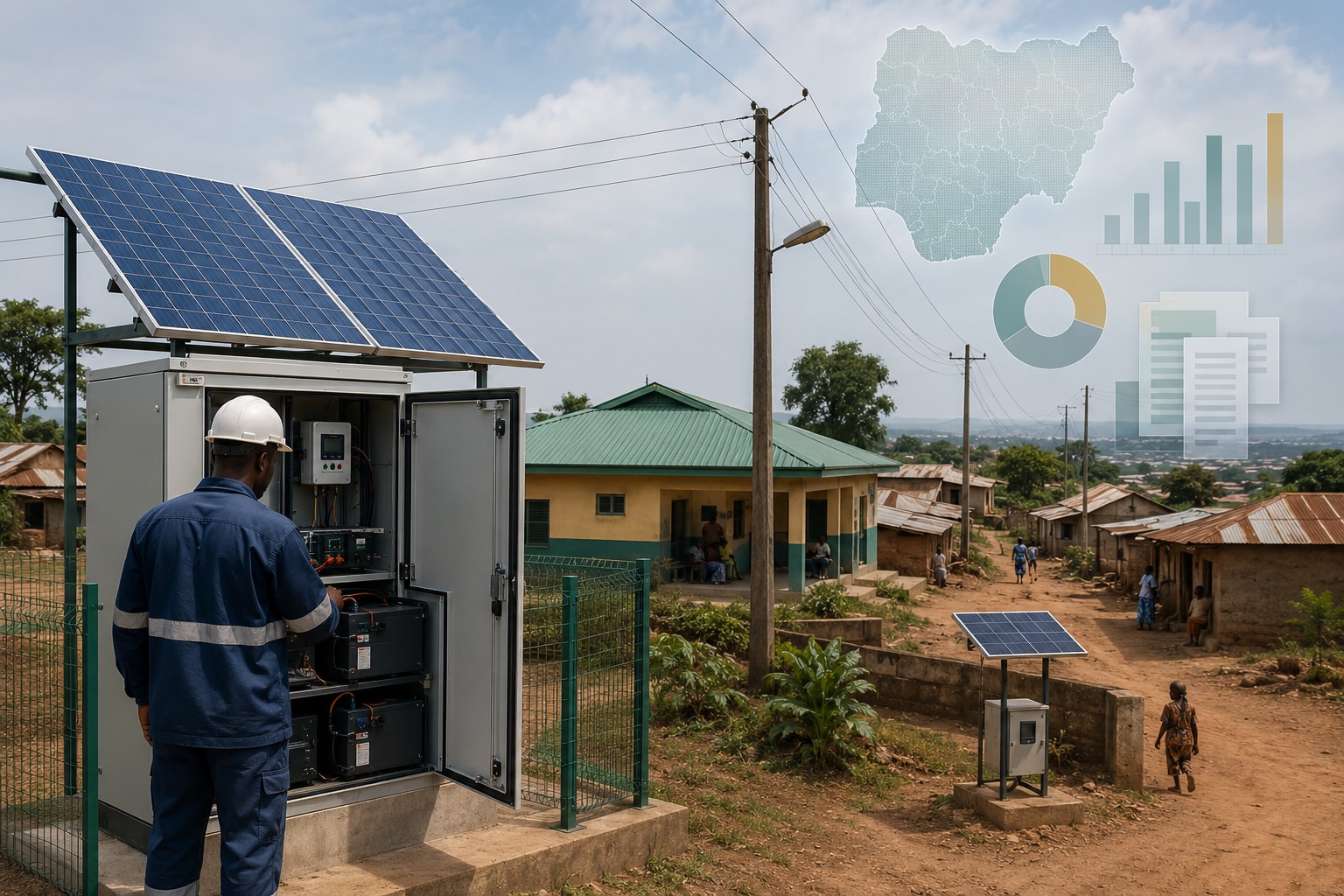
A source-led explanation of Nigeria’s reported electricity capacity, access challenge, official energy-planning framework and distributed renewable-energy initiatives—and the limits of what the available evidence establishes.
What Nigeria Energy Information Can—and Cannot—Establish
The available Nigeria energy information supports a broad overview of electricity capacity, access, policy and distributed renewable-energy activity. It does not collectively verify a specific development within a recent 30-day period.
The sources serve different purposes. Enerdata reports a national electricity-capacity figure for 2025. The Energy Commission of Nigeria describes its institutional role and policy vision. The Global Energy Alliance documents an electricity-access challenge and several distributed renewable-energy initiatives.
These materials should therefore be read as background rather than evidence of a single current event. They also do not provide enough information to confirm claims about individual bills, billing disputes or particular service decisions. Those issues would require additional, directly relevant evidence.
Nigeria’s Electricity Capacity in Context
Enerdata reports that Nigeria had 15 GW of electricity capacity in 2025 and characterizes the country’s capacity as limited. This figure provides a national-level indicator for readers examining the scale of the electricity system.
Limited capacity helps explain why reliable supply remains an important consumer concern. However, the reported 15 GW figure should not be treated as a direct measure of the electricity available to every household or business. The cited material does not establish individual service quality, the frequency of interruptions or outcomes in particular locations.
For consumers, researchers and decision-makers, the main supported conclusion is narrow: the source reports limited national electricity capacity of 15 GW for 2025. More detailed decisions would require additional information that directly addresses local supply conditions and the date on which each relevant dataset was published or updated.
Electricity Access Remains a Consumer Concern
The Global Energy Alliance describes Nigeria as having the world’s largest population without electricity access. That characterization points to the scale of the country’s basic electricity-access challenge and explains why access remains central to discussions of Nigeria’s energy system.
The source supports a national-level concern, not conclusions about any particular consumer. It does not establish whether a named household or business is connected, how reliable an existing connection is, or how a specific service matter should be resolved.
Electricity access and dependable supply should also be interpreted carefully. The documented existence of a large unconnected population concerns whether people have electricity access, while the capacity information addresses the scale of the electricity system. Together, the sources show why both access and capacity matter, but they do not provide evidence about individual experiences.
The Official Energy-Planning and Policy Framework
The Energy Commission of Nigeria identifies itself as the highest government body responsible for overall energy-sector planning and policy implementation. Its stated vision is an adequate, reliable, cost-effective and sustainable energy supply for the country.
This official description provides institutional and policy context for Nigeria energy information. It indicates the objectives against which readers may consider capacity, access and energy initiatives. However, a policy vision is an intended direction; the cited statement alone does not demonstrate that every objective has already been achieved.
Consumers and analysts should therefore distinguish the commission’s stated mandate and aspirations from evidence about present outcomes. The source explains who has the overarching planning and policy-implementation role and what kind of energy supply the institution seeks. It does not resolve individual billing, service or connection questions.
Distributed Renewable-Energy Initiatives in Nigeria
The Global Energy Alliance reports several distributed renewable-energy initiatives in Nigeria. These include support for establishing a cross-government Energy Transition Office and work to aggregate the procurement needs of smaller developers.
The organization also reports efforts to design a local-currency financing platform and provide financing for productive-use appliances. These activities address different parts of the distributed-energy environment: government coordination, combined demand from developers and access to financing.
The cited material establishes that these initiatives are being pursued. It does not, by itself, establish nationwide electricity-access outcomes, specific benefits for an individual consumer or the performance of any particular project. Readers should avoid treating documented project activity as proof that the broader capacity and access challenges have been resolved.
The initiatives nevertheless add an important dimension to the available overview. Nigeria energy information is not limited to national capacity and access conditions; it also includes documented efforts involving distributed renewable energy, institutional coordination and financing structures.
How Consumers Should Interpret These Sources
The sources describe four distinct types of information: a reported national capacity figure, the scale of the electricity-access challenge, an official policy mandate and vision, and distributed renewable-energy initiatives. These categories should not be combined into claims that the evidence does not support.
Enerdata’s 15 GW figure is a capacity indicator for 2025. The Global Energy Alliance’s access description identifies a national challenge, while its project information documents activity rather than completed nationwide outcomes. The Energy Commission’s statements explain its role and desired direction, not the experience of every electricity consumer.
None of the available materials provides sufficient evidence to determine individual bills, settle disputes or interpret specific service decisions. Consumers, policymakers, researchers and investors should review the cited sources and confirm their publication or update dates before relying on the information for policy, investment or consumer decisions.
Disclosures and limitations
- This article was prepared with AI assistance using only the supplied Research Package and approved Content Plan. Material claims are attributed through the accompanying source IDs and should be checked against the original sources and their publication or update dates.
- The supplied research contained no products or product recommendations. No affiliate relationship is represented; if commercial links are added later, any affiliate relationship or commission risk should be disclosed clearly.
Sources
- Energy Commission of Nigeria — energy.gov.ng
- International Civil Aviation Organization – Wikipedia — en.wikipedia.org
- Nigeria Energy Information — Enerdata
- Future Forces Forum — future-forces-forum.org
- Nigeria – Energy Policy Tracker — Energy Policy Tracker
- Heritage Foundation — DeSmog
- Join your supplier’s Priority Services Register — Ofgem
- A plan to make Europe the first electro-continent — European Commission
- Nigeria | Where we work | Global Energy Alliance for People and Planet — Global Energy Alliance for People and Planet
- Economy of Nigeria – Wikipedia — en.wikipedia.org