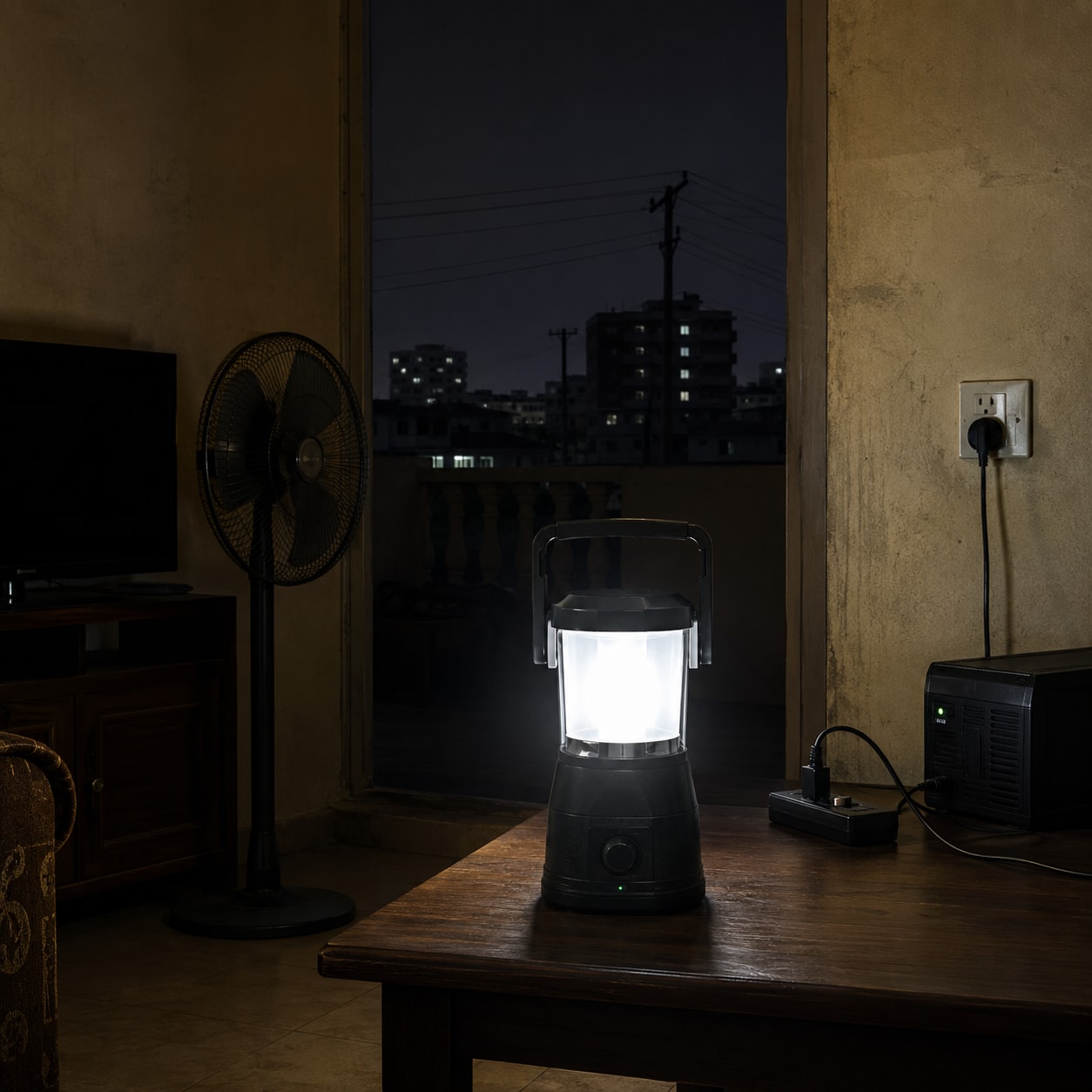
An evidence-limited explanation of blackout terminology, potential impacts, safety precautions, Nigeria’s grid-reliability context and the claims that the supplied sources cannot verify.
What “power outage” and “blackout” mean
A power outage is a short- or long-term loss of electricity that may affect anything from one home to an entire community. A blackout is a power outage that covers an entire area. These definitions help describe the scale of electricity loss, but they do not by themselves establish that an outage is nationwide.
The distinction matters when reading claims about Nigeria. Describing an incident as a “nationwide blackout” requires incident-specific evidence about its geographic reach. The available sources provide general definitions and background context, but they do not verify any particular Nigerian event as nationwide.
Why widespread electricity loss matters
Electricity outages can interrupt far more than household lighting. They may affect water supplies, heating and cooling, information services, communications, businesses, hospitals and shelters. Households can also lose access to electricity-dependent refrigeration, including refrigeration needed for some medicines, as well as powered medical equipment.
An extended outage can make it harder to keep phones, computers, lighting, refrigerators and home-security equipment operating, particularly if internet connectivity also fails. Effects outside the home may include reduced access to grocery stores, banks, ATMs, fuel stations and pharmacies. Hospitals and shelters can also face additional strain even where backup generation is available.
The severity of these effects depends on the outage’s duration, reach and local conditions. The supplied sources describe these potential consequences in general terms; they do not document their occurrence during a specific Nigerian blackout.
Nigeria’s grid-reliability context
A 2026 Nigeria renewable-energy market analysis by Mordor Intelligence identifies grid instability, high transmission and distribution losses, and recurring system collapses as constraints in the electricity sector. According to the publisher, these conditions can weaken confidence in utility-scale projects.
The same market-analysis context indicates that frequent grid outages and volatile diesel costs can encourage Nigerian commercial and industrial electricity users to consider self-generation or on-site renewable power. This describes pressure on business energy decisions, not verified details of a particular blackout.
These findings require careful attribution. They come from a commercial market-analysis publisher using its own estimation framework and should not be presented as official Nigerian grid statistics. They provide broad reliability context but cannot establish the date, cause, scope or restoration progress of a specific incident.
How power-sector reforms relate to reliability and tariffs
Nigeriawide reported that Power Minister Adebayo Adelabu connected the government’s longer-term goal of lower electricity tariffs with several operational changes: increasing generation, improving distribution, raising efficiency and reducing losses.
The reported position presents reliability, efficiency and tariffs as related parts of power-sector reform. More available generation would not by itself resolve every delivery problem if distribution performance and system losses remained unchanged. In the minister’s reported framing, progress across these areas is part of the pathway toward eventually reducing tariffs.
However, the supplied article is a secondary account of ministerial statements. It does not provide independently verified performance data showing how far the stated measures have progressed or quantifying their effect on reliability or tariffs. It therefore offers policy context rather than proof of current outcomes.
Safety steps during an outage
The available safety guidance recommends contacting the local electricity utility to determine the outage’s scale and obtain available updates. People should remain at least 10 metres away from downed power lines and treat them as dangerous.
Most appliances and electronics should be unplugged during an outage. This can reduce exposure to surge-related damage when electricity returns. Essential circumstances may require different decisions, especially where medical equipment is involved, so affected households should follow applicable local instructions.
Generators, charcoal barbecues and camping stoves must not be used indoors. These devices can create carbon-monoxide or smoke hazards. A generator should not be treated as safe for indoor use simply because doors or windows are open.
This guidance comes from the Government of Ontario and is not specific to Nigeria. Instructions from the relevant Nigerian authorities, emergency services and local electricity utility should take precedence. Readers should check those channels for locally applicable safety information and outage updates.
Restoring appliances and electronics safely
The return of electricity does not mean every appliance should be switched on immediately. The Ontario guidance advises waiting 10 to 15 minutes after restoration and then reconnecting appliances gradually, allowing the electricity system time to stabilize.
Gradual reconnection also addresses concerns about surges around outages, which may damage electronics. Devices that were unplugged should be restored in stages rather than all at once. Local Nigerian utility instructions should take priority if they differ or if power remains unstable after an announced restoration.
What the available sources cannot confirm
The research package does not contain an official account from a Nigerian system operator, regulator or government authority documenting a specific nationwide blackout. It therefore cannot verify an incident’s date, cause, geographic reach, restoration timeline, affected population or frequency.
The sources also do not establish that nationwide blackouts are a current search trend or breaking-news development. No Google Trends signal, growth rate or search-volume evidence was supplied.
The Ontario material provides general definitions and safety guidance, not evidence about a Nigerian incident. The Nigeriawide article supplies secondary reporting about reform objectives but no independently verified performance results. Mordor Intelligence offers proprietary market analysis about sector constraints rather than official incident statistics. These materials can support background explanation, but they cannot substitute for verified incident reporting.
How readers should evaluate blackout claims
Start by identifying what kind of source supports each claim. An official incident notice may address the location, cause and restoration status of a particular outage. General emergency guidance can explain precautions without confirming that an incident occurred. Secondary reporting can summarize public statements, while proprietary market analysis can provide sector context without serving as an official operational record.
Do not treat these source types as interchangeable. Check outage information and safety instructions from the local electricity utility and relevant Nigerian authorities. Compare specific claims about timing, reach and restoration with official incident updates, and distinguish those verified details from broader analysis about grid reliability or reform.
Disclosures and limitations
– This article was prepared with AI assistance from the supplied Content Plan and Research Package. – The article relies only on the supplied sources: Government of Ontario outage guidance, a Nigeriawide account of ministerial statements, an additional source concerning outage-related technology risks, and Mordor Intelligence market analysis. Ontario guidance is not Nigeria-specific, Nigeriawide is a secondary source, and Mordor Intelligence findings are proprietary market analysis rather than official Nigerian statistics. – No products, affiliate links or commercial recommendations are included.
Sources
– Power outages and blackouts — ontario.ca – Craft: Notes, Documents, AI App – App Store — App Store – Nigeria’s Minister of Power Pledges Lower Electricity Tariffs as Power Generation Increases – Nigeriawide.com — Nigeriawide.com – List of major power outages – Wikipedia — en.wikipedia.org – More than 75 data center build-outs worth $130 billion have been successfully blocked in the first three months of 2026 — bipartisan opposition mounts nationwide over fears of soaring power and water costs — Tom’s Hardware – Adeniyi Adeyemi: Nigeria’s President Bola Tinubu orders probe into alleged fake agency — bbc.com – 6 Devices You Need to Help Manage Blackouts During Summer Heat Waves – CNET — CNET – Nigeria Renewable Energy Market Growth | Industry Analysis, Size & Forecast Report — Mordor Intelligence – Smart grid – Wikipedia — en.wikipedia.org – Wikipedia:Artificial intelligence resources – Wikipedia — en.wikipedia.org