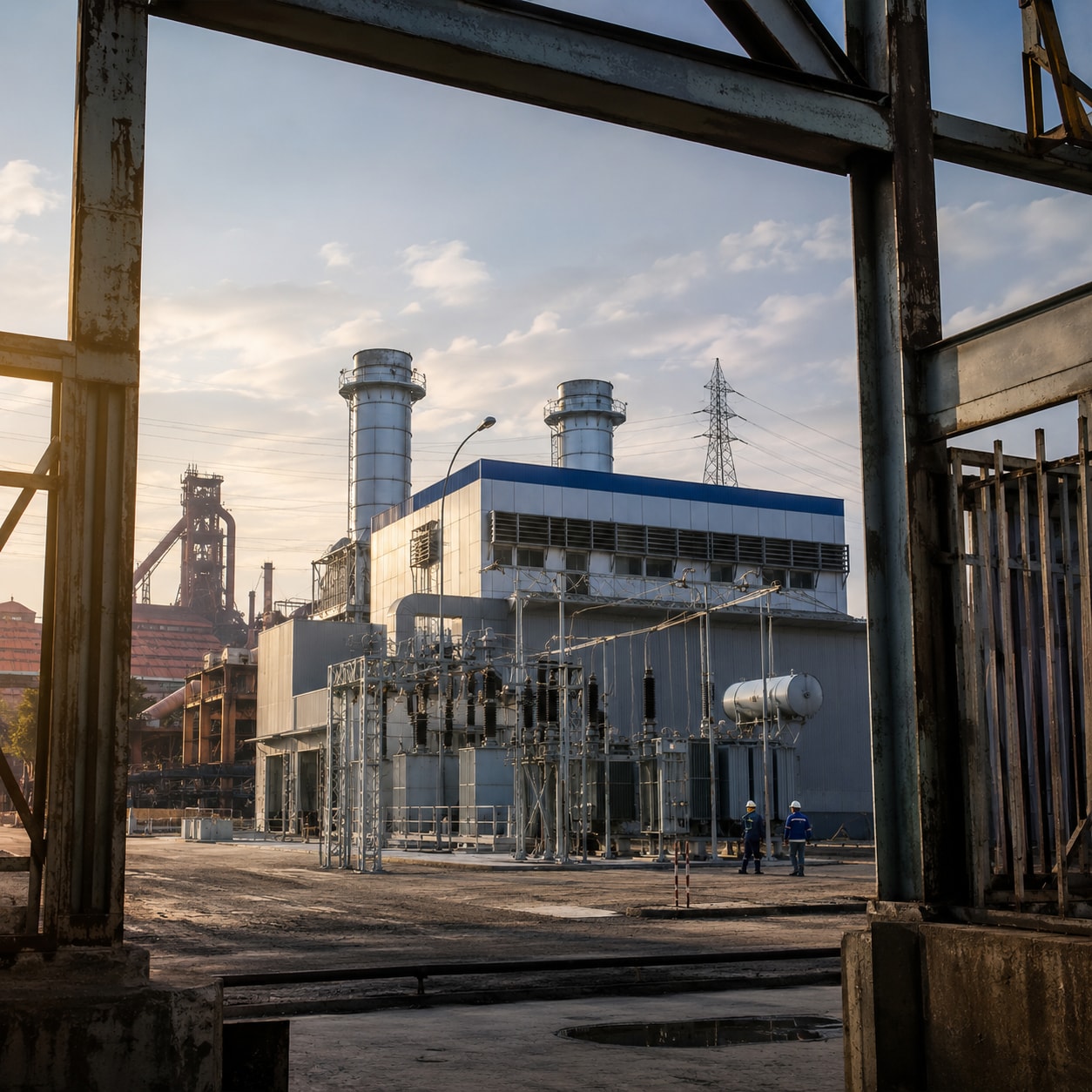
The available research does not verify the reported completion of a 22MW power plant in Ajaokuta. It documents Ajaokuta-linked gas pipeline infrastructure instead, leaving the power-project claim without direct official or independent confirmation.
What is being claimed about the 22MW Ajaokuta power plant?
The claim is that the government has completed a 22MW power plant in Ajaokuta. However, neither of the two available sources mentions such a plant or confirms its capacity, completion or operational status. The collected material therefore cannot establish the claim as fact. What it does provide is limited context about natural gas pipelines connected with Ajaokuta. Those pipeline references must not be treated as evidence that an electricity-generating facility has been built or commissioned. Until direct documentation identifies the project and confirms its status, the reported completion should be described as unverified.
What the available sources actually document
Both available sources concern natural gas pipeline infrastructure rather than a 22MW electricity-generation project. One describes the Ajaokuta–Kaduna–Kano pipeline as a planned route running from Ajaokuta in Kogi State to Kano. The other discusses a broader pipeline account and associates it with improved gas supply to the Geregu power plant.
These references establish only that Ajaokuta appears in accounts of gas-transport infrastructure. They do not identify an Ajaokuta power plant with a 22MW capacity, state that such a facility was completed, or provide the information needed to distinguish it from the pipeline projects. The difference matters: a gas pipeline transports fuel, while a power plant generates electricity. Evidence about one does not verify the existence or completion of the other.
The Ajaokuta–Kaduna–Kano pipeline account
One source describes the Ajaokuta–Kaduna–Kano natural gas pipeline as an approximately 614-kilometre planned project extending from Ajaokuta in Kogi State to Kano. According to that account, construction began in July 2020.
This information offers context about Ajaokuta’s place in Nigeria’s gas infrastructure, but it does not support the reported power-plant completion. The source does not mention a 22MW generating facility, its commissioning or its operational status. The pipeline’s route, reported length and construction date therefore should remain separate from any claim about an Ajaokuta power plant.
The separate pipeline-completion account and Geregu connection
The second source presents a different pipeline account. It claims that the government completed the Calabar–Umuahia–Ajaokuta–Kaduna–Kano gas pipeline in 2011 and emphasizes improved gas-supply capacity for the Geregu power plant.
That account does not mention a 22MW power plant in Ajaokuta. Its reference to Geregu concerns gas supply to another named power facility and cannot be repurposed as confirmation of a separate Ajaokuta generating project. It also does not provide the identity, capacity, developer or commissioning details of the plant described in the headline claim.
Why the power-plant completion claim remains unverified
The available material leaves all central elements of the completion claim unsupported. It does not directly confirm a 22MW capacity, the project’s precise location, its generation technology, developer or contractor, cost, commissioning date, operational status, or the government institution responsible for it.
The sources also cannot establish whether “completed” means construction finished, commissioning concluded, electricity generation began, or the facility entered commercial operation. Those are distinct milestones and require direct evidence.
A further limitation is source quality. The research package notes that the available material is mainly associated with Wikipedia and LinkedIn rather than records from a Nigerian government body, electricity regulator, project owner or independently reporting news organization. Because the two sources discuss pipelines and not the claimed plant, they cannot close these evidence gaps.
What evidence would be needed to confirm the project
Confirmation would require a direct record that clearly identifies the project. An official announcement, regulatory filing or project-owner document would need to specify the facility’s name, location, installed capacity, generation technology and responsible organizations. It should also distinguish construction completion from commissioning and actual operation.
The record would be stronger if it included a dated commissioning notice or another verifiable statement about whether the plant is supplying electricity. Independent reporting or a separate regulatory record should then corroborate the essential details. Without that combination of direct documentation and independent confirmation, the available pipeline references are insufficient to present the 22MW completion claim as established news.
Conclusion: a claim requiring further verification
The current evidence supports only limited context about Ajaokuta-linked natural gas pipelines. It does not confirm that the government has completed a 22MW Ajaokuta power plant. Publishing the completion claim as verified news would therefore go beyond the available sources. Readers, researchers and sector participants should treat it as unverified until a direct official record and independent corroboration establish the project’s identity, capacity and operational status.
Disclosures and limitations
– This article was prepared with AI assistance from the supplied Content Plan and Research Package. – The article relies only on source IDs source-5e3ede7a98bf2f60ec6629fd and source-2f45895a688f32274ce19a50. Those materials discuss gas pipelines and do not directly verify the reported 22MW Ajaokuta power plant. – No products are recommended and no affiliate relationship is presented in this article.
Sources
– Rooppur Nuclear Power Plant – Wikipedia — en.wikipedia.org – Raptor Comply | LinkedIn — linkedin.com – NuScale Power Releases Updated Evaluation for 77 MWe Module Clean Hydrogen Production — nuscalepower.com – Green Power Leadership Awardees | US EPA — US EPA – Ivanpah Solar Power Facility – Wikipedia — en.wikipedia.org – Ajaokuta–Kaduna–Kano Natural Gas Pipeline – Wikipedia — en.wikipedia.org – Kaliro Thermal Power Station – Wikipedia — en.wikipedia.org – International Water Power & Dam Construction | LinkedIn — linkedin.com – Litostroj Power Supplies Equipment for Stejaru Hydropower Plant in Romania | International Water Power & Dam Construction posted on the topic | LinkedIn — LinkedIn – #GEJAchievements in Oil and Gas: Construction,Repairs & Rehabilitation — linkedin.com